
Back and wrist pain from greenhouse farm work in Korea: lower back, knees, wrists and care on home leave
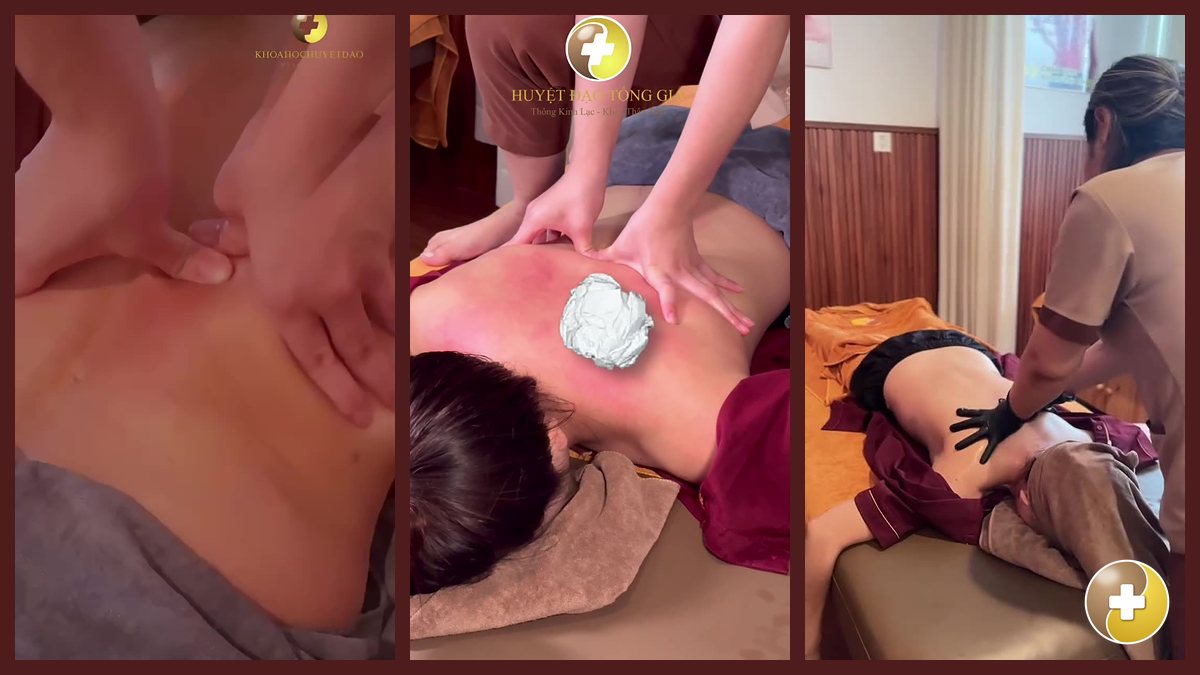
Quick answer: Back and wrist pain from greenhouse and farm work in Korea usually comes from stooping, deep squatting, lifting crates and thousands of cuts in humid heat or winter cold. Breaks, drinking and warmth help. On home leave, Tong Gia Acupoint Wellness in Ho Chi Minh City reads the spine by hand, releases the muscles and applies acupressure.
Want Lương Y Tống Văn Huynh’s team to read your spine and posture in person?
Why greenhouse and farm work in Korea is so hard on your back and wrists
Across Gyeonggi (Pocheon, Icheon, Yeoju, Anseong), Chungcheong (Nonsan, Buyeo, Cheongyang) and Jeolla (Damyang, Naju, Iksan), long rows of plastic-covered greenhouses, the vinyl houses Koreans call 비닐하우스, stretch across the fields. Many Vietnamese work here on the EPS farm visa (E-9) or as seasonal workers (E-8), and the work never really stops: strawberries from winter into spring, peppers, tomatoes and cucumbers in summer, lettuce, mushrooms and stacks of perilla leaves counted by hand. At midday in July the air inside a greenhouse is heavy, hot and wet, far warmer than outside. In January it is the opposite: frost outside at dawn, cold soil, drafts through the door, fingers stiff around the secateurs. By the end of a season, many people need a hand on the knee to stand up, cannot make a tight fist in the morning, and feel a sharp pain at the thumb side of the wrist every time they squeeze.
From a Western anatomy point of view, this is mostly muscle and tendon overload from repetition, not a disease of an internal organ. Three areas take most of the strain:
- The lower back (L4–L5, L5–S1): hours of bending over low beds keep the spinal erector muscles and the ligaments behind the spine stretched, while the discs take load towards the back. When you finally straighten up, tired muscles must brace again, so the lower back feels stiff and sore.
- The knees: squatting to pick strawberries, weed or cut lettuce keeps the knee deeply bent for long periods. Pressure rises between the kneecap and the thigh bone and on the menisci, and the front thigh muscles hold you up the whole time. The result is aching at the front of the knee, sometimes clicking, and pain when standing up.
- The wrists and fingers: one shift can mean thousands of squeezes, snaps and twists. The tendons that lift and extend the thumb run through a narrow sheath at the outer wrist, and constant friction makes it sting when you grip or turn the hand. Inside the wrist is the carpal tunnel, where the median nerve passes; long bending and tight gripping can cause numbness in the thumb, index and middle fingers, often at night.
The three areas feed each other: a tired back makes you lean on your knees, sore knees make you stoop more, and tired hands pull the shoulders and neck into tension. If you also want to see how the neck, back and lower back connect after long journeys, read our main guide on spine care after a long-haul flight.
Common causes: humid summers, freezing winters, stooping, squatting and crates
Greenhouse back and wrist pain rarely comes from a single wrong move. It builds up over a season:
- Low beds and long stooping: picking strawberries at ground level, weeding and pruning the lower leaves of tomato plants keep the back rounded for hours, and the muscles behind the spine get less blood flow.
- Squatting and kneeling on soil: switching from stooping to squatting rests the back but loads the knees and ankles. Soft, damp, uneven ground makes the hip and thigh muscles work harder just to keep balance.
- Crates, sacks and carts: trays of strawberries, boxes of peppers, fertiliser sacks, hose reels and carts between greenhouses. Carrying with one hand pulls the back to one side, and lifting a crate from the ground onto a cart while twisting easily strains the lower back.
- Repetitive hand work: cutting pepper stems, snapping perilla leaves, packing fruit, tying tomato vines. Blunt secateurs or loose gloves mean squeezing harder with every cut.
- Humid summer heat: heavy sweating drains water and salts, muscles tire faster and cramp in the calves and hands. High humidity stops sweat evaporating, so the body feels heavy and sluggish.
- Freezing winters: cold muscles tighten and lose elasticity; starting work at dawn without warming up invites a strained back. Cold hands grip the tools harder.
- Long days, few rest days, farm dormitory life: harvest weeks are packed, meals are rushed, rooms are small, some are converted containers that are hot in summer and cold in winter, and sleep is shallow. Yesterday's fatigue carries into today.
| Season in the greenhouse | What the body faces | What the back, knees and wrists feel |
|---|---|---|
| Summer (June–August) | Trapped heat, high humidity, water and salt lost in sweat | Fast fatigue, cramps, heaviness, a worn-out back by evening |
| Autumn | Pepper and vegetable harvest peak | Wrist pain from cutting, tight neck and shoulders after many days in a row |
| Winter (December–February) | Below zero at dawn, cold soil, temperature swings in and out | Cold, stiff back in the morning, aching knees on cold ground, numb fingers |
| Spring | Strawberry season and new planting, lots of squatting | Pain at the front of the knee, sore lower back when standing up |
The flight from Incheon to Tan Son Nhat takes about five hours, but sitting with bent knees in a tight seat after a whole season is enough to stiffen the back and knees further. Factory work brings its own load from lifting and machine shifts, see back pain from factory work in Korea; working-holiday fruit pickers in Australia have their own guide, back and wrist pain from fruit picking in Australia.
Related signs to notice
- Morning stiffness in the lower back that eases after a few minutes of walking: tight muscles after a day of stooping.
- Pain at the front of the knee when standing up or sitting down, clicking: pressure behind the kneecap after long squatting. See knee pain when squatting.
- Numb feet or shins after squatting that fade once you walk: vessels and nerves behind the knee were folded for too long.
- Sharp pain at the thumb side of the wrist when gripping or turning the hand: irritation of the thumb tendon sheath.
- Night numbness in the thumb, index and middle fingers that improves when you shake the hand: a sign of pressure on the median nerve in the carpal tunnel, worth watching closely.
- Stiff, catching fingers in the morning: overloaded finger flexor tendons.
- Night cramps in the calves or hands, exhaustion after summer shifts: lost fluids and salts.
- A cold back, dislike of wind, knees that ache more in cold weather: in Eastern wellness this is linked with weak Kidney yang, covered below.
As the Tong Gia curriculum puts it, pain shows up in one place but its source is often somewhere else: a sore wrist may start in the shoulder and lower neck, a sore knee in a tight, uneven lower back and hip. That is why the whole spine is read by hand, not only the spot you point to.
When to see a doctor
Most farm-work back, knee and wrist pain settles with rest, sleep, fluids and stretching. Please see a doctor, and do not use massage instead, if you notice any of the following:
- After working in a hot greenhouse: confusion, slurred speech, hot dry skin, no sweating, vomiting or fainting may mean heatstroke. Move the person to shade, loosen clothing, cool the body and call 119 in Korea. Severe muscle pain with tea-coloured urine after a heavy shift also needs urgent care.
- After spraying chemicals in a closed greenhouse: headache, nausea, heavy drooling, blurred vision, breathing difficulty or muscle twitching. Leave the greenhouse, get checked at once and bring the product label.
- Back pain after a fall from a ladder or cart, or a sudden "snap" while lifting followed by being unable to stand straight.
- Pain spreading below the knee, numbness or weakness in the leg, difficulty lifting the front of the foot; numbness around the groin or buttocks, or loss of bladder or bowel control: go to emergency now.
- A knee that becomes very swollen, hot, locks and will not straighten, or gives way when you walk.
- A swollen, bruised wrist after falling on an outstretched hand; constant numbness, a weak hand, dropping things, or a shrinking muscle at the base of the thumb.
- A hot, red, swollen hand or wrist with fever, or a cut from secateurs or a knife that swells and weeps.
- Back pain with chest tightness, shortness of breath, cold sweat, or pain spreading to the jaw or left arm: call 119 in Korea or 115 in Vietnam. No massage.
- One swollen, painful, warm calf after a flight or days of little movement may be a deep vein clot: get checked at once and do not rub the leg.
- Pain with fever, unexplained weight loss, pain that worsens at night, or pain lasting more than 4–6 weeks.
If you are hurt at work, tell the farm owner and get checked early so there is a record; a support centre for foreign workers near your farm can also help. Tong Gia does not read X-rays or MRI scans, does not give medical conclusions and does not make medical plans; if you have results from Korea, tell the staff so they know which areas to work gently or avoid.
This is a wellness service, not medical care.
The Y Tướng Học view: the Kidney and the back and knees, the Liver and the tendons, the Spleen and damp
Y Tướng Học, the Vietnamese art of reading the body's outer signs for wellness care, rests on one idea: what is inside shows outside. Lương Y Tống Văn Huynh systematised it so practitioners read the face and posture before placing a hand on the spine. For people who have worked many farm seasons, three organ systems are compared.
The Kidney, the lower back and the knees. In the Tong Gia curriculum the Kidney governs the bones, links with the lower back and knees and corresponds to winter. Thick, rosy ears, glossy hair and a strong back are good signs; aching knees, a cold back, ringing ears and hair loss suggest it is time to keep the lower back warm and rebuild reserves. Kneeling on cold soil every winter dawn is a classic way to end up with a dull, cold ache in the back and knees. The curriculum also says the Kidney is your capital: spend it too early and you pay later in money and time.
The Liver and the tendons of the wrist and fingers. The Liver governs the tendons and ligaments; when it is well, tendons are supple and joints move freely. When Liver blood is low, you see cramps, dry eyes and thin, brittle nails; when it is weak, muscles tighten and flexibility drops. Hands squeezing secateurs all day, short sleep and harvest quotas are exactly the pattern that tires the tendons. The outer signs are red, dry eyes, ridged nails and stiff fingers in the morning.
The Spleen, the muscles and dampness. The Spleen governs the muscles and the four limbs; when it weakens, arms and legs feel tired and soft. The curriculum notes that the Spleen likes dryness and dislikes damp. A hot, humid greenhouse plus rushed meals leaves many people heavy, sluggish, with poor appetite, pale lips and a swollen tongue with tooth marks. People with a square, fleshy face (the chữ Điền type) tend, when unwell, towards damp stagnation, with thick back muscles that tighten in large patches around T11–T12.
Faces that need a closer read. A bony face with high cheekbones (chữ Vương) belongs to people who carry heavy loads well but, per the curriculum, are prone to fibrous tendons and early joint wear, with uneven vertebrae and stiff fibres in the joint spaces. A long, narrow, thin face (chữ Mục) comes with thin spinal muscles, so the work is gentle and nourishing. A face wider at the jaw (chữ Do) has thick waist and hip muscles; a round face (chữ Viên) tends to a cold lower back. The bridge of the nose is read as a small map of the spine: a crooked bridge often goes with an uneven spinal axis.
This is observation for wellness care. It is not fortune telling and not a judgement about anyone's health.
Vertebrae and nerve-reflex areas involved
In the Tong Gia method of spinal nerve-reflex balancing, muscle and joint aches, including sciatica and numb hands or feet, are worked through C5–C7, L1–L5 and S1–S5 together. For greenhouse workers, staff usually compare these areas:
| Vertebrae | Nerves / function (anatomy) | Typical signs in greenhouse workers | Organ (Eastern view) | Outer signs (Y Tướng Học) |
|---|---|---|---|---|
| C5–C6 | C6 root: biceps, wrist extensors, sensation of thumb and index finger | Outer wrist and thumb-base pain from cutting peppers and snapping strawberry stems | Liver (tendons) | Ridged, brittle nails; red, dry eyes |
| C6–C7 | C7 root: triceps, wrist flexors, middle finger | Tired forearms after hours of packing and tying vines | Liver – Heart | Flushed or pale face after hot shifts, poor sleep |
| C7–T1 | C8–T1 roots: finger flexors, small hand muscles, little finger | Stiff fist in the morning, weak grip, night tingling | Spleen (limbs) | Pale lips, soft hand muscles |
| T11–T12 | Nerves to the lower abdominal wall; level of the Tỳ du and Vị du points | Heavy mid-back, sluggishness, bloating after rushed summer meals | Spleen – Stomach | Square, fleshy face; swollen tongue with tooth marks |
| L1–L3 | Roots to groin and front thigh; level of Thận du and Mệnh môn (L2) | Cold, stiff back when straightening up, worse in winter | Kidney | Thin, dull ears; dry hair; round face |
| L2–L4 | Roots forming the femoral nerve to the quadriceps that hold the knee | Aching front of the knee when rising from a squat | Kidney (bones), Liver (tendons) | Bony face with prominent joints |
| L4–L5, S1 | Roots that help form the sciatic nerve; discs under heavy load when bending | Pain across the lower back after a morning of stooping and crates | Kidney – Bladder | Thick waist muscles, crooked nose bridge |
| S1–S5 | Roots to buttocks, back of thigh, calf; pelvic nerves | Sore buttocks, tight hamstrings, calf cramps after squatting | Kidney – Bladder | Cold, hollow lower back |
The table lists related areas so staff know where to read carefully by hand. It is not a conclusion about the cause. For the lifting side, see back pain after lifting something heavy; for the hands, wrist pain when putting weight on your hands.
How Tong Gia helps rebalance your back, knees and wrists on home leave
Tong Gia Acupoint Wellness (Huyệt Đạo Tống Gia) follows a Vietnamese traditional method of spinal nerve-reflex balancing massage built by Lương Y Tống Văn Huynh, who has over 13 years in Eastern wellness care, Y Tướng Học and spinal reflex work. The aim is to help each spinal area and the related organ functions come back into balance, by hand.
- Talk and observe: what you grow, strawberries or peppers, stooping or squatting, which hand holds the secateurs, how many seasons, numb fingers or pain into the leg, any falls or injuries, any check-ups in Korea. Then face colour, lips, nails, ears, nose bridge, posture and the height of shoulders and hips.
- Read the spine by hand: skin temperature, the muscle layer, the shape of the spine and sensation at each point, left against right, top against bottom, narrowing to the key zones. Years of cutting with the right hand usually leave the right shoulder and forearm tighter; heavy squatters tend to have tight front thighs and buttocks.
- Release the muscles: spinal erectors, waist, buttocks, front and back of the thighs and calves, then shoulders, shoulder blades, inner and outer forearms, the wrist area and palms, with pressure rising through five levels and constant check-ins. Only over-active zones (warmer skin, hard muscle, more tender on pressure) are worked; swollen, hot areas after a knock are left alone.
- Acupressure on the right points: Thận du and Mệnh môn on the lower back, Ủy trung behind the knee, Túc tam lý below the knee and Âm lăng tuyền under the inner shin for heavy legs, and at the arm Nội quan two finger-widths above the wrist crease, Liệt khuyết and Thái uyên near the crease. Pressure stops when the skin turns from dry to slightly moist. Hợp cốc and Tam âm giao are not used during pregnancy.
- Self-care coaching: back stretches for the start and end of a shift, how to squat and switch legs, how to hold secateurs with less squeeze, hourly wrist stretches, warming the lower back in your dorm room.
During the session most people feel tender spots along the waist, the front of the thighs, behind the knees and on the outer forearm; as the muscles let go, the tenderness fades, the back warms and the hand opens and closes more easily. Afterwards many find standing up from low seats lighter and sleep more deeply that night; some feel a little sore for a day first. Everyone responds differently, and Tong Gia does not promise the pain will be gone after one visit.
Suitable services and prices
- Neck-shoulder / lower back care, 60 min: 550,000 VND (about 21 USD); first visit 399,000 VND (about 15 USD); 90 min: 750,000 VND (about 29 USD). Focus on the lower back, waist, buttocks, mid-back and shoulders.
- Heavy, tired legs care, 60 min: 500,000 VND (about 19 USD) for people who squat and kneel a lot: thighs, around the knees, calves and feet.
- Extra 30 minutes on one area: 199,000 VND (about 8 USD) for forearms, wrists and the cutting hand.
Approximate rate: 1 USD ≈ 26,000 VND; payment is in VND. Full list: prices.
From Tan Son Nhat Airport
The District 12 branch (225 Dương Thị Mười, Phường Tân Chánh Hiệp – north of the airport) is usually a short ride outside rush hour. The Vinhomes Grand Park branch (Căn T16-21 khu Manhattan, Phường Long Bình, TP. Thủ Đức – Thu Duc City, east side) is further and takes longer, so avoid the evening peak. Flights from Korea often land in the evening or late at night, so most people book for the next morning; see also massage near Tan Son Nhat Airport.
Want Lương Y Tống Văn Huynh’s team to read your spine and posture in person?
Self-care after shifts in the farm dormitory
- Warm up 3–5 minutes before the shift: hip circles, side bends, gentle back arches, wrist circles, open and close the hands, march on the spot, especially on winter mornings.
- Change position every 20–30 minutes: if stooping, stand, put your hands on your hips and arch gently a few times; if squatting, switch the supporting leg or kneel on a pad. Many Korean farms use a small seat strapped behind the hips, which saves a deep squat. Lift crates close to your body by bending the knees, and step to turn instead of twisting.
- Rest the wrists every hour: straighten the arm and use the other hand to draw the fingers gently back, then forward, 15–20 seconds each way. Keep secateurs sharp, wear gloves that fit, and switch hands when you can.
- Drink steadily through summer shifts: a few sips every 15–20 minutes without waiting for thirst, salts if you sweat heavily, and a midday break somewhere cool outside the greenhouse.
- Warm the lower back and soak your feet at night: rub your palms until warm, place them on both sides of the lower back over the Thận du area and rub up and down 50–100 times. Soak your feet in water at about 38–42°C for 15–20 minutes before bed; people with diabetes should test the temperature carefully.
- Keep warm and sleep enough: in winter wear a thermal layer that covers the waist and change out of sweaty clothes at once; aim for bed before 11 pm. If a heated floor leaves your back aching, read back pain from sleeping on heated ondol floors.
Anything swollen, hot or red after a knock should be left alone, not rubbed or heated. Constant wrist numbness is a reason to get checked, not to push through.
A suggested plan for your home leave
| When | What your body needs | What to do |
|---|---|---|
| Last week on the farm | No extra load | Slow down if the wrists hurt, get help with heavy crates, sleep well before travel |
| Ride to Incheon Airport | Movement | Walk and stretch at every stop, sip water |
| Flight of about five hours | Keep back and knees from stiffening | Rolled jacket behind the lower back, walk every hour, wrist circles, heel raises |
| Arrival day | Rest | Warm shower, light walk; Vietnam is two hours behind Korea, so sleep early on local time |
| Day 2–3 | Release a season of stooping and squatting | A 90-minute back session, or 60 minutes plus 30 for the wrists |
| Mid-leave | Real rest for knees and tendons | A legs session if the knees still ache; less one-hand carrying and phone scrolling |
| 3–5 days before flying back | Prepare for the next season | A lighter session and your stretches; read preparing your body before a long flight |
Saigon's dry season is hot too, so keep your greenhouse drinking habit; see heat fatigue in Vietnam's dry season.
Book from Korea before you fly home
You can message us while still in Pocheon, Nonsan or Damyang. Call, Zalo or WhatsApp +84 888 264 559 (0888 264 559 in Vietnam) with your landing date and time at Tan Son Nhat, where it aches (lower back, knees, wrists, forearms or the whole back) and which branch you prefer. Staff will suggest a suitable day and hold a slot, including for parents coming with you. You can also book online or read how to book a massage in Saigon from abroad.
- District 12 branch: 225 Dương Thị Mười, Phường Tân Chánh Hiệp, Ho Chi Minh City. Open 8:00–19:00 daily.
- District 9 branch: Căn T16-21 khu Manhattan, Vinhomes Grand Park, Phường Long Bình, TP. Thủ Đức. Open 9:00–20:00 daily.
Slots before Tết fill quickly, so book early. Genuine customer reviews are on Google Maps for each branch.
Visit us
- Đông Y Huyệt Đạo Tống Gia Quận 12 (District 12)
225 Dương Thị Mười, Phường Tân Chánh Hiệp, Quận 12, HCMC · 8:00–19:00 daily · 0888 264 559 · Directions on Google Maps - Đông Y Huyệt Đạo Tống Gia Quận 9 (Vinhomes Grand Park, District 9)
Căn T16-21 khu Manhattan, Vinhomes Grand Park, Phường Long Bình, TP. Thủ Đức, HCMC · 9:00–20:00 daily · 0888 264 559 · Directions on Google Maps
Map of our two branches
Want Lương Y Tống Văn Huynh’s team to read your spine and posture in person?
What guests say on Google Maps
“Service was good and they look after guests well. I will come regularly.” (translated from a Vietnamese review)
— Như N., Google Maps review · Vinhomes Grand Park branch (District 9) · 10/2026 · See on Google Maps
“Good service, very satisfied. The staff gave warm, careful advice.” (translated from a Vietnamese review)
— An P., Google Maps review · Vinhomes Grand Park branch (District 9) · 2025 · See on Google Maps
Quoted from public reviews, shortened where marked (…). Experiences vary from person to person; reviews are not a substitute for seeing a doctor when something feels wrong.
Related guides for your trip
- Fatigue from cleanroom suits on long shifts: heat, heavy shoulders and back, dry skin in chip plants
- Vietnamese brides farming in rural Korea: back and knee pain, and how to care for your body on a visit home
- How to describe back pain in Japanese, Korean and Chinese: hospital phrases, warning signs and care in Saigon
FAQ
Is back and wrist pain from greenhouse work in Korea serious? Usually it is muscle and tendon overload from stooping, squatting, lifting crates and squeezing secateurs in humid heat or cold, and it eases with rest, fluids, warmth and stretching. Get checked at once after a fall, with leg weakness, constant finger numbness, a hot swollen wrist or signs of heatstroke.
My knees hurt from squatting to pick strawberries in Nonsan. What helps? Deep squatting loads the kneecap joint and menisci while the front thigh muscles hold you up. Switch the supporting leg every 20–30 minutes, kneel on a pad or use a hip-strapped seat, and stand to stretch often. A very swollen, hot knee that locks or gives way needs a check-up.
The greenhouse in Gyeonggi gets very hot in summer. When should I worry? Confusion, slurred speech, hot dry skin without sweat, vomiting or fainting point to heatstroke: move to shade, cool the body and call 119. Severe muscle pain with dark urine, or headache, nausea and breathing trouble after spraying in a closed greenhouse, also need urgent care.
Is wrist pain from cutting peppers carpal tunnel? Not always. Sharp pain at the thumb side of the wrist when gripping usually comes from the thumb tendon sheath. Night numbness in the thumb, index and middle fingers points more to the median nerve in the carpal tunnel. Constant numbness, weakness or dropping things should be checked.
Can I get a massage the day after flying home from Korea? Yes, most people rest one night and come the next morning or on day two or three. Staff first ask about your work, where it hurts and any falls, numbness or recent check-ups; if something looks unusual they will advise seeing a doctor first instead of working on it.
How much is back and wrist care at Tong Gia? Neck-shoulder / lower back care is 550,000 VND for 60 minutes (399,000 VND first visit) and 750,000 VND for 90 minutes; heavy-legs care is 500,000 VND for 60 minutes; an extra 30 minutes on the wrists is 199,000 VND. Payment is in VND. This is wellness care, not a replacement for a check-up.
Author: Lương Y Tống Văn Huynh – founder of Huyệt Đạo Tống Gia, a master of traditional Vietnamese wellness with over 13 years in Eastern wellness care, Y Tướng Học (face reading) and spinal nerve-reflex balancing massage.
Updated: 2026-11-17
Related guides
- Back pain from packing up before moving back to Vietnam: boxes, garage sales, the container and a long flight
- Back and shoulder pain from landscaping work in the US: vibration, digging, heat and care on a trip home
- Back pain from elderly care work in Germany: causes, when to get checked and back care on home leave
- Back and wrist pain from greenhouse farm work in Korea: lower back, knees, wrists and care on home leave
- Fatigue from cleanroom suits on long shifts: heat, heavy shoulders and back, dry skin in chip plants
- Parents' back pain after a long flight with young kids: lower back, shoulders and wrists
This is a wellness service, not medical care.