
Can children and teens get a massage in Vietnam? Safety rules for families bringing teenagers home
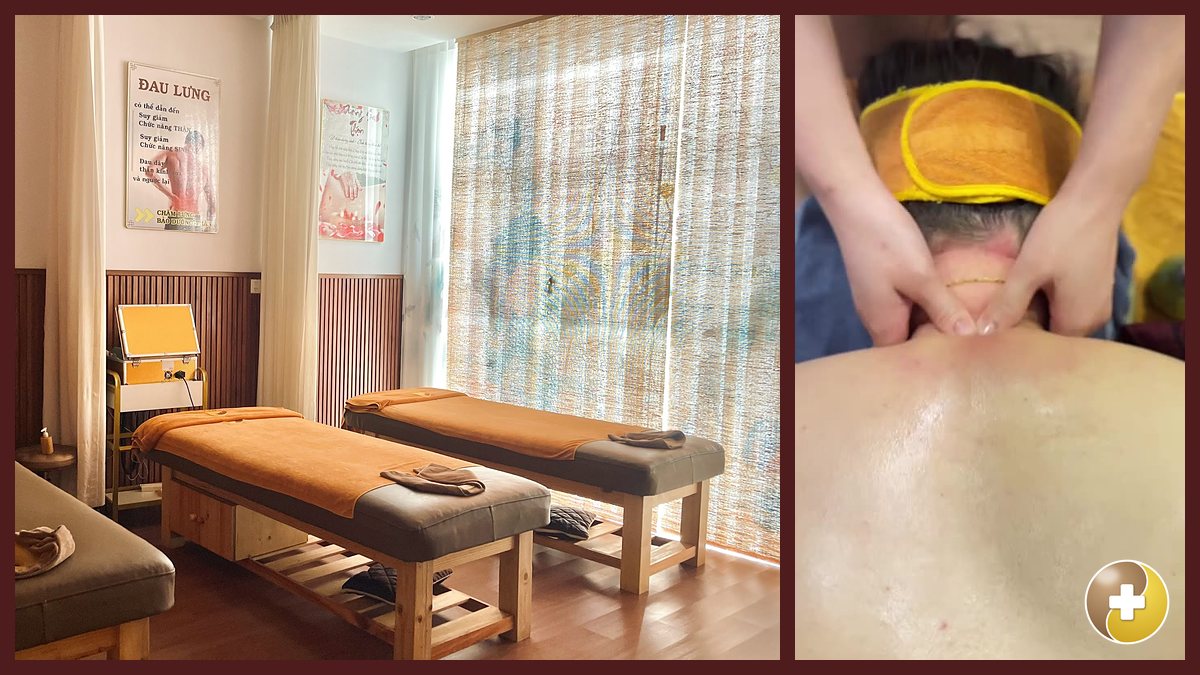
Quick answer: Babies and young children, no. A healthy teenager can have gentle head, neck and shoulder work with a parent present, but not with a fever or a fresh injury. Which services accept minors, and from what age, is a question for the front desk at Tong Gia in District 12 or Vinhomes Grand Park, Ho Chi Minh City.
Want Lương Y Tống Văn Huynh’s team to read your spine and posture in person?
Can children and teens get a massage?
Can children and teens get a massage in Vietnam? The honest answer has two parts. Babies and young children are not clients for an adult wellness studio: Tong Gia Acupoint Wellness (Huyệt Đạo Tống Gia) does not care for newborns or young children. For a healthy teenager, a light session on the head, neck and shoulders with a parent in the room is something a family can reasonably consider, as long as the teen has no fever, no recent injury, and actually wants it. Which services accept minors, and from what age, is a question to ask the front desk before booking. This article does not invent an age limit on their behalf.
In Western anatomical terms, most of the neck and shoulder ache teenagers complain about is postural muscle strain. A teenager's head weighs roughly what an adult's does, about 4.5 to 5.5 kg. When the head tips forward over a phone, its centre of gravity moves in front of the cervical spine, and the muscles at the back of the neck (the small suboccipital muscles, the cervical erectors, upper trapezius and levator scapulae) have to pull several times harder to hold it up. Hours of that leave them tired, tight and tender, sometimes with a dull headache at the base of the skull. Add a heavy backpack slung over one shoulder, sports practice without a proper warm-up, and the growth spurt, when bones lengthen faster than muscles and tendons can keep up, and you get the picture many parents describe: a kid who says their neck hurts, with one shoulder higher than the other and a rounded upper back.
Gentle massage does not change bone and it does not replace a medical check when something is wrong. Its job is more modest: helping tight muscles let go, so the teen feels more comfortable, sleeps more easily, and starts to notice where their body is complaining.
The families asking this are often Vietnamese Americans in San Jose, Houston or Orange County, Vietnamese Australians in Sydney or Melbourne, and Vietnamese Canadians in Toronto, Calgary or Vancouver, flying home over the winter break, Christmas and New Year, or the long Australian summer holidays. From North America the trip almost always involves a connection and can take close to a full day; from Sydney or Melbourne there are direct flights of about 8 to 9 hours. Teens spend much of the flight curled up with a phone or a game. Saigon's dry season greets them with 32 to 34°C sun and air-conditioned rooms, jet lag keeps them up until 2 or 3 a.m., and by day two or three parents notice a stiff neck and wonder whether the kids can join the family massage. International visitors flying long-haul into Ho Chi Minh City with teenagers face exactly the same question.
This article belongs to Tong Gia's programme for overseas Vietnamese and long-haul visitors. For the bigger picture on neck and back after many hours in a seat, see our guide to spine care after a long-haul flight. If you are the parent with the sore back after carrying and minding kids all flight, read parents' back pain after a long flight with kids.
Why teenagers get stiff necks, shoulders and backs on a trip home
- Phones, tablets and game consoles: looking down at a screen for long stretches is the most common driver of neck strain in students. Head forward, shoulders rounded: the posture is discussed in neck pain from reading and studying.
- Heavy backpacks: books, a laptop and sports kit in one bag, often carried on one strap. Many school guidelines suggest a backpack should weigh no more than about 10 to 15 percent of body weight and be worn on both straps, snug to the back.
- Sport: basketball, soccer, swimming, volleyball, tennis, ice hockey in Canada. Exercise is good, but hard training with little warm-up or stretching leaves shoulders, thighs and calves tight; swimmers and throwers load the shoulder more than most.
- Growth spurts: during puberty bones grow quickly and muscles and tendons lag behind, so things feel tight, and active kids sometimes get pain where tendons attach, below the knee or behind the heel. That kind of pain should be checked by a health professional, not rubbed hard.
- The long flight: sitting folded, sleeping with the head dropped to one side, rarely getting up. Our article on a stiff neck after a long flight explains why overnight flights are so hard on the neck.
- Jet lag and late nights: staying up on home-country time, scrolling in bed, sleeping on a high pillow at the grandparents' house. Poor sleep keeps muscles from relaxing; see jet lag and sleep after flying to Vietnam.
- Less movement on holiday, more study stress: at school they walk and play every day; in Saigon they sit in cars, cafés and air-conditioned rooms. Many also bring holiday assignments or college applications, and stress keeps the neck and shoulders braced; see stiff neck and headaches from studying late for exams.
Signs that come with it
| Area | Common, fine for gentle wellness care | Ask a health professional first | Get checked straight away |
|---|---|---|---|
| Neck | Stiff turning the head after the flight or a day on the phone; eases with rest and warmth | Neck ache lasting many days or keeps coming back | Stiff neck with fever, severe headache, vomiting, light sensitivity; pain after a fall or blow |
| Shoulders, upper back | One shoulder tight from the backpack; upper back tired after sitting | Uneven shoulders, one shoulder blade sticking out, a back that looks curved when bending forward | Back pain getting worse, waking the teen at night, with weight loss or tiredness |
| Hands | Tired wrists and thumbs from gaming and texting | Recurring finger numbness, weaker grip | Numbness or weakness of a whole arm or one side of the body |
| Knees, heels after sport | Tired thighs and calves after training, better in a day or two | Lasting pain below the knee or behind the heel in a growing, sporty teen | Swelling, bruising, deformity, unable to bear weight after an injury |
| Whole body | Tired after flying, jet lag, poor sleep for a few nights | Fatigue that drags on, poor appetite, unusual sleepiness | Fever, chest pain, breathlessness, fainting during sport: call 115 |
Other common companions: a headache at the back of the head late in the day, dry and tired eyes, aching thumbs (see numb hands from holding a phone), shallow sleep and irritability, and tired legs after days of sightseeing in the heat.
When to see a doctor instead
If a child or teenager has any of the following, skip the massage and see a doctor, ideally at a facility with paediatric care:
- Fever, even a mild one, flu, sore throat or exhaustion; read should you get a massage with a cold or fever.
- A fresh injury from sport, a bike fall or stairs: swelling, bruising, deformity, inability to bear weight, or a knock to the head followed by headache, nausea or drowsiness.
- Back or neck pain that lasts in a child: many days without easing, steadily worse, pain at night, or with weight loss, fever or fatigue. Lasting back pain in children deserves an early medical look.
- Uneven shoulders or a visibly curved back: ask for a scoliosis check, since puberty is the stage to watch.
- Numbness or weakness in arms or legs, clumsiness, bladder problems, pain running from the back into a leg.
- Sudden severe headache, vomiting, blurred vision, stiff neck with fever.
- Chest pain, breathlessness, a racing heart or fainting, especially during sport: call 115 immediately.
- After a long flight, one calf swollen, warm, red and painful, or sudden breathlessness: blood clots after flying are rare in teens but possible. Get checked at once and do not massage that leg.
Tong Gia does not care for newborns or young children. With teenagers, the practitioner goes through these questions before touching anyone and stops to recommend a medical check if anything comes up. Tong Gia does not read X-rays or MRI scans and does not draw up any medical plan. If your teen is being followed for scoliosis, a sports injury or another condition, ask the professional who follows them whether massage is suitable and which areas to avoid.
Tong Gia Acupoint Wellness is a wellness care service, not medical care. This is a wellness service, not medical care.
Safety rules for a teen's first massage
- A parent or guardian stays with them in the room or right beside them, and hears the safety questions too.
- The teen agrees and chooses the areas; they can ask for lighter pressure or to stop at any moment, and that request is respected immediately.
- Ask the front desk first which services accept minors and from what age. Do not assume an adult service will.
- Light pressure only: Tong Gia's training manual grades pressure in five levels, from one finger, to the whole hand, bent arm, straight arm and full body weight. For teenagers only the lightest levels are used; see is strong massage better.
- Few areas, fully covered: head, neck, shoulders, upper back, arms, hands and feet; comfortable clothing, towels, no sensitive areas.
- Not with fever, a fresh injury or broken skin, sunburn or an inflamed rash.
- Not right after a big meal or when very hungry; after hard sport, rest and drink water first.
- Mention asthma, allergies (including to essential oils), epilepsy, heart conditions and anything prescribed by their health professional.
The Eastern view: liver governs the sinews, spleen governs the muscles, heart houses the spirit
Traditional Vietnamese wellness thinking sees these organs as functional systems, not as a diseased liver, spleen or heart. According to Tong Gia's training manual, the Liver (Can) nourishes tendons and ligaments and supports movement; when it is weak, muscles tighten, cramp and lose flexibility. The Liver "opens into the eyes", so dry, tired eyes go with it, and it shows in the nails: thin, brittle, ridged nails suggest Liver blood needs nourishing. Liver qi stagnation brings irritability, something parents of sleep-deprived teens will recognise. The Spleen (Tỳ) governs the muscles and limbs and shows in the lips; irregular meals, fried food and sugary drinks leave muscles tiring quickly. The Heart (Tâm) houses the spirit and governs sleep; late screens and exam stress bring shallow sleep and a dull complexion.
Y Tướng Học (face reading for wellness) holds that "what shows outside reflects what lies inside". Lương Y (traditional healer) Tống Văn Huynh, founder of Tong Gia, systematised it so practitioners observe before choosing areas and pressure. With teens they look at the eyes, nails, lips, complexion and posture: head forward, rounded shoulders, one shoulder higher. The manual notes that with a Giáp face shape (broad forehead, pointed chin) the upper neck at C1 and C2 tends to run warm and tense, and that with a long, narrow, thin Mục face the muscles along the spine are thin and need soft, toning techniques. These are hints for care, never a judgement of character and never a medical conclusion.
Vertebrae and nerve-reflex zones involved
| Vertebrae | Nerves / function (Western anatomy) | Typical signs in teens | Organ system | Outer signs (Y Tướng Học) |
|---|---|---|---|---|
| C1–C3 | Upper cervical roots, occipital nerves; suboccipital muscles holding the head | Stiff neck from phone use, headache at the base of the skull, tired eyes | Liver (eyes), Heart (spirit) | Dry red eyes; Giáp face: warm upper neck |
| C4–C6 | Cervical and brachial plexus roots; upper trapezius, levator scapulae | One tight, raised shoulder from the backpack; stiff shoulders after swimming or throwing | Liver (sinews) | Tight neck and shoulders, brittle nails, cramps |
| C7–D1 | Brachial plexus roots to forearm, hand, fingers | Tired wrists and thumbs from gaming, mild finger tingling | Liver | Rounded shoulders, head forward |
| D1–D5 | Upper thoracic roots; rhomboids, upper back muscles; Lung shu (BL13) at D3, Heart shu (BL15) at D5 | Rounded upper back, shallow breathing when hunched, late nights, light sleep | Lung, Heart | Pale, dull complexion; red tongue tip |
| D11–L1 | Lower thoracic and upper lumbar roots; Spleen shu (BL20) at D11 | Irregular meals, muscles tiring fast in sport, sluggishness | Spleen (muscles, limbs) | Pale lips, soft muscle tone; Mục face: thin spinal muscles |
The table guides care only. Questions about scoliosis or growing bones belong with a health professional, not a practitioner's hands.
Want Lương Y Tống Văn Huynh’s team to read your spine and posture in person?
How Tong Gia helps rebalance: light, short, parent present
Tong Gia's spinal nerve-reflex balancing is a Vietnamese traditional method built by Lương Y Tống Văn Huynh over more than 13 years. With a teenager a session runs: safety questions with the parent; observation of face and posture; a gentle hand reading of the spine, comparing left and right and working only the warm, tight zones; light muscle release at the base of the skull, neck, trapezius, shoulder blades, arms and hands; moderate acupressure at Fengchi (GB20) and Jianjing (GB21), stopping when the skin turns from dry to slightly moist; then simple homework: phone at eye level, both backpack straps, a few neck and shoulder stretches.
A typical visit: the parent messages ahead with the teen's age and where it aches; at the branch the practitioner explains which areas and how light, and asks the teen if that is okay. The teen sits or lies clothed under towels with the parent nearby, and is asked about pressure after a few minutes. Many get sleepy halfway through. Afterwards they usually turn the head more easily and sleep better that night, though it varies; nothing is promised, and the daily habits matter more.
Three services worth asking the front desk about for a teen (paid in VND; approximate at 1 USD ≈ 26,000 VND, reference rate only; see prices):
- Herbal hair wash with neck and shoulder massage, 60 min: 250,000 VND (about 10 USD). Gentle, head, neck and shoulders only; a good first visit.
- Qi-flow hair wash, 45 min: 150,000 VND (about 6 USD). Short and light for a teen who is unsure about being touched.
- Neck and shoulder care, 60 min: 550,000 VND, first visit 399,000 VND (about 21 USD, first visit about 15 USD). For older teens with clearly stiff necks from study or sport, still with light pressure and a parent present.
From Tân Sơn Nhất airport: the District 12 branch (225 Dương Thị Mười, Phường Tân Chánh Hiệp) is on the same northern side of the city as the airport, a fairly short drive depending on traffic. The Vinhomes Grand Park branch (Căn T16-21 khu Manhattan, Phường Long Bình, TP. Thủ Đức) is further and takes longer at rush hour. Let the kids rest on landing day and come a day or two later.
Suggested plan for the trip and self-care
| When | What to do | Notes |
|---|---|---|
| Before flying | Message the front desk about which services accept minors; book the family at the same time | Send your teen's age, sore spots, conditions, allergies |
| On the flight | Every 1–2 hours get up and roll the shoulders; neck pillow; screen at eye level | Drink water; avoid gaming curled up the whole way |
| Landing day | Rest, warm shower, light meal, sleep on Vietnam time | No massage yet; phones out of the bedroom |
| Days 2–3 | Light session for the teen while parents book their own | Not with fever, exhaustion or a fresh injury |
| Weeks 1–4 | Early-morning walks or swims; five minutes of neck stretches each evening; one more session if needed | Lasting or night-time pain: see a doctor |
- Raise the screen to eye level; every 20 minutes or so, look into the distance for a few seconds.
- Every 30–45 minutes of study or gaming, stand, roll the shoulders back ten times, tuck the chin gently.
- Warm up 5–10 minutes before sport and stretch after; play in the cool of morning or evening.
- Keep phones out of bed, set the air conditioner around 26–27°C, use a pillow that is not too high.
- Gently circle the thumbs in the hollows at the base of the skull (Fengchi) for a minute or two; never press hard.
Book from abroad before you fly
Tong Gia has two branches in Ho Chi Minh City, open daily: District 12, 225 Dương Thị Mười, Phường Tân Chánh Hiệp (Tan Chanh Hiep Ward), 8:00–19:00; and Vinhomes Grand Park, Căn T16-21 khu Manhattan, Phường Long Bình, TP. Thủ Đức (Thu Duc City), 9:00–20:00. Families in San Jose, Houston, Sydney, Melbourne or Toronto can message Zalo or WhatsApp +84 888 264 559 (0888 264 559) or book online. Send your landing date and time, number of people, your teen's age, where it aches, any conditions or allergies and the branch you prefer, and ask which services accept minors. The days around Christmas and Tết fill up fast.
Visit us
- Đông Y Huyệt Đạo Tống Gia Quận 12 (District 12)
225 Dương Thị Mười, Phường Tân Chánh Hiệp, Quận 12, HCMC · 8:00–19:00 daily · 0888 264 559 · Directions on Google Maps - Đông Y Huyệt Đạo Tống Gia Quận 9 (Vinhomes Grand Park, District 9)
Căn T16-21 khu Manhattan, Vinhomes Grand Park, Phường Long Bình, TP. Thủ Đức, HCMC · 9:00–20:00 daily · 0888 264 559 · Directions on Google Maps
Map of our two branches
Want Lương Y Tống Văn Huynh’s team to read your spine and posture in person?
What guests say on Google Maps
“A very good experience, just what I needed.” (translated from a Vietnamese review)
— Văn H. L., Google Maps review · Vinhomes Grand Park branch (District 9) · 10/2026 · See on Google Maps
“A cosy space and polite staff – just what a wellness place should be.” (translated from a Vietnamese review)
— Hà Trương, Google Maps review · Vinhomes Grand Park branch (District 9) · 2025 · See on Google Maps
Quoted from public reviews, shortened where marked (…). Experiences vary from person to person; reviews are not a substitute for seeing a doctor when something feels wrong.
Related guides for your trip
- Health check in Vietnam, then a massage: how to plan the week if you fly in from the US, Australia or Canada
- Getting a massage in Saigon without speaking Vietnamese: phrases, messaging ahead and a Tong Gia session
- Massage with osteoporosis: is it safe on a trip to Vietnam, what pressure is right and what to avoid
FAQ
Can children and teens get a massage in Vietnam? Babies and young children, no: Tong Gia does not care for newborns or young children. A healthy teenager can have a light head, neck and shoulder session with a parent present, without fever or a fresh injury. Ask the front desk which services accept minors and from what age.
My 15-year-old from Houston is glued to his phone and has a stiff neck. Should he get a massage? If there is no fever, no lasting pain and no arm numbness, a gentle neck and shoulder session with you present can help him feel more comfortable. Raising the phone to eye level and breaking every 30–45 minutes matters more. If it lasts many days, see a doctor.
Is massage safe for teenagers? With light pressure, few areas, a parent present and safety questions first, a wellness session for a teen is usually gentle. It is skipped with fever, fresh injuries or broken skin, and painful spots on growing tendons are not rubbed hard. Anything unusual means stopping and getting checked.
Can I stay in the room during my teen's massage? Yes, and you should. A parent or guardian stays in the room or right beside them for the whole session and hears the safety questions. Your teen can ask for lighter pressure or to stop at any time. Mention it when booking so the front desk can arrange space.
We are visiting from Melbourne and my son gets pain below the knee from soccer. Is massage a good idea? Lasting pain below the knee or behind the heel in a growing, sporty teen should be checked by a health professional first, and that area should not be rubbed hard. Swelling or inability to bear weight after a knock means see a doctor now. The session can focus on neck and upper back only.
What should I do if my child has back pain that will not go away? Lasting back pain in a child, especially at night, getting worse, or with fever, weight loss, leg weakness or a visibly uneven back, needs a medical check, ideally with paediatric care. Tong Gia is a wellness service, does not read scans and does not replace that check.
Author: Lương Y Tống Văn Huynh – founder of Huyệt Đạo Tống Gia, a master of traditional Vietnamese wellness with over 13 years in Eastern wellness care, Y Tướng Học (face reading) and spinal nerve-reflex balancing massage.
Updated: 2026-11-18
Related guides
- Can you get a massage with sensitive skin or an essential oil allergy? What to say and how to test safely
- Can you get a massage while on blood thinners? How light it should be, what to avoid and when to get checked
- Massage chair at home vs hands-on massage: an honest comparison for long-haul visitors in Saigon
- Women getting a massage alone in Vietnam: choosing a safe, private place and a session at Tong Gia
- Used to the Russian banya: what Vietnamese massage offers in Saigon, and who should skip the heat
- Can children and teens get a massage in Vietnam? Safety rules for families bringing teenagers home
This is a wellness service, not medical care.