
Used to the Russian banya: what Vietnamese massage offers in Saigon, and who should skip the heat
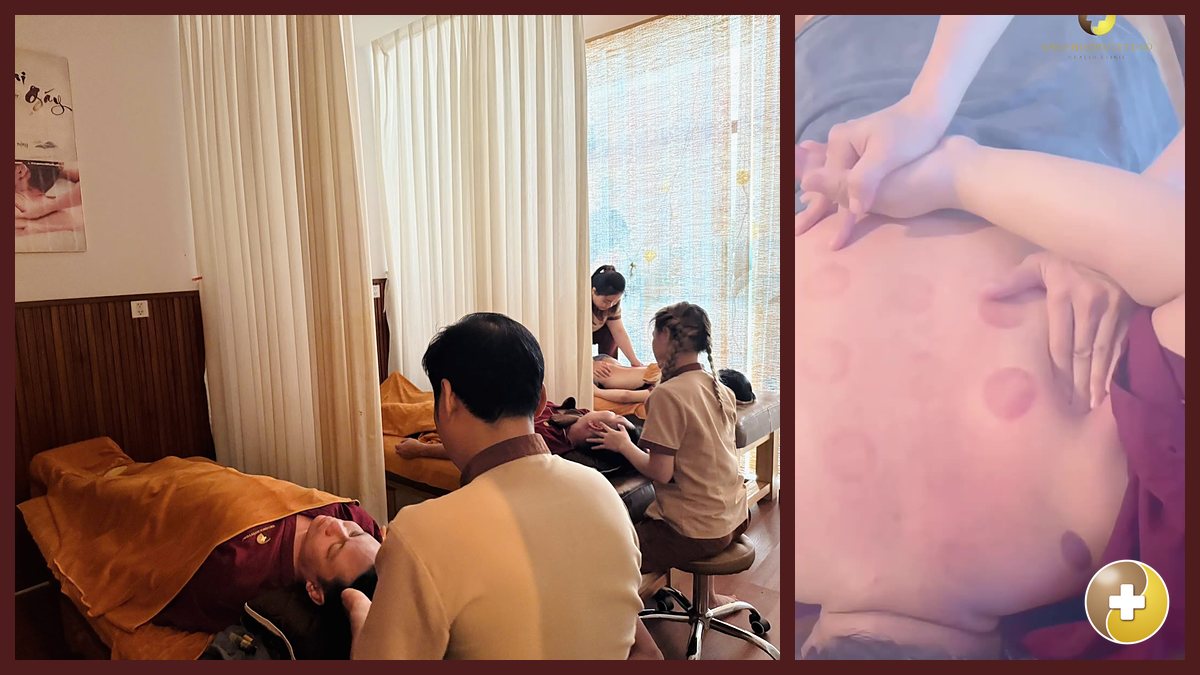
Quick answer: If you are used to the Russian banya, a Vietnamese massage feels different: no very hot steam room, birch venik or cold plunge, but a short herbal steam only when it suits you, and hands that read the spine, release muscles and press points. Heart conditions, unstable blood pressure or pregnancy: ask first. Huyệt Đạo Tống Gia has two branches in Ho Chi Minh City.
Want Lương Y Tống Văn Huynh’s team to read your spine and posture in person?
Used to the banya, now in Saigon: what does your body actually need?
By mid-November Moscow and St Petersburg hover around zero, Novosibirsk sees nights of minus ten and colder, and Vladivostok has its biting sea wind. For many Russians, and for Vietnamese who have lived in Russia for years, Saturday means the banya: a very hot, humid steam room, a birch or oak venik swept and tapped along the back, then a bucket of cold water, a cold pool or a roll in the snow, several rounds in a row with hot tea in between. You come home soft and sleep deeply.
Then you fly to Ho Chi Minh City. A direct flight from Moscow takes about ten hours, longer with a connection through the Gulf or China. The doors at Tân Sơn Nhất open onto 31–33°C and the damp tail of the rainy season. There is no banya around the corner and no snow to roll in. After a few days many visitors feel something is missing: stiff shoulders and back, a heavy body, shallow sleep, an urge to "sweat it out". The question we hear often: if I am used to the banya, how is a Vietnamese massage different, and should I even take a steam in this heat?
This article does not compare the banya with massage or herbal steam in medical terms and makes no claim about which is better for health. It explains why relaxation habits need to change in a hot, humid climate, what a Vietnamese-style session at Huyệt Đạo Tống Gia looks like, and who should avoid heat.
In Western physiology, a very hot room widens the blood vessels under the skin, the heart beats faster to carry blood to the surface, and sweat glands work hard; cold water then narrows those vessels quickly. In a cold country the steam room is one of the few places to get truly warm. In Saigon your body is already shedding heat all day, sweating a lot and easily running short of fluid, and humid air slows evaporation. Bodies typically need one to two weeks to adapt to heat. Add long, repeated rounds in a very hot room and many people end up dizzy and drained rather than light.
What the body usually needs here is not more heat but muscles that let go, a spine that is read and released where it is guarding, and moderate warmth for the areas chilled by air conditioning. For the wider picture of how a Vietnamese massage feels, read what Vietnamese massage feels like; for neck, back and lower back after the flight, see our main guide spine care after a long-haul flight.
Banya and a Vietnamese session at Tống Gia: how they differ
Neither replaces the other, and neither is "better". They are two relaxation habits born in two very different climates. The table compares the experience only, not medical effects:
| Aspect | The banya you know | A session at Huyệt Đạo Tống Gia |
|---|---|---|
| Heat | Very hot, humid steam room, several rounds | A short herbal steam at moderate warmth, added only when your condition suits it |
| Hot and cold | Cold bucket, cold pool, snow, ice hole | No cold plunge straight after; sit and settle, then a cool shower |
| Work on the muscles | Venik sweeps, taps and presses heat into the skin | Hands read the spine, release muscle layer by layer and press the right points |
| Starts with | Straight into the steam room | Questions, reading face and skin by Y Tướng Học, reading the spine by hand |
| Pressure | Depends on the bath attendant, often strong | Builds from light to firm, always checking with you, never rough |
| Afterwards | Hot tea, sometimes beer | Warm water and a rest; no steam after alcohol |
Banya lovers usually want two things: deep warmth and the sense that the muscles have been woken up. At Tống Gia the warmth comes from slow hands on a cold back and from a short steam or warm herbal compress; the "waking up" comes from muscle release and point pressure along the spine. There is no venik and no ice, but there is one step the banya does not have: reading each section of the spine by hand before working on it.
Common causes: why banya people feel stiff and heavy in Saigon
- Losing the weekly ritual: the banya tells your body "the week is over". Without it, shoulders keep guarding and the mind finds it hard to switch off.
- The long flight: ten hours or more in a seat, neck bent, lower back curved, calves barely working, feet heavy and ankles a little puffy.
- Time zones: Moscow is four hours behind Vietnam, Yekaterinburg two; Novosibirsk shares Vietnam's time; Vladivostok is three hours ahead.
- A sudden change of climate: from freezing streets and dry central heating to humid 32°C. Heavy sweating, easy dehydration, sluggishness.
- Air conditioning on your back: rooms kept cold all night; your body is hot but your back and nape are chilled, and you wake with a stiff neck.
- Trying to make up with heat: a long session in a hotel sauna followed by a cold shower, then dizziness and fatigue.
- Food, cold beer and busy days: late dinners, iced drinks, lots of walking.
Staying for the winter? Read wintering in Vietnam: a health routine.
Signs that come with it
- Nape, shoulders and the area between the shoulder blades hard as wood: common in people used to strong pressure, physical work or long flights.
- A cold lower back that feels soft to the touch, cold hands and feet despite the heat: typical after days in air conditioning.
- Thirst, dry lips, dark yellow urine, a dull headache: you are short of fluid; not a day to steam.
- A flushed face, feeling hot, a fast heartbeat at rest: you are "running hot", and extra heat tends to tire you.
- Dizziness or blackouts when standing up quickly: common right after a flight or a hot shower.
- Dry, itchy skin from heated Russian flats, then sticky with sweat in Saigon.
- Broken sleep, waking in the night: jet lag plus a lost ritual.
The Tống Gia curriculum stresses that discomfort shows in one place while its source often lies elsewhere. So a good session starts not with heat but with finding which zones run hot and which run cold.
Who should skip heat, and when to see a doctor
Banya people often tolerate heat well and enjoy it. In a hot, humid climate, the following should postpone steam or check first with the health professional who follows them:
- A heart condition, irregular rhythm, a stent or a pacemaker.
- Blood pressure that is not yet controlled, or low blood pressure with dizziness or fainting in hot showers; see massage with high blood pressure.
- Pregnancy: raising core temperature is not advised, especially in the first trimester.
- After drinking: some people drink beer in the banya; in Saigon, no steam after alcohol. Wait until the next day.
- Landing day, no sleep yet, thirst or fever.
- Monitored blood sugar with feet that sense heat poorly; frail older adults.
- Sunburnt, broken or inflamed skin; a very full or an empty stomach.
Do not steam or have a massage, and get medical help, if you notice:
- Chest pain or tightness, breathlessness, cold sweats, pain spreading to the jaw or left arm, fainting: call 115 (Vietnam's emergency number) at once.
- After a long flight, one calf swollen, painful, warm or red, or sudden breathlessness and chest pain on a deep breath: this can be a blood clot. Call 115 or go to an emergency room; no leg massage, no heat. See swollen legs after a long flight.
- Heat illness: high body temperature, hot red skin, confusion, slurred speech, vomiting, sweating that stops. Move somewhere cool and call 115.
- A drooping face, weakness on one side, difficulty speaking or a sudden severe headache: call 115.
- A sudden high fever with body aches, pain behind the eyes, a rash or bleeding gums: see a doctor early.
- Diarrhoea or vomiting that stops you keeping fluids down.
Long-lasting fatigue, unexplained weight loss or pale skin are reasons to get checked at a medical facility alongside any wellness care. Tống Gia does not read X-rays or MRI scans and does not draw up medical plans. If a health professional in Russia or Vietnam has told you what to use or avoid, keep to it, and bring any test results so the practitioner knows where to work gently. This is a wellness service, not medical care.
The Y Tướng Học view: sweat belongs to the Heart, the Lungs guard the skin, the Kidneys dislike cold
Y Tướng Học, the Vietnamese art of reading the face and body, is rooted in a tradition more than 2,000 years old: "what lies within shows on the outside". Lương Y Tống Văn Huynh, founder of Tống Gia, systematised it so practitioners look before they touch. These are Eastern wellness concepts used to guide care, not disease names, and not fortune-telling.
The Heart and sweat. In the Tống Gia curriculum the Heart belongs to Fire and to summer, and "sweat is the fluid of the Heart". In Russia a steam room is a rare chance to sweat in winter; in Saigon you already sweat all day, and long heat on top is seen as draining body fluids, leaving the Heart tired: palpitations, restlessness, poor sleep. Signs show on the tongue and complexion: a flushed or pale face, a red tongue tip.
The Lungs and the skin. The curriculum says the Lungs govern skin and body hair and hold protective qi at the surface; when they are weak you catch colds easily, sweat easily and have dry skin. After dry central heating and a dry cabin, skin and throat are already parched, and air conditioning makes the nape sensitive to drafts. The direction is to drink enough and keep the nape covered, not to force out sweat.
Complexion. The Tống Gia face-reading material describes skin that is pale yet moist and luminous, with red lips, as a sign that Heart and Lungs work well; skin that is chalky, bluish-white or sallow points to depleted blood, often with dizziness, shortness of breath and poor sleep. With fair skin, the practitioner looks at moisture and glow, not paleness.
The Kidneys and cold. The Kidneys show in the ears, hair, bones and lower back. Tống Gia's reference data links steam, cupping and foot soaks to the Kidneys and Spleen, with the area to check described as "soft, cold flesh, a cold back". The Mệnh môn point below the L2 spinous process is used to warm the Kidneys and support a cold, tired lower back. This is the person for whom a short steam or warm compress tends to feel right.
The Spleen and the Liver. The Spleen likes dryness and dislikes damp; Saigon's humidity, rich food and cold beer leave the body heavy and the lips pale. The Liver governs the sinews. The curriculum describes muscle "hard as wood, dry or tender to the touch" as stagnation linked to mental pressure, especially in the trapezius and the long muscles along the spine. People who love a hard venik often have this layer; it needs deep release, but gradually.
The curriculum's temperature rule sums it up: "if high, lower it; if low, raise it". Running hot means cool down and rest; running cold means moderate warmth.
Spinal segments and related nerve reflex zones
Anatomically, sweating and widening of skin vessels are controlled by the sympathetic nervous system, whose fibres leave the spinal cord between T1 and L2. The heart receives sympathetic fibres from roughly T1–T4, and pressure sensors in the carotid sinus, around C3–C4, help narrow vessels when you stand. Heat, dehydration and poor sleep make this system work harder, which is why people just off a flight often feel faint after a long hot session.
| Segment | Nerves / function (Western anatomy) | What banya people feel in the heat | Organ system (Eastern view) | Outer signs (Y Tướng Học) |
|---|---|---|---|---|
| C1–C4 | Suboccipital muscles, occipital nerves; carotid sinus near C3–C4 senses blood pressure | Heavy head, dizziness on standing after heat | Heart, Liver | Flushed or pale face, tight nape |
| C7–T1 (Đại Chùy) | Neck–chest junction, C8–T1 roots, start of the thoracic sympathetic chain | Sweaty nape, chills in air conditioning | Lungs (skin and hair) | Raised base of the neck, dry skin |
| T1–T5 (Phế du T3, Tâm du T5) | Sympathetic fibres to heart and lungs; rhomboids, upper erector muscles | Fast heartbeat in heat, tight band between the shoulder blades | Heart, Lungs | Red tongue tip, dull complexion; tight T3 |
| T11–T12 (Tỳ du, Vị du) | Sympathetic fibres to stomach and gut | Heaviness and bloating in humid weather | Spleen–Stomach | Pale lips, soft heavy muscles |
| L1–L2 (Thận du, Mệnh môn) | Lower end of the T1–L2 sympathetic outflow to sweat glands and skin vessels; lumbar muscles | Cold lower back, tired knees after air conditioning | Kidneys | Soft, cold flesh; cold back; thin, dull ears |
| Along T1–L5 (long back muscles) | Erector spinae, supplied by the posterior branches of the spinal nerves | A back like a plank; only strong pressure feels "enough" | Liver (sinews) | Muscle hard as wood, tender |
The table lists related zones for the practitioner to examine by hand, not causes. Hands read four things: skin temperature, the muscle layer, the shape of each vertebra and sensation, comparing left with right. Warmer, tight, tender zones are worked; cooler zones are warmed gently rather than pressed hard.
Want Lương Y Tống Văn Huynh’s team to read your spine and posture in person?
How Tống Gia helps you rebalance: the session, services, prices and the trip from the airport
Tống Gia is a Vietnamese Eastern wellness method built by Lương Y Tống Văn Huynh, who has over 13 years in Eastern wellness, Y Tướng Học and spinal nerve reflex balancing. The method keeps "three nos": nothing to swallow or inject, no needles, no rough force. Herbs in the steam or compress act locally through the skin, keeping you warm and relaxed. A session usually runs:
- Questions and screening: where you flew from, when you landed, how you have slept, alcohol yesterday, heart or blood-pressure issues, pregnancy, fever; how often you go to the banya and what pressure you like. Warning signs mean no session and advice to get checked.
- Observation: complexion, skin moisture, lips, tongue tip, sweat on the forehead and nape, posture and breathing.
- Reading the spine by hand from C1 to L5 for temperature, muscle layer, vertebral shape and sensation.
- Muscle release: skull base, trapezius, shoulder blades, long back muscles and lower back, building from light to firm. Say "stronger" if you are used to a hard venik; pressure rises with the muscle's response. See is strong massage better?
- Pressing the right points: Phong Trì at the nape; Đại Chùy, Phế du, Tâm du, Thận du and Mệnh môn on the back; Nội quan at the wrist for mild palpitations; Dũng tuyền on the sole to settle sleep. When skin over a key point turns from dry to slightly moist, the practitioner stops.
- Herbal steam or compress when it suits: short, until warm and lightly sweating; no repeated rounds, no cold plunge. If steam does not suit you, a warm herbal compress on the lower back or knees.
- Home care: drinking by urine colour, keeping the nape covered in air conditioning, sleeping on Vietnam time.
A typical picture: someone three nights after arriving from Moscow, sleeping again, not thirsty, but "missing the banya", with an upper back like a plank and a cold lower back from sleeping under air conditioning. The practitioner finds T3 and the long back muscles hot and tight, L1–L2 cool and soft; the upper back is released with rising pressure, Thận du and Mệnh môn are worked until warm, and a short steam closes the session. During release you usually feel a satisfying ache, close to the "woken up" feeling banya lovers enjoy; afterwards many people feel lighter and sleep more easily, while some feel mild muscle soreness for a day or two. Everyone responds differently; Tống Gia supports balance and promises no instant result.
Services that suit (see prices):
- Eastern (Đông y) massage, 90 min: 550,000 VND (about US$21 / €18). For people used to a long banya evening who want slow, thorough work from nape to feet.
- Herbal steam: 120,000 VND (about US$4.60 / €4). An add-on after massage for a cold back or air-con chills; read herbal steam after arriving in the tropics.
- Herbal compress: 130,000 VND (about US$5 / €4.30). Local warmth for the lower back or knees when hot steam does not suit you.
Exchange rates are for reference (US$1 ≈ 26,000 VND, €1 ≈ 30,000 VND); payment is in VND. More at cupping, gua sha and herbal steam.
From Tân Sơn Nhất airport: the District 12 branch (225 Dương Thị Mười, Phường Tân Chánh Hiệp, District 12) lies north of the airport and is usually a shorter drive, depending on traffic. The Vinhomes Grand Park branch (Căn T16-21 khu Manhattan, Phường Long Bình, TP. Thủ Đức, the Manhattan zone of Vinhomes Grand Park, Thủ Đức City) is further and takes longer at rush hour. Rest, drink and sleep a night before your first visit; for a stop on the way from the airport, see massage near Tân Sơn Nhất airport.
A suggested plan for your stay, and self-care
| When | What the body needs | What to do |
|---|---|---|
| Last week in Russia | Less accumulated strain | Banya with fewer rounds, no alcohol; sleep well before the flight |
| Flight day | Movement for neck, back and calves | Sip water, go easy on alcohol and coffee, walk every 1–2 hours, circle your ankles |
| Day 1 (landing) | Fluids and local-time sleep | No steam or long hot showers; lukewarm shower, light meal, early night |
| Days 2–3 | Release the back and nape | 90-minute Đông y massage; skip steam if still thirsty, dizzy or flushed |
| Days 4–7 | Moderate warmth for air-con chill | A session with a short herbal steam or compress; water before and after |
| Wintering | A steady rhythm | One session a week; no steam on days you drink |
| 1–2 days before flying back | Getting ready for the cold | A gentle neck and back session; read preparing your body before a long flight |
- Drink by urine colour: pale yellow is enough; add a little salt or coconut water when sweating a lot.
- Lukewarm evening showers instead of very hot ones; a warm foot soak for 15–20 minutes if your feet are cold from air conditioning.
- No icy water straight after heat: sit, settle, stand up slowly.
- Air conditioning at about 26–28°C, vents away from your back and nape; dry off sweat before entering a cold room.
- Slow 4–6 breathing before sleep for 5–10 minutes, and avoid the midday sun.
Booking from abroad
You can book from Moscow, St Petersburg, Novosibirsk or Vladivostok. Call, Zalo or WhatsApp +84 888 264 559 (0888 264 559 in Vietnam), or book online. Send your landing date and time at Tân Sơn Nhất, where you feel stiff, whether you want herbal steam or massage only, the pressure you like, any heart, blood-pressure or pregnancy issues, and your preferred branch. More tips in booking a massage in Saigon from abroad.
- District 12 branch: 225 Dương Thị Mười, Phường Tân Chánh Hiệp, HCMC. Open 8:00–19:00 daily.
- Vinhomes Grand Park branch (District 9): Căn T16-21 khu Manhattan, Vinhomes Grand Park, Phường Long Bình, TP. Thủ Đức. Open 9:00–20:00 daily.
Moscow is four hours behind: a message at 8 pm Moscow time arrives at midnight in Saigon and is answered during opening hours the next morning. Tết and the winter season fill up, so write early. Genuine customer reviews are on each branch's Google Maps page.
Visit us
- Đông Y Huyệt Đạo Tống Gia Quận 12 (District 12)
225 Dương Thị Mười, Phường Tân Chánh Hiệp, Quận 12, HCMC · 8:00–19:00 daily · 0888 264 559 · Directions on Google Maps - Đông Y Huyệt Đạo Tống Gia Quận 9 (Vinhomes Grand Park, District 9)
Căn T16-21 khu Manhattan, Vinhomes Grand Park, Phường Long Bình, TP. Thủ Đức, HCMC · 9:00–20:00 daily · 0888 264 559 · Directions on Google Maps
Map of our two branches
Want Lương Y Tống Văn Huynh’s team to read your spine and posture in person?
What guests say on Google Maps
“Lovely staff, cheerful and warm to chat with – do drop by and try it.” (translated from a Vietnamese review)
— Mỹ T., Google Maps review · Vinhomes Grand Park branch (District 9) · 2025 · See on Google Maps
Quoted from public reviews, shortened where marked (…). Experiences vary from person to person; reviews are not a substitute for seeing a doctor when something feels wrong.
Related guides for your trip
FAQ
I'm used to the Russian banya. How is a Vietnamese massage different? At Huyệt Đạo Tống Gia there is no very hot steam room, venik or cold plunge. The session starts with observation and reading the spine by hand, then muscle release and point pressure; a short herbal steam is added only when your condition suits it. This compares the experience, not medical effects.
I go to the banya every week in Moscow. Can I take a herbal steam in Saigon? Usually yes, once you have slept a night or two, are not thirsty, have no fever and have not been drinking. Keep it short, warm and lightly sweating, with no repeated rounds, and drink warm water before and after. With a heart condition, unstable blood pressure or pregnancy, ask your health professional first.
Can I jump into cold water after the steam, like in the banya? In hot, humid Saigon, avoid icy water straight after steam. Sit and settle for a while, stand up slowly, drink warm water, then take a cool shower. People just off a flight, dehydrated or with low blood pressure can feel faint with sudden hot–cold switches.
I like a hard venik. Will Vietnamese massage feel too gentle? Not necessarily. Pressure builds from light to firm in response to your muscles, with regular check-ins and never rough force. Tight, wood-hard bands along the back are released deeply but gradually; cold, soft areas are warmed. Mention the pressure you like when you book.
Who should avoid hot steam in Ho Chi Minh City? People with heart conditions or a stent, uncontrolled high or low blood pressure, pregnancy, after alcohol, with fever or thirst, on landing day, with poor heat sensation in the feet, or with sunburnt or broken skin. Chest pain, breathlessness or cold sweats: call 115 at once.
How much do massage and herbal steam cost at Tống Gia? A 90-minute Đông y massage is 550,000 VND (about US$21 / €18), herbal steam 120,000 VND and a herbal compress 130,000 VND. Rates are for reference; payment is in VND. Message +84 888 264 559 on Zalo or WhatsApp with your landing time and preferred branch.
Author: Lương Y Tống Văn Huynh – founder of Huyệt Đạo Tống Gia, a master of traditional Vietnamese wellness with over 13 years in Eastern wellness care, Y Tướng Học (face reading) and spinal nerve-reflex balancing massage.
Updated: 2026-11-18
Related guides
- Can you get a massage with sensitive skin or an essential oil allergy? What to say and how to test safely
- Can you get a massage while on blood thinners? How light it should be, what to avoid and when to get checked
- Women getting a massage alone in Vietnam: choosing a safe, private place and a session at Tong Gia
- Used to the Russian banya: what Vietnamese massage offers in Saigon, and who should skip the heat
- Should you get a massage with a cold or fever? When to postpone and when a gentle session is fine
- Can you get a massage during your period? Which areas are fine and which to skip on a trip to Vietnam
This is a wellness service, not medical care.