
Is a strong massage better? How to choose the right pressure, how to ask for it, and when to keep it gentle
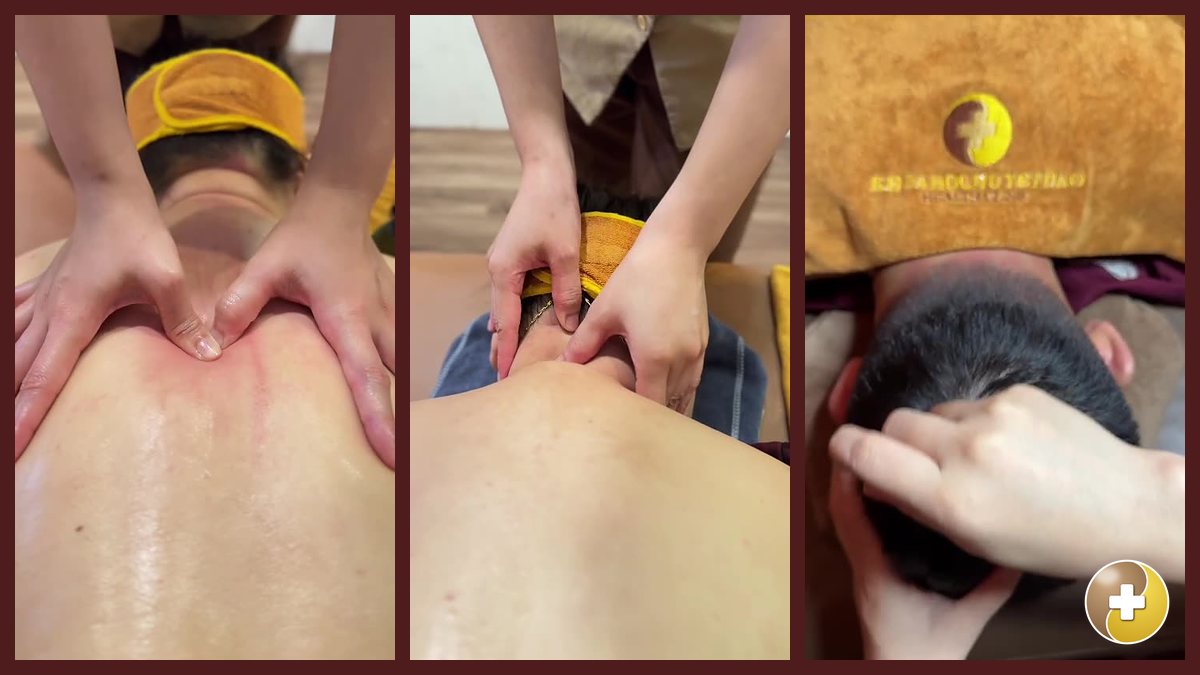
Quick answer: No, stronger is not automatically better. Pressure beyond your limit makes muscles brace, can bruise you; the useful level feels "achy but pleasant" while you keep breathing easily. At Huyệt Đạo Tong Gia in District 12 and Vinhomes Grand Park, Ho Chi Minh City, pressure builds through 5 levels and you are asked as it goes.
Want Lương Y Tống Văn Huynh’s team to read your spine and posture in person?
Is a strong massage better? The short answer
November is when many Vietnamese families from Russia and Kazakhstan start heading home for the winter, and when long-haul travellers from colder countries arrive in Ho Chi Minh City. Moscow, Novosibirsk and Yekaterinburg have had their first snow; Almaty and Astana are getting dry, biting cold. A direct flight from Moscow to Saigon takes roughly 9 to 10 hours, longer with a connection. At the same time, people who live in Nha Trang or Phan Thiết come down to the city to sort out paperwork, meet relatives at Tân Sơn Nhất airport, or escape the heavy end-of-year rains on the central coast. Many of them grew up with classic Russian or sports massage and the banya, and on a Vietnamese massage table their favourite phrase is "harder, harder". So the question comes up again and again: is a strong massage better, and how do you choose the right pressure?
The short answer: more pressure is not more benefit. The right pressure is the level at which your muscles can still let go, your breathing stays even, and the tight spot feels achy but pleasant rather than sharp, burning or tingling. The idea that "the more it hurts, the more it helps" is one of the most common misunderstandings about massage. Pressure beyond your limit makes the muscle tighten to protect itself, you start holding your breath, and the next day you may have bruises and feel sorer than before.
From a Western anatomy point of view, massage is mechanical work on skin, fascia, muscle, tendon and ligament. Pressure stimulates mechanoreceptors in skin and muscle, and the signals travel along nerves to the spinal cord and brain. When the input is steady and comfortable, the autonomic nervous system shifts towards its rest mode: heart rate slows, breathing deepens, muscles release and local circulation improves. When pressure crosses your threshold, the brain reads it as a threat. The sympathetic side switches on, heart rate and blood pressure rise, and muscle spindles trigger a protective contraction. The hands are now pressing on a muscle that is bracing against them. Small capillaries under the skin can also break, which is where bruises come from.
This page is for Vietnamese families from Russia and Kazakhstan, for Russian speakers living in Saigon, Nha Trang and Phan Thiết, and for anyone flying in on a long-haul route. If this is your first massage in Vietnam, start with first massage in Vietnam: what to know. Here we focus on pressure: why people like it strong, how good soreness differs from sharp pain, the five pressure levels in the Tong Gia programme, the words to ask for what you want, and when strong pressure is a bad idea.
Why people love deep pressure, and why too much backfires
- Habit and training culture: in Russia, massage is often linked with sport, injury recovery and big, heavy hands. Many people grew up believing a massage has to hurt to count.
- The early rush: hard pressure releases the body's own pain-dampening chemicals, so a few minutes in you feel floaty. It is easy to read that as proof that harder works, even while the muscle underneath is still guarding.
- Genuinely stiff muscles: 9 to 10 hours in a plane seat after a winter of heavy coats and hunched shoulders leaves the neck and trapezius tight, and everyone wants it "crushed out".
- A sudden climate change: from below zero to above 30°C, in and out of air conditioning. A tired, slightly dehydrated body bruises more easily, so pressure that feels fine at home can be too much here.
- Not speaking up: Vietnamese people are often too polite to say "that hurts", and visitors do not know how, so they grit their teeth until the end.
Too much pressure backfires because braced muscles do not release, deep compression bruises and leaves soreness for a day or two, and holding your breath with a racing heart leaves you drained rather than light. The Tong Gia programme sets out three "no" rules, one of which is no rough force: no hard mechanical kneading and no violent point pressing. Your spine takes most of the strain of a long journey; the main guide is spine care after a long-haul flight.
Good soreness versus sharp pain: signs to watch for
- Pleasant ache: broad, dull, deep. You keep breathing evenly, the muscle softens under the hands and the skin warms. The Tong Gia programme calls this "creating a wave of sensation": soft, rhythmic pressure that produces a pleasant ache and invites the muscle to contract and release so the body can adjust itself.
- Sharp or burning pain: pinpoint and intense, making you flinch or hold your breath. Ask for less pressure straight away.
- Tingling or pins and needles running into the arm or leg when the neck or lower back is pressed: the hands may be close to a nerve root. Stop and change area.
- Dizziness, nausea, cold sweat or a pounding heart during the session: stop, sit up slowly, drink water.
- Afterwards: mild soreness like after light exercise is common and fades in a day or two. Spreading bruises, increasing pain or a hot, swollen area mean next time must be much lighter; with fever or strong pain, get checked.
A simple tool is a 0 to 10 scale. The right level is one where you still breathe easily and would like it kept as it is. Clenched fists, a held breath or a grimace mean the pressure is past your limit for that day, even if you tolerate it at home.
When to see a doctor, and when strong pressure is a bad idea
Skip massage and seek medical care first if you have:
- Chest pain or pressure, shortness of breath, sweating, pain spreading to the neck, jaw or left arm: call 115 (Vietnam's emergency number) immediately.
- A drooping face, slurred speech, weakness on one side or sudden blurred vision: call 115.
- One swollen leg with a painful, tight, warm or red calf after a long flight: this can be a deep vein clot. See a doctor straight away and do not have the leg massaged; with breathlessness or chest pain, call 115.
- Back pain with numbness down the leg, leg weakness, or bladder or bowel changes.
- A recent fall or motorbike accident involving the neck, back or shoulder.
- Fever, pain worse at night, unexplained weight loss or very pale skin: get checked by a healthcare provider alongside any wellness care.
Keep the pressure light, even if you want it strong, if you:
- Have high blood pressure that is not well controlled: pain pushes it higher. Measure first; see massage with high blood pressure.
- Take blood thinners as prescribed: the Tong Gia programme states light pressure only, avoid bruised areas, no strong pressing.
- Are older, have osteoporosis or thin skin: ribs and vertebrae are more fragile and deep back work can do harm.
- Have just landed after a long-haul flight: keep it light on day one and avoid deep calf work.
- Have heart disease, a stent or pacemaker, kidney disease, diabetes, varicose veins, recent surgery or are pregnant: the programme says ask carefully, work gently and follow your healthcare provider's advice.
- Have been drinking or are sunburnt after a few days on the beach in Nha Trang or Mũi Né: wait for another day.
This is a wellness service, not medical care. Tong Gia does not read X-rays, MRI scans or lab results and does not draw up care plans in place of medical providers. If you have been told at home to avoid an area, mention it when you book.
The face-reading view: the same pressure lands differently on different bodies
Y Tướng Học (Vietnamese face and body reading for wellness) has roots going back more than 2,000 years and was systematised into a practical method by Lương Y Tống Văn Huynh. Its core idea is "the outer form reflects the inner organs". It is observation to guide care, not fortune telling. For pressure, it explains why two people who both say "harder" may be given two different levels. According to the Tong Gia programme:
- The Liver (Can) governs the sinews: long stress and a winter of hunching tighten tendons and muscles. Signs: a frequently knitted brow, a vertical line between the eyebrows, hard shoulders. Contracted muscle needs steady, sustained pressure, not sudden force.
- The Spleen (Tỳ) governs the flesh: a square, full "Điền" face often comes with thick back muscles that lock into broad plates around T11–T12. Thick, stiff, immobile tissue suits pushing and rotating techniques, so deeper pressure can work here, built up gradually.
- Depleted qi and blood: a long, narrow, bony "Mục" face often comes with thin, slack muscles along the spine. The programme prescribes tonifying techniques: vibration and light gliding. For these bodies, more pressure means more fatigue.
- The Kidneys (Thận) govern the bones, and the lower back is their "house": a round "Viên" face often has a cold, soft lower back; thin, dark ears and dry hair are Kidney signs. Cold, hollow areas need warming, not hard pressing.
- The Heart (Tâm) governs the blood vessels: palpitations, jet-lag insomnia, a pale or flushed face. Painful pressure speeds the heart further, so moderate pressure and a slow rhythm suit better.
Face reading only suggests where to check first. The hands on the spine decide the pressure.
Vertebrae and nerve reflex zones: where deep pressure fits and where it does not
In the Tong Gia programme the spine has 33 vertebrae: 7 cervical (C1–C7) serving the head, face, neck and arms; 12 thoracic (T1–T12, written D1–D12 in Vietnamese) linked to circulation, breathing and digestion; 5 lumbar (L1–L5) linked to digestion, kidneys, urinary and reproductive organs and legs; sacrum and coccyx linked to elimination and the pelvis. Nerve roots leave between the vertebrae, which is why pressure close to the spine has to be precise rather than heavy. The programme also separates "excited" zones (warm skin, tight muscle, rising tenderness), which are worked, from "inhibited" zones (skin cooler than normal), which are not pressed directly.
| Vertebrae | Nerves / function (anatomy) | Typical signs and pressure note | Organ (Eastern view) | Outer signs (face reading) |
|---|---|---|---|---|
| C1–C2, base of skull | Upper cervical roots; suboccipital muscles; close to vessels supplying the brain | Heavy head after sleeping upright on the plane. Moderate only, no cracking or twisting | Heart, Liver, Kidneys | "Giáp" face: warm upper neck; knitted brow |
| C3–C7 | Cervical and brachial plexus; neck, shoulders, arms, hands | Stiff neck, raised shoulders. Tingling into the arm means less pressure at once | Liver (sinews) | Hard, uneven shoulders |
| T1–T4 (T3: Lung point) | Upper thoracic nerves; heart, lungs, muscles between the shoulder blades | Ache between the shoulder blades, shallow breathing. Older ribs are fragile: medium pressure, no full body weight | Lungs, Heart | "Đồng" face; dry skin and nose |
| T7–T9 | Mid thoracic nerves; liver, gallbladder, stomach area | Long back muscles contract under stress; steady, even pressure | Liver – Spleen/Stomach | "Thân" face; line between the brows |
| T11–T12 | Lower thoracic nerves; upper abdominal digestion | Thick back muscle locked in plates: usually tolerates deeper, gradual pressure | Spleen/Stomach | "Điền" face; pale lips |
| L1–L3 (Kidney point, Mệnh môn at L2) | Upper lumbar roots; kidneys, bladder, hip flexors | Cold, soft, dull-aching lower back: warm it, do not press hard | Kidneys | "Viên" face; thin, dark ears |
| L4–S1 | Roots of the sciatic nerve; buttocks, thighs, calves | Stiff lower back and glutes after sitting. Sharp pain down the leg means stop | Kidneys – Liver | "Do" face: very thick lower back and hips |
The table shows links used to choose areas and pressure, not names of illnesses.
Tong Gia's five pressure levels and how to ask for the pressure you want
The fifth of the eight principles in the Tong Gia programme is setting the force, graded from light to strong in five levels. It sits alongside two others: work a key point until the skin there turns from dry to slightly moist, then stop; and follow skin temperature, cooling what is hot and warming what is cold. So pressure is not one fixed number, it is chosen area by area:
| Level | Where the force comes from | Usual feeling | Typical use |
|---|---|---|---|
| 1 | One finger | Light, precise, searching | Reading the spine, base of the skull, close to the vertebrae, older guests |
| 2 | Whole hand | Warm, broad, easy to relax into | Opening the session, cold areas, just after a flight |
| 3 | Bent arm | Medium depth, achy but pleasant | Tight trapezius and spinal muscles |
| 4 | Straight arm | Deep, clear pressure on stiff spots | Thick lower back and glutes once you have relaxed |
| 5 | Whole body weight | Very deep | Only thick muscle in people who tolerate it; never with the cautions above |
Pressure always climbs from the bottom. Guests used to strong massage often want to start at level 4 or 5, but on cold, guarding muscle that only adds tension. Once the muscle is warm and soft, depth becomes useful.
| Say in Vietnamese | Meaning | When |
|---|---|---|
| Nhẹ thôi ạ. | Lighter, please. | You are bracing or holding your breath |
| Mạnh hơn một chút ạ. | A little firmer, please. | The muscle has softened, you want more depth |
| Vừa rồi ạ. | That's just right. | Keep it as it is |
| Chỗ này đau nhói. | That's a sharp pain. | Pinpoint, burning pain |
| Tôi thấy tê xuống tay / chân. | Tingling down my arm / leg. | Pins and needles when pressed |
| Đừng bấm chỗ này ạ. | Please don't press here. | Old surgery, injury, varicose veins |
Simple English such as "softer", "harder", "stop" also works at reception. If you are comparing styles, read Vietnamese vs Thai massage.
Want Lương Y Tống Văn Huynh’s team to read your spine and posture in person?
A session at Huyệt Đạo Tong Gia: steps, services, prices and getting there from the airport
Huyệt Đạo Tong Gia was founded by Lương Y Tống Văn Huynh, a traditional practitioner with over 13 years in Vietnamese Eastern wellness, face reading and spinal nerve reflex balancing. It is a Vietnamese method he built himself, and you are welcome to try it while you are in Ho Chi Minh City. A session has five steps aimed at helping each spinal area and its related organ function come back into balance:
- Questions and observation: your flight, the massage style you are used to, the pressure you like, blood pressure, blood thinners; then face colour, lips, ears, posture, shoulder height.
- Reading the spine by hand: fingertip pads press, glide and roll from C1 to S1, reading skin temperature, the muscle layer, the shape of each vertebra and your response, comparing left and right. This uses level 1.
- Releasing muscle: neck, trapezius, spinal erectors, lower back and glutes, with pressure climbing through the levels and checked with you several times.
- Pressing the right points: around the base of the skull, around T3, the Kidney points and Mệnh môn when the lower back is cold; stopping when the skin over the key point turns from dry to slightly moist.
- Self-care advice: neck stretches, keeping the lower back warm, and what pressure to ask for next time.
Prices are in VND; conversions use a reference rate (1 USD ≈ 26,000 VND, 1 EUR ≈ 30,000 VND) and payment is in VND:
| Service | Length | Price (VND) | ≈ USD / EUR (reference) | Good for |
|---|---|---|---|---|
| Eastern-style massage (Massage Đông y) | 60 / 90 min | 450,000 / 550,000 | ≈ 17 USD, ≈ 15 EUR / ≈ 21 USD, ≈ 18 EUR | All-over tiredness, trying the pressure scale from light to deep |
| Neck-shoulder / lower back care | 60 / 90 min | 550,000 (first visit 399,000) / 750,000 | ≈ 21 USD, ≈ 18 EUR (first visit ≈ 15 USD, ≈ 13 EUR) / ≈ 29 USD, ≈ 25 EUR | Stiff neck after winter and the flight, tired lower back |
| Full-body care | 120 min | 950,000 | ≈ 37 USD, ≈ 32 EUR | Longer stays, enough time to build pressure slowly area by area |
Other services are on the price list.
From Tân Sơn Nhất airport: the District 12 branch (225 Dương Thị Mười, Tân Chánh Hiệp ward) lies north of the airport and is usually the shorter drive, handy after meeting relatives or flying in from Nha Trang. The Vinhomes Grand Park branch (Unit T16-21, Manhattan zone, Long Bình ward, Thủ Đức City) is on the east side, a longer drive, and suits people staying in Thủ Đức or arriving by road from Phan Thiết. Driving time depends heavily on the hour and rush-hour traffic; see massage near Tân Sơn Nhất airport.
A typical session for someone used to strong massage: the guest has just flown in from Moscow and says "strong, please". The practitioner asks about blood pressure and blood thinners, then notices raised shoulders, a knitted brow and a broad, full face. On the spine, C5–C7 are warm and tight, there is a thick muscle plate around T11–T12 and L2 feels cool. The work starts with the whole hand to warm up, moves to the bent arm on the trapezius, and only after the muscle softens uses the straight arm on the thick area at T11–T12. The cool lower back is only warmed, not pressed deeply. At the end the guest hears that next time the deeper work can start a little earlier, if they have slept well.
What you may feel: a pleasant ache on tight spots, a back that slowly warms, slower breathing. Afterwards the neck may turn more easily and sleep may come sooner; some people feel mildly sore the next day. Everyone responds differently. Tong Gia supports the body to rebalance and does not promise that all tension disappears in one session.
Suggested plan for your stay and daily self-care
| When | What to do | Suggested pressure |
|---|---|---|
| Arrival day | Drink water, eat light, walk slowly, sleep on Vietnam time | Rest, or a light session at levels 1–2 |
| Days 2–3 | Morning light, avoid midday sun, less iced drinks | Main session: 90-minute massage or neck-shoulder / lower back care, up to level 3, level 4 on thick muscle if it feels good |
| Mid-trip, after beach days | Avoid sunburn, catch up on sleep | A medium session; skip sunburnt skin |
| Wintering in Saigon | Morning walks, regular sleep | One steady session a week; see wintering in Vietnam |
| A few days before flying back | Pack early, avoid heavy lifting | A light session before the flight |
- Morning neck stretch: tilt your head to each side for 20–30 seconds, roll the shoulders back 10 times; never crack your own neck.
- Warm the lower back: rub your palms hot and stroke both sides of the lower back 50–100 times before bed.
- Self-press gently: fingertips on the shoulders at a pleasant ache; no hard tools on the spine.
- Drink enough water after a massage and on hot days.
- Note the pressure that suited you so you can say it at the start next time. As the programme puts it, do not wait for pain before you start caring for your body.
Booking from abroad
You can book from Russia, Kazakhstan, Nha Trang or Phan Thiết, or ask family in the city to book for you. Message Zalo or WhatsApp +84 888 264 559 (0888 264 559 inside Vietnam) or use the booking page. Include your landing date and time at Tân Sơn Nhất (Vietnam time), where you feel tired, the pressure you are used to, health conditions and any blood thinners, which branch you prefer, and the date and time you would like.
Opening hours: District 12 branch 8:00–19:00 daily; Vinhomes Grand Park branch 9:00–20:00 daily. Vietnam is 4 hours ahead of Moscow and 2 hours ahead of Almaty and Astana; always give your booking time in Vietnam time. Step by step: booking a massage in Saigon from abroad.
- District 12 branch: 225 Dương Thị Mười, Tân Chánh Hiệp ward. 8:00–19:00 daily.
- Vinhomes Grand Park branch, District 9: Unit T16-21, Manhattan zone, Long Bình ward, Thủ Đức City. 9:00–20:00 daily.
Both branches have genuine reviews on Google Maps. The right pressure is not measured by how much pain you can take but by whether your body lets go. If you are used to strong massage, try one session where the pressure climbs from a single finger, is checked with you and goes where it is needed, then compare how you feel the next day.
Visit us
- Đông Y Huyệt Đạo Tống Gia Quận 12 (District 12)
225 Dương Thị Mười, Phường Tân Chánh Hiệp, Quận 12, HCMC · 8:00–19:00 daily · 0888 264 559 · Directions on Google Maps - Đông Y Huyệt Đạo Tống Gia Quận 9 (Vinhomes Grand Park, District 9)
Căn T16-21 khu Manhattan, Vinhomes Grand Park, Phường Long Bình, TP. Thủ Đức, HCMC · 9:00–20:00 daily · 0888 264 559 · Directions on Google Maps
Map of our two branches
Want Lương Y Tống Văn Huynh’s team to read your spine and posture in person?
What guests say on Google Maps
“Very good service. Excellent technician skills. Elegant, tidy facilities.” (translated from a Vietnamese review)
— Tuyết Mai T., Google Maps review · Vinhomes Grand Park branch (District 9) · 2024 · See on Google Maps
“Very good service. Warm, lovely, professional staff.” (translated from a Vietnamese review)
— Phương L., Google Maps review · Vinhomes Grand Park branch (District 9) · 2025 · See on Google Maps
Quoted from public reviews, shortened where marked (…). Experiences vary from person to person; reviews are not a substitute for seeing a doctor when something feels wrong.
Related guides for your trip
FAQ
Is a strong massage better? Not automatically. Pressure beyond your limit makes muscles brace, can bruise and leave you sorer. The useful level is where you breathe easily, the muscle softens and the ache feels pleasant. At Tong Gia pressure builds through five levels and is checked with you during the session.
I bruised after a massage. Is that normal? A bruise means small vessels under the skin broke from pressure that was too deep. Small ones usually fade in a few days, but ask for lighter work next time. Large spreading bruises, heat, swelling or increasing pain, or bruising while on blood thinners, should be checked by a healthcare provider.
How do I tell good soreness from bad pain during a massage? Good soreness is broad and dull, you keep breathing evenly and the muscle softens. Bad pain is sharp and pinpoint and makes you flinch or hold your breath. Tingling into an arm or leg is a stop signal too. Say so straight away.
I live in Nha Trang and like firm massage. How do I ask for it in Saigon? Use short phrases: "Mạnh hơn một chút ạ" (a little firmer), "Nhẹ thôi ạ" (lighter), "Vừa rồi ạ" (just right). Simple English works too. At Tong Gia the practitioner checks pressure several times, and you can note your preference when booking on WhatsApp +84 888 264 559.
Can I have a massage if I take blood thinners? Usually yes, but only with light pressure, avoiding bruised areas and no strong pressing, as the Tong Gia programme sets out. Ask the healthcare provider who prescribed them first and mention it when you book.
Should I get a deep massage right after a flight from Moscow? Better not. On day one the body is tired and slightly dehydrated and leg circulation is slow, so keep it light and skip deep calf work. One swollen, painful, warm leg, or chest pain and breathlessness, means see a doctor first; call 115 for chest pain or breathlessness.
Author: Lương Y Tống Văn Huynh – founder of Huyệt Đạo Tống Gia, a master of traditional Vietnamese wellness with over 13 years in Eastern wellness care, Y Tướng Học (face reading) and spinal nerve-reflex balancing massage.
Updated: 2026-11-17
Related guides
- Booking a massage for a group during Tet: how to plan sessions for family, relatives and friends in Saigon
- Booking a massage together as a couple in Ho Chi Minh City: same time slot, a different focus for each person
- Vietnamese cupping vs cupping abroad: the marks, who should skip it, and how a Tong Gia session works
- Massage with osteoporosis: is it safe on a trip to Vietnam, what pressure is right and what to avoid
- Is a strong massage better? How to choose the right pressure, how to ask for it, and when to keep it gentle
- Massage after slipping on ice: is it safe, what has to wait, and when to get checked first
This is a wellness service, not medical care.