
Herbal hair wash after a long-haul flight: is it a good idea, what time of day, and who should wait
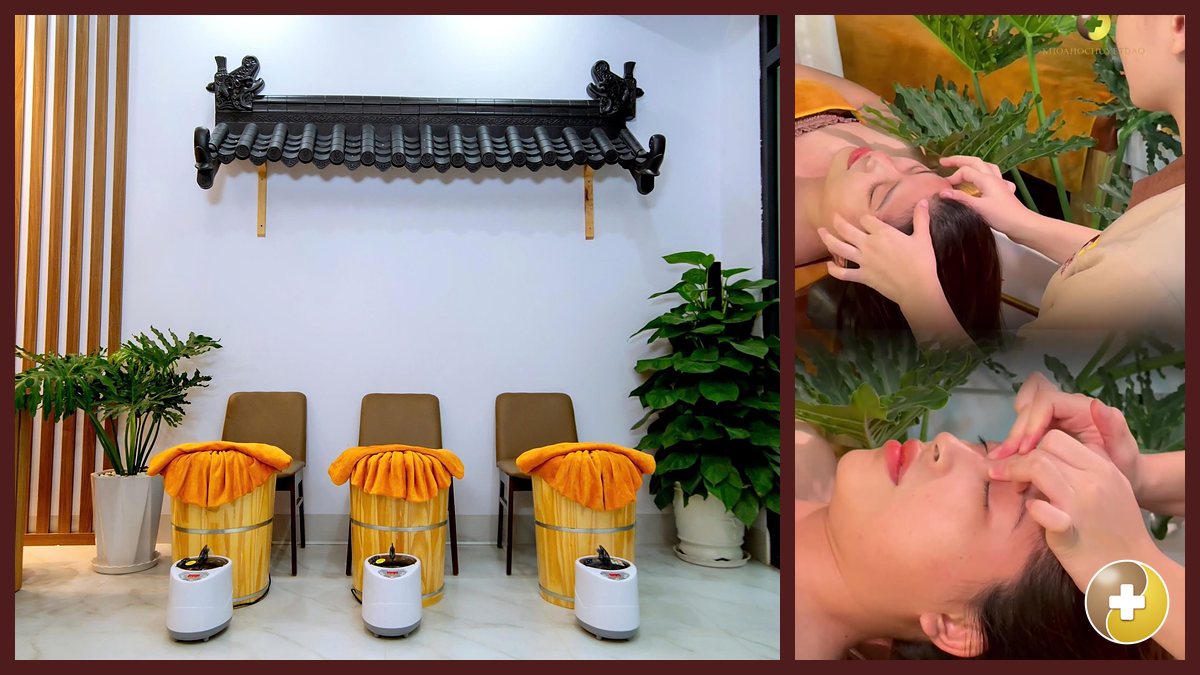
Quick answer: A Vietnamese herbal hair wash is a gentle first-day option after a long-haul flight: it cleans greasy roots, soothes a scalp dried out by cabin air and loosens a stiff neck. Go in the afternoon, finish a few hours before bed, and postpone it if you have a fever or a severe headache. Tong Gia Acupoint Wellness, District 12 and Thu Duc, Ho Chi Minh City.
Want Lương Y Tống Văn Huynh’s team to read your spine and posture in person?
What is a herbal hair wash, and is it a good idea on your first day?
After 12 to 20 hours in the air, most people walking out of Tân Sơn Nhất airport carry the same feeling in their head. The roots are greasy and flat, yet the scalp feels tight, dry and a little itchy, sometimes with tiny flakes along the hairline. The head feels heavy, as if you were wearing a hat one size too small. The back of the neck is stiff, the eyes are dry, and jet lag leaves everything slightly blurred. Many travellers want one thing: a proper hair wash, then sleep. The common question is whether a Vietnamese herbal hair wash (gội đầu dưỡng sinh) is sensible on day one, or better left for later in the trip.
A herbal hair wash is done lying on your back on a washing bed. The scalp is washed with warm water infused with herbs, combined with acupressure on the head, face and neck and a massage of the neck and shoulders, with moderate pressure. The short answer: for a healthy traveller with no warning signs, it is a gentle option for the first or second day. You do not have to lie face down for long, no strong pressure goes onto a back that is still stiff from the seat, and the work focuses exactly where the flight leaves you tired: the scalp, the base of the skull, the temples and the shoulders. Two things still matter: choosing a sensible time of day, not right before bed, and knowing when to wait. Both are covered below.
Seen through Western physiology, the reasons are clear. Cabin air is very dry, often below 20% humidity, and the cabin is pressurised to the equivalent of roughly 1,800 to 2,400 metres of altitude. The scalp loses water through its surface and feels tight and itchy, while the oil glands at the roots keep producing sebum the whole way. Add sweat, dust and hair pressed against a headrest or neck pillow, and you get greasy roots with dry ends. The heavy-head feeling usually comes from the small muscles under the skull, the trapezius and the thin muscle sheet over the scalp, all strained by hours of sleeping upright, plus too little sleep, too little water and a body clock turned upside down.
This is familiar to overseas Vietnamese and international visitors alike. From Sydney or Melbourne the flight to Saigon is about 8 to 9 hours, often overnight. From Los Angeles, Houston, Toronto or Vancouver, with a connection in Taipei, Seoul, Tokyo or Hong Kong, the journey is often 15 to 20 hours. From Paris, Frankfurt or Berlin it is more than 12 hours. Then you land in Ho Chi Minh City's heat and humidity and, the same afternoon, you are greeting relatives and heading out to eat.
This article belongs to Tong Gia's programme for travellers coming home to Vietnam. For the bigger picture of neck, back and lower back after many hours in a plane seat, read the pillar guide on spine care after a long-haul flight. If your issue is an itchy scalp and greasy hair that lasts for days in the humid weather, see itchy scalp in Vietnam's humid climate. Here we stay with the first day after the flight: whether to have a wash, when, and who should wait.
Causes: why the hair gets greasy, the scalp dry and the head heavy
- Very dry cabin air: scalp, face, eyes and nose lose water continuously. A dry scalp feels tight and flakes, and the roots react with more oil, so it is dry and greasy at once.
- One or two days without washing: packing day, airport day, flight day, sometimes a connection day. Oil, sweat and dust build up at the crown and the back of the head.
- Hair pressed against headrests and pillows: those spots get hot and stuffy; a tight ponytail worn for hours pulls on the roots and leaves the scalp sore.
- Sleeping upright: the head drops sideways or forwards, and the muscles under the skull, the sternocleidomastoid and the trapezius hold it for hours. The "tight band around the head" usually starts at the back of the neck.
- Lower cabin pressure: blood oxygen drops slightly; most healthy people notice nothing, but some feel tired, heavy-headed and sleepy.
- Little water, plenty of wine or coffee: both add to dehydration, which adds to a heavy head and dry skin.
- Jet lag: your body is still on Los Angeles, Toronto, Paris or Sydney time. See jet lag and sleep after flying to Vietnam.
- Cold cabin, hot street: from air-conditioning into 32–35°C humid air and back into a cold car, many times a day.
- Washing at the wrong moment: very hot water on arrival, or a late-night wash followed by sleeping with damp hair under the air-conditioner, often means a cold neck and a heavier head next morning.
Signs worth noting
The key is to separate flight-related head fatigue, which usually eases within a day or two, from signs that need a medical check:
| Feature | Flight-related (common) | Climate-related, later days | Get checked |
|---|---|---|---|
| Scalp | Tight, mildly itchy, small white flakes, oily roots | Itchy in the afternoon, sweaty under a motorbike helmet | Red weeping patches, pus spots, sores, patchy hair loss |
| Head | Heavy, tight like a small hat, worse at the back and temples | Heavy on muggy days or after long hours in air-conditioning | Sudden, severe headache unlike any before; headache with fever, vomiting, stiff neck |
| Neck | Stiff, pulls when turning | Tired after motorbike rides or a strange bed | Weak or numb arm, drooping face, slurred speech, sudden blurred vision |
| What to do | Warm wash, dry well, rest; a herbal hair wash is fine | Adjust washing and drying habits | See a doctor; a massage wash is no substitute |
You may also notice dry eyes, lips and nose; a stiff neck and shoulders (see stiff neck after a long flight); a headache during descent (see headache when flying); broken sleep; and mildly swollen ankles (see swollen legs after a long flight). If these are mild and fading, they are your body's response to the journey.
When to see a doctor, and who should postpone the wash
If any of the following appears after a long flight, see a doctor or go to a medical facility; a hair wash or acupressure cannot replace that:
- A sudden, severe headache, like a blow to the head, unlike anything you have had before.
- A drooping face, slurred speech, weakness or numbness on one side, sudden loss or doubling of vision, loss of balance: call 115 (Vietnam's emergency number) immediately. These can be signs of a stroke.
- Crushing chest pain, shortness of breath, cold sweat: call 115; do not ride a motorbike to hospital.
- Sudden breathlessness, chest pain on deep breaths, coughing blood, or one calf swollen, warm, red and painful in the days after a flight: possible blood clot; get checked at once, call 115 if breathless.
- High fever, stiff neck, vomiting, drowsiness or confusion.
- Headache after a knock, such as a bag falling from the overhead locker.
- Severe ear pain, fluid from the ear, ringing or reduced hearing that does not settle after a few days.
- Red weeping patches, sores or patchy hair loss on the scalp, or intense itching that persists.
Some situations are not urgent, but it is wise to postpone the herbal hair wash or tell the practitioner first: fever, chills or a heavy cold; a lot of alcohol on the flight or at the welcome dinner; blood pressure that is not under control, or a strong headache; being very hungry or just after a big meal; an open wound on the scalp, hair dyed, permed or bleached in the last day or two, or recent surgery or cosmetic procedures on the head, face or neck; severe neck arthritis or dizziness when tilting the head back (we adjust the pillow and avoid long neck extension); pregnancy (we adjust position and pressure); or no sleep for over a day, in which case have a 20–30 minute nap and a light meal first.
At Tong Gia, practitioners ask about these signs before the wash; if any warning sign is present, they stop and recommend a medical check. Tong Gia does not read X-rays or MRI scans and does not give medical plans; if you are under medical care, wellness work is only done with your care team's agreement.
This is a wellness service, not medical care.
The Y Tướng Học view: Lung, Kidney, Heart and the shape of the head
In Tong Gia's manual, organs in Eastern wellness are functional systems rather than single body parts. For greasy hair, a dry scalp, a heavy head and jet lag after flying, four of them are worth looking at:
- Lung (Phế) governs the skin and body hair and opens into the nose. The manual says the Lung nourishes skin and hair and keeps the protective qi; when it is weak, you catch colds easily, sweat easily and the skin turns dry. After hours of dry cabin air, the scalp and nose are the first to feel it.
- Kidney (Thận) shows in the hair. Glossy dark hair reflects abundant essence and blood; dry hair, hair loss and early greying are signals that the Kidney needs care. Overnight flights and days of jet lag often leave the hair dull and brittle.
- Heart (Tâm) houses the spirit and governs consciousness and sleep. Jet lag is the Heart's spirit unsettled: awake at night, foggy in the day. The manual lists Bách hội (GV20) on the crown for clearing the head, calming the mind and easing tension, a familiar point in a herbal hair wash.
- Liver (Can) stores the blood and opens into the eyes. At rest, blood returns to the Liver; when Liver blood is low, you get dizziness and dry eyes, as after a night awake in a plane seat.
Y Tướng Học, the Vietnamese face- and body-reading tradition systematised by Lương Y Tống Văn Huynh, rests on the saying "what is inside shows on the outside". The chapter on head shapes in the manual notes a few types worth watching. A round, upright head (Đầu Viên Trực) flows well, but under heavy pressure the scalp tightens and the crown aches. A flat or dented back of the skull is linked to weak Kidney essence and deep tension at the base of the skull, around C1–C3. A head flat at the back (Đầu Hậu Bộ Bình) goes with weak Kidney qi: feeling the cold, sleeping lightly. A bony head with thin, tight scalp (Đầu Lộ Cốt Vô Nhục) goes with dry yin of Liver and Kidney and headaches from tension in the scalp and neck muscles. A pointed crown (Đầu Đỉnh Cao Tiêm) tends towards heat rising to the head and dry, burning eyes. Among face shapes, the Giáp face (wide top, narrow chin) often has a warm, reactive upper neck at C1–C2. These are reference points used to decide where to look first on the spine, never a judgement or a medical conclusion.
Spine segments and nerve-reflex zones involved
Tong Gia's spinal nerve-reflex manual describes 33 vertebrae: the neck, C1–C7, relates to the head, face, neck and arms; the thoracic spine, D1–D12, to circulation, breathing and digestion. For nervous-system complaints such as headaches and poor sleep, the manual combines C1–C7, the upper thoracic D1–D3 and the sacral area. Anatomically, sensation at the back of the scalp comes from the greater and lesser occipital nerves of the upper neck, the forehead and front of the crown from branches of the trigeminal nerve, and sweat glands and blood vessels of the head from sympathetic fibres originating in the upper thoracic spinal cord.
| Segment | Nerves / function (Western anatomy) | Typical after a flight | Organ | Outer signs (Y Tướng Học) |
|---|---|---|---|---|
| C1–C3 (base of skull) | Greater and lesser occipital nerves; suboccipital muscles that hold and turn the head | Heaviness rising from the back of the neck, tight band, sore scalp at the back | Kidney (hair), Liver | Flat back of skull; Giáp face with a warm neck |
| C4–C7 and shoulder blades | Cervical and brachial plexus; trapezius, levator scapulae | Stiff neck and shoulders after sleeping upright | Liver (sinews) | Uneven shoulders, forward head, knotted shoulder muscles |
| D1–D3 (Phế du at D3) | Upper thoracic sympathetic fibres: sweat glands and vessels of head and neck; breathing | Scalp hot then cold, dry nose, sneezing in air-conditioning | Lung (skin and hair) | Đồng face; dry skin, uneven pores |
| D4–D6 (Tâm du at D5) | Upper to mid thoracic nerves: chest, heart area, muscles between the shoulder blades | Restless, hard to fall asleep, racing heart when overtired | Heart (spirit) | Dull complexion, eyes lacking sparkle after a sleepless night |
| Sacral area | Pelvic region; combined with C1–C7 and D1–D3 for sleep and nerves in the manual | Sore buttocks from sitting, sluggishness, light sleep | Kidney – Bladder | Cool, hollow lower back; flat back of head |
The table shows related zones to guide care, not to name a disease. In Western terms, greasy roots and a dry scalp after a flight are about humidity, hygiene and posture, not a "misaligned" vertebra. The neck is read because the nerves for the neck muscles and the back of the scalp emerge there; when those muscles soften, the band around the head usually eases.
How Tong Gia helps rebalance the head and neck in one hair-wash session
The method was built by Lương Y Tống Văn Huynh, founder of Tong Gia, over more than 13 years of Vietnamese Eastern wellness practice, Y Tướng Học and spinal nerve-reflex balancing. It is a Vietnamese traditional approach worth trying when you are in Ho Chi Minh City. For someone just off a flight, the aim is a clean, airy scalp, a softer neck and support for rest, never a replacement for a medical check. A session runs like this:
- Safety questions: where you flew from, for how long, when you landed, whether you have slept and eaten; the kind of headache, fever, blood pressure or heart problems, pregnancy, recent dyeing or perming. Any warning sign and the session stops here.
- Observation (Y Tướng Học): complexion, eyes, lips, ears, neck and shoulder posture, head shape; roots and scalp, oily or dry, flakes or red patches.
- Reading the spine by hand: pressing, stroking and kneading to feel the four factors in the manual: skin temperature, muscle layer, vertebral shape and your own sensation, from C1 down to D3 and D5, comparing left and right to find warm, tight, tender areas.
- Neck and shoulder release: softening the suboccipital muscles, sides of the neck, trapezius and shoulder blades, building from light to firmer across the manual's 5 pressure levels, working only on reactive areas.
- Warm herbal wash with acupressure: fingertips, never nails, on the scalp; pressure on Bách hội (GV20, 百会), Thái dương (temples, 太阳), Phong trì (GB20, 风池) and Ấn đường (between the eyebrows, 印堂); neck and shoulder massage, then a warm towel. Warm skin is cooled, cool skin warmed, and work on a point stops when the skin turns from dry to slightly moist.
- Drying and self-care coaching: roots dried fully, especially at the nape; how often to wash during your stay, how to press Phong trì and comb the scalp with your fingertips at night.
A typical session: travellers off an overnight flight often come in the early afternoon of landing day or the next day. The practitioner usually finds an oily crown while the hairline and behind the ears are dry with small white flakes; the nape is warmer, both sides of the neck tight, one shoulder higher from sleeping with the head tilted. The neck is released first so lying on your back feels easy, then comes the warm herbal wash, slow pressure on Phong trì, the temples and Bách hội, and a warm towel around the neck before drying.
What time of day to go: if you land in the morning, go in the early afternoon, then take a walk outside in the late-day light to stay awake until local bedtime. If you land in the afternoon, you can go straight away when there are no warning signs, as long as you finish a few hours before sleep. Avoid washing right before bed: damp hair under air-conditioning means a cold neck and a heavy head next morning, and deep relaxation too early can send you to sleep at 8 p.m. and wake you at 2 a.m. If you land late at night, do a quick warm wash at home, dry your hair and save the herbal wash for the next afternoon.
Services that suit travellers (prices in VND; USD, AUD, CAD and EUR are approximate at a reference rate, payment in VND; see prices):
- Energy-clearing herbal hair wash (gội đầu trược khí), 45 minutes: 150,000₫ (about 6 USD / 9 AUD / 8 CAD / 5 EUR). When you mainly want a clean scalp and a lighter head on day one.
- Hair wash with neck and shoulder massage, 60 minutes: 250,000₫ (about 10 USD / 15 AUD / 13 CAD / 8 EUR). For greasy hair plus a stiff neck and heavy head after sleeping upright.
- Head care, 60 minutes: 750,000₫ (about 29 USD / 44 AUD / 39 CAD / 25 EUR). For a clearly heavy, tight head and jet-lagged sleep, with more detailed work on head, face and neck.
More about the service is on the Vietnamese head spa page, and a deeper scalp cleanse is described in scalp detox.
From the airport: the District 12 branch, 225 Dương Thị Mười, Phường Tân Chánh Hiệp (District 12), is on the same north side of the city as Tân Sơn Nhất airport, not a long drive depending on traffic. The Vinhomes Grand Park branch, Căn T16-21 khu Manhattan, Phường Long Bình, TP. Thủ Đức (Thu Duc City), is further and takes longer at rush hour, but it opens until 20:00, handy for afternoon arrivals. If you are coming straight from the airport with suitcases, message first. See also massage near Tan Son Nhat airport.
What you will feel: a mild, pleasant ache as fingers work under the base of the skull, which the manual calls "creating a sensation wave" so the muscles contract and let go; warmth spreading through the neck; the band around the head loosening; often drowsiness during the warm towel. Afterwards the scalp usually feels clean and light and the neck turns more easily, though results vary with each person and their sleep. Tong Gia promises no instant end to a heavy head; local-time sleep, water and good washing habits still matter most.
Want Lương Y Tống Văn Huynh’s team to read your spine and posture in person?
A suggested plan for your trip, plus self-care
Adjust this to your landing time and family plans; for a full week, see a 7-day wellness plan for a Tet visit.
| When | Hair, scalp and neck | Note |
|---|---|---|
| On the flight | Drink water steadily; tie hair loosely and move the tie; use a neck pillow | Go easy on wine and coffee; walk every 1–2 hours |
| Morning arrival | Short 20–30 minute nap if exhausted; herbal wash early afternoon; walk outside late in the day | No long nap; sleep on Vietnam time |
| Afternoon arrival | Herbal wash if no warning signs, finishing a few hours before bed | Dry hair fully before an air-conditioned room |
| Late-night arrival | Quick warm wash, dry, sleep; herbal wash the next afternoon | No very hot water, no sleeping with wet hair |
| Days 2–3 | If still heavy-headed or stiff: hair wash with neck massage, or head care | Your body is starting to adapt to local time |
| 1–2 days before flying out | A gentle wash and neck release; sleep and water | See preparing your body before the long flight home |
- Warm, not hot, water: small circles with the fingertips from the hairline to the nape; conditioner only on the lengths. To make your own, see the bồ kết herbal hair wash recipe.
- Dry the roots before sleeping or putting on a helmet, especially at the nape.
- Press Phong trì: thumbs in the two hollows under the skull behind the ears, gentle circles for one minute.
- Comb the scalp with ten fingertips from forehead to nape ten times each evening, then breathe slowly with a palm resting on the crown.
- Water, afternoon light, local bedtime: pale yellow urine means you are drinking enough; go light on alcohol for the first days.
Booking from abroad before you fly
Tong Gia has 2 branches in Ho Chi Minh City, open every day:
- District 12: 225 Dương Thị Mười, Phường Tân Chánh Hiệp, 8:00–19:00 daily.
- Vinhomes Grand Park (District 9, Thu Duc City): Căn T16-21 khu Manhattan, Phường Long Bình, TP. Thủ Đức, 9:00–20:00 daily.
Whether you live in Sydney, Los Angeles, Toronto, Paris or Tokyo, you can book before you fly: message Zalo or WhatsApp +84 888 264 559 (0888 264 559 in Vietnam) or book online. Send your landing date and time, how long the journey is, what feels tired (heavy head, stiff neck, dry or itchy scalp), any health conditions, whether you want a hair wash or head care, and which branch suits you. Family in Ho Chi Minh City can book for you. More tips are in booking a massage in Saigon from abroad. Around Tet, slots fill quickly, so message early.
Visit us
- Đông Y Huyệt Đạo Tống Gia Quận 12 (District 12)
225 Dương Thị Mười, Phường Tân Chánh Hiệp, Quận 12, HCMC · 8:00–19:00 daily · 0888 264 559 · Directions on Google Maps - Đông Y Huyệt Đạo Tống Gia Quận 9 (Vinhomes Grand Park, District 9)
Căn T16-21 khu Manhattan, Vinhomes Grand Park, Phường Long Bình, TP. Thủ Đức, HCMC · 9:00–20:00 daily · 0888 264 559 · Directions on Google Maps
Map of our two branches
Want Lương Y Tống Văn Huynh’s team to read your spine and posture in person?
What guests say on Google Maps
“I felt comfortable after the session; the technician was very good.” (translated from a Vietnamese review)
— Minh T., Google Maps review · District 12 branch · 09/2026 · See on Google Maps
“Warm, cheerful and funny – I hope more people get to know this place.” (translated from a Vietnamese review)
— Thiện B., Google Maps review · District 12 branch · 08/2026 · See on Google Maps
Quoted from public reviews, shortened where marked (…). Experiences vary from person to person; reviews are not a substitute for seeing a doctor when something feels wrong.
Related guides for your trip
- Migraine sufferer: can I get a Vietnamese head spa in Ho Chi Minh City, and when is the right time?
- Headache and eye strain from night shift work: why the back of the head and temples ache and what helps
- Massage when you get dizzy turning your head: what to know before a neck session in Ho Chi Minh City
FAQ
Is a herbal hair wash after a long-haul flight a good idea? For a healthy traveller with no warning signs, yes: it is a gentle first-day option that cleans greasy roots, soothes a scalp dried by cabin air and loosens a neck stiff from sleeping upright. Go in the afternoon, dry your hair fully and finish a few hours before bed. With a fever or severe headache, postpone it and get checked.
Can I go for a hair wash straight after landing at Tan Son Nhat? Yes, if you only have a heavy head, greasy hair and a stiff neck, with no fever, severe headache or breathlessness. After a morning landing, early afternoon works well; after a late-night landing, wash quickly at home and book for the next day. District 12 opens 8:00–19:00, Vinhomes Grand Park 9:00–20:00.
Is it bad to wash my hair right before bed after flying home? It is not dangerous, but damp hair under air-conditioning often leaves a cold neck and a heavy head next morning, and relaxing too early can make you fall asleep early and wake in the night because of jet lag. If you must wash at night, use warm water and dry the roots fully, especially at the nape.
I flew in from Los Angeles and have jet lag. Will a hair wash help me sleep? Many people feel calmer and drift off more easily after the neck and scalp relax, and Tong Gia's manual lists Bách hội on the crown for calming the mind. Resetting your clock still depends on afternoon daylight, avoiding long naps and going to bed on Vietnam time.
Who should not have a herbal hair wash right after a flight? Wait if you have a fever or heavy cold, drank a lot of alcohol, have uncontrolled blood pressure, are very hungry or just ate a big meal, have a scalp wound, dyed or permed your hair in the last day or two, or had recent head, face or neck surgery. With severe neck arthritis, dizziness when tilting back, or pregnancy, tell the practitioner first.
How much is a herbal hair wash at Tong Gia and how long does it take? The energy-clearing hair wash is 45 minutes for 150,000₫ (about 6 USD), the hair wash with neck and shoulder massage 60 minutes for 250,000₫ (about 10 USD), and head care 60 minutes for 750,000₫ (about 29 USD). Exchange rates are for reference; payment is in VND. Book on Zalo or WhatsApp +84 888 264 559.
Author: Lương Y Tống Văn Huynh – founder of Huyệt Đạo Tống Gia, a master of traditional Vietnamese wellness with over 13 years in Eastern wellness care, Y Tướng Học (face reading) and spinal nerve-reflex balancing massage.
Updated: 2026-11-17
Related guides
- Herbal hair wash after a long-haul flight: is it a good idea, what time of day, and who should wait
- Headache and eye strain from night shift work: why the back of the head and temples ache and what helps
This is a wellness service, not medical care.