
Massage after slipping on ice: is it safe, what has to wait, and when to get checked first
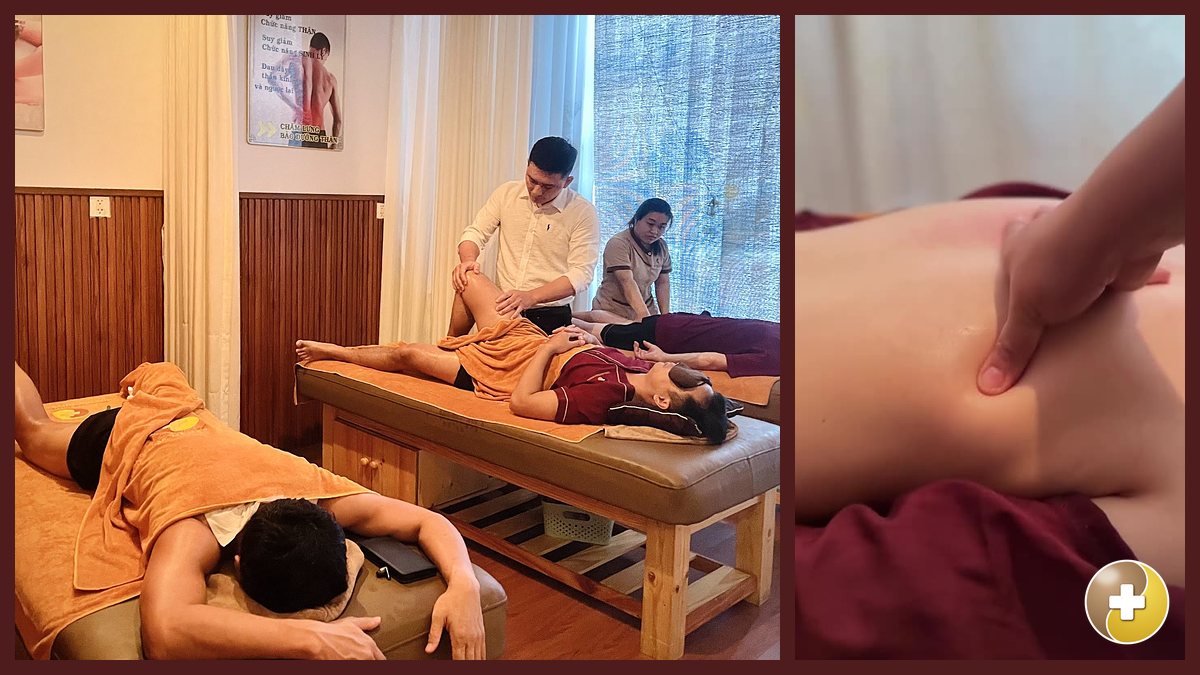
Quick answer: Do not massage an area that is still swollen, bruised, sharply painful or possibly fractured after a fall on ice; get it checked first. Older adults who hit their head should be seen the same day. Once cleared, Tong Gia Acupoint Wellness in Ho Chi Minh City gently works the neck, shoulders and upper back.
Want Lương Y Tống Văn Huynh’s team to read your spine and posture in person?
Is massage safe after slipping on ice?
If you live in Toronto, Montreal, Ottawa, Winnipeg or Edmonton, you know the moment: you step out in the dark, the pavement looks wet, and it turns out to be a thin sheet of clear ice. In Moscow or Saint Petersburg, sidewalks thaw at noon and refreeze at dusk. In Oslo, Stockholm, Helsinki or Copenhagen, people fit spikes to their boots and still slip on the odd morning. In Chicago, Minneapolis or Boston, one night of freezing rain turns the parking lot into a rink. It takes a split second: a hand shoots out to break the fall, or you land hard on your bottom, or you go backwards and your head hits the ground.
A few days or weeks later you fly to Ho Chi Minh City for Tet or a winter break. The wrist still aches when you pull your suitcase, the tailbone stings after a long sit, the lower back feels stiff, and the shoulder on the side that took the fall has been clenched for a week. Family or friends suggest a massage, and the obvious question comes up: is a massage safe after slipping on ice?
Tong Gia Acupoint Wellness (Huyệt Đạo Tống Gia) puts safety first and answers plainly: an area that is still swollen, bruised, warm, sharply painful when you move it, or possibly fractured should not be massaged; get it checked at a medical facility first. Older adults who hit their head should be seen the same day, even if they feel fine. Only after you have been checked, and medical staff have told you there is nothing more to watch or that you may move normally again, does a light session on other areas make sense: the clenched neck and shoulders, the upper back, the uninjured arm and the legs. The injured spot itself is left alone to recover as your care team advised.
In Western terms, a fall on ice typically causes one or more of these injuries:
- Falling on an outstretched hand: the whole body weight goes through the wrist. It may be a ligament sprain, but it may also be a fracture of the lower end of the radius, or of the scaphoid at the base of the thumb. A small scaphoid crack sometimes does not show clearly on X-rays in the first days, so pain in the hollow at the base of the thumb needs the follow-up check you were given.
- Landing on your bottom: the force goes straight into the tailbone (coccyx) and sacrum, causing bruising and tailbone pain that can last for weeks, worst when sitting or getting up from a chair.
- Back and hip: back muscles jerk as you try to stay upright, often straining one side. In people with osteoporosis, even a minor fall can compress a vertebra or break the hip.
- Hitting your head: concussion is possible; in older adults and anyone on blood thinners, bleeding inside the skull can appear hours or even days later.
These injuries need imaging and a hands-on medical check, not a massage. Below we go through the signs, when to get checked, and only then how Tong Gia cares for the rest of your body. If the long flight has also left your back tired, read our main guide on spine care after a long-haul flight.
Why people in cold countries slip on ice so often
Slipping on ice is rarely clumsiness. It is what a northern winter piles up all at once:
- Black ice: thin, transparent ice that looks like a wet road, common early in the morning, on bridges, steps, driveways and in shaded spots.
- Freeze–thaw days: when temperatures hover around zero in Moscow, Saint Petersburg, Oslo or Stockholm, meltwater from midday freezes again by evening; freezing rain in Toronto, Montreal or Chicago glazes everything.
- Short days: in Scandinavia and Finland, winter commutes happen in the dark, so ice is hard to see.
- Busy hands: shopping bags, a child, a phone, hands in pockets. If your hands cannot react, you fall backwards and hit your head; if they can, the wrist takes the impact.
- Shoes without grip: hard or worn soles, office shoes, stepping out of a car, going down front steps, taking out the trash.
- Outdoor chores: shoveling, scraping the windshield, dragging bins to the curb. Back strain from shoveling has its own page: back strain from shoveling snow.
- Age: slower reflexes, weaker balance, poorer eyesight, undiagnosed bone loss, and prescriptions that cause drowsiness or dizziness.
Then comes the flight. From Toronto, Montreal or Calgary you usually connect through Vancouver, Tokyo, Seoul, Taipei or Hong Kong; from Scandinavia or Russia, whether nonstop or via Doha, Dubai, Istanbul or Bangkok, it is many hours in a seat. A sore tailbone is pressed into an airline seat, a sore wrist pulls luggage and lifts bags into the overhead bin. Then Saigon greets you with over 30°C, air conditioning, motorbike rides and low plastic stools at family meals. Your body is coping with an injury and a long trip at the same time, which is why the neck, shoulders and back often feel worse than the spot you landed on.
Related signs to notice
After a fall, jot down each day where it hurts and whether it is getting better or worse, so you can describe it clearly when you are checked:
- Wrist: swelling, bruising, pain when turning the wrist, pushing up from a chair or opening a jar; weak grip; tenderness in the hollow at the base of the thumb. More in wrist pain when putting weight on your hands.
- Tailbone: pain sitting for long, on hard chairs, or when standing up; sitting tilted onto one buttock. See tailbone pain when sitting.
- Back: stiffness, a one-sided muscle spasm, difficulty bending, needing your hands to sit up in the morning.
- Neck and shoulders: a backwards fall jerks the head and tightens the neck; the shoulder on the fall side stays clenched for days.
- Whole-body guarding: after one fall many people walk on tiptoe, take tiny steps, lift their shoulders and keep the back rigid all winter for fear of falling again. That guarding is what makes the neck and back ache.
- The healthy side doing all the work: with one wrist splinted, the other arm does everything; with one sore leg, weight shifts to the other and the hips tilt.
Headache that keeps getting worse, nausea, drowsiness, or numbness and weakness are not signs to watch at home; they are reasons to get help at once, as listed next.
When to see a doctor
The Tong Gia curriculum sets one rule above all: wellness knowledge is for care, relaxation and support, never a replacement for a medical check; when warning signs appear, the staff stop and advise you to get checked. After a fall on ice, these are the times to put massage aside:
- You hit your head, especially if you are older or on blood thinners: get checked the same day even if you feel alert. In the hours and days after, a worsening headache, repeated vomiting, drowsiness, confusion, slurred speech, weakness on one side or a seizure means call emergency services at once (911 in Canada and the US, 112 in Europe and Russia, 115 in Vietnam).
- The wrist is very swollen or misshapen, the bone is sharply tender, you cannot grip, or pain at the base of the thumb persists: it needs imaging. Do not squeeze or pull it yourself.
- You cannot get up, cannot put weight on one leg, or that leg looks shorter or turned outward: a hip fracture is possible. Call an ambulance; do not try to walk it off.
- Severe back pain after the fall, especially if you are older or have osteoporosis; back pain with numbness or weakness in one or both legs; numbness around the buttocks or groin; new bladder or bowel problems.
- Neck pain after a backwards fall with tingling or weak arms, or dizziness.
- Rib pain on deep breaths after a sideways fall, coughing blood, or shortness of breath.
- Tailbone pain that is not easing after a few weeks, keeps getting worse, or comes with fever.
- After the long flight: one calf swollen, warm, red or painful may be a deep vein clot; get checked now and do not have your legs massaged. Sudden breathlessness or chest pain on breathing in: call 115. If the fall has limited your walking or your leg is in a brace, ask your care team before a long-haul flight.
- Chest pain, breathlessness or cold sweat during or after the fall: call emergency services. The Tong Gia curriculum is clear that chest pain, shortness of breath or stroke signs mean no massage and no acupressure.
For a fresh injury, the usual advice in the first days is rest, a cold pack wrapped in a cloth for 15–20 minutes at a time, and raising the swollen part. No heating balms, no rubbing, no hot packs and no steam on an area that is still swollen or bruised.
Tong Gia does not read X-rays, CT or MRI scans, does not judge whether a bone has mended, and does not make medical plans. How much an injured area may move or be touched is decided by the medical staff who examined you, and Tong Gia follows that advice. This is a wellness service, not medical care.
The Y Tướng Học view: Kidney and bones, Liver and tendons, Spleen and muscle
Y Tướng Học, the Eastern face-and-body reading taught at Tong Gia, rests on the idea that what is inside shows on the outside. Lương Y Tống Văn Huynh, founder of Tong Gia, organized this knowledge so staff can observe before they touch. After a fall it is never used to guess whether a bone is broken; that is what imaging is for. It helps the staff understand your general constitution and choose a gentle enough approach. The Tong Gia curriculum points to three organ systems:
- Kidney – bones and fear. The Kidney governs the bones and produces marrow; essence makes marrow and marrow nourishes bone. It belongs to Water, corresponds to winter, and its emotion is fear. Outer signs to notice: thin, soft ears and a flat bone behind the ear, which the curriculum links with weak Kidney qi or yang: a tired lower back and knees, feeling the cold, cold hands and feet, night urination, and early ageing of bones and joints, including bone loss. Anyone with these signs who falls should be checked carefully rather than shrugging it off as "just a small fall". Fear is easy to spot after a fall: tiny steps, a rigid back, raised shoulders, a whole winter of never stepping out with confidence.
- Liver – tendons and ligaments. The Liver nourishes tendons and ligaments and keeps joints supple; when it is out of balance, muscles stiffen, cramp and lose flexibility. It shows in the nails and opens into the eyes: thin, ridged, brittle nails and dry eyes suggest weak Liver blood. A sprained wrist or a wrenched ankle ligament is a matter of the tendons. The curriculum links high, prominent cheekbones with knotted, tight trapezius and back muscles, exactly the pattern of someone who clenches their shoulders all icy season.
- Spleen – the padding of muscle. The Spleen governs muscle and the limbs. Firm muscle padding is what protects the bones when you fall.
The curriculum describes an ideal of balanced bone and flesh: bones not jutting out, flesh not sagging, the Liver–Spleen–Kidney axis in balance, with the Kidney nourishing bone, the Spleen building muscle and the Liver keeping tendons supple. The opposite, more bone than flesh (very thin, with prominent cheekbones and nose bridge), is linked with early wear of bones and joints and tight, shortened tendons. The bridge of the nose is read as a small image of the spine; a crooked nose bridge often goes with a shifted spinal axis, which the staff then check by hand.
This is wellness observation, not fortune-telling and not a medical conclusion. One sign always comes first: in older adults, a mouth or tongue that has newly become crooked is a danger sign that needs medical help at once, all the more after a fall with a head knock.
Vertebrae and nerve-reflex areas involved
According to Tong Gia's spinal nerve-reflex balancing curriculum, the spine has 33 vertebrae: the neck (C1–C7) serves the head, face, neck and arms; the thoracic spine (T1–T12) circulation, breathing and digestion; the lumbar spine (L1–L5) digestion, kidneys, urinary and reproductive organs and the legs; the sacrum and tailbone (S1–S5 and coccyx) elimination and the pelvic floor. Nerve roots leave on both sides between the vertebrae, which is where the fingers read. This table shows which areas a fall on ice tends to affect, so you know what needs a medical check and what may, once cleared, receive gentle care:
| Vertebrae | Nerves / function (anatomy) | Typical signs after a fall | Organ (Eastern view) | Outer signs (Y Tướng Học) |
|---|---|---|---|---|
| C1–C3, base of the skull | Upper cervical roots; small suboccipital muscles that hold the head, jerked in a backwards fall | Stiff neck, heavy head; if you hit your head: get checked first | Kidney (marrow), Liver | Flat bone behind the ear, tight nape |
| C5–C7, T1 | Roots forming the brachial plexus to the shoulder, forearm, wrist and hand | Clenched shoulder and arm on the fall side; tingling fingers: see a doctor | Liver (tendons) | Ridged thin nails, tight trapezius |
| T4–T8 | Intercostal nerves; spinal erectors and the muscles between the shoulder blades | Shoulder blades clenched when walking on ice; rib pain on deep breaths after a sideways fall: get checked | Heart, Liver | Raised shoulders, prominent cheekbones |
| T11–L2 | Thoracolumbar junction, loaded when you land on your bottom; Kidney point area at L2 | Back pain after a seated fall; with osteoporosis a vertebra may compress: get checked | Kidney | Thin soft ears, cold lower back |
| L4–L5, S1 | Roots forming the sciatic nerve to the buttock, back of the thigh and calf | Buttock pain spreading to the thigh; leg numbness or weakness: get checked | Kidney – Bladder | Crooked nose bridge, tilted hips |
| S1–S5 and coccyx | Per the curriculum: elimination and pelvic floor; ligaments around the tailbone | Pain when sitting long or standing up | Kidney | Sitting tilted onto one buttock |
The table is a guide for the hands, not a way of naming injuries. Tong Gia's safety rule after a fall is simple: an area that is swollen, bruised, warm or not yet cleared by medical staff is not touched. The tailbone, the lower back after a seated fall and a wrist just out of a splint are worked only when the people who examined you agree, and even then the pressure starts very light. There is no twisting or cracking of the neck or back.
How Tong Gia helps you rebalance once you are cleared
Each session follows the spinal nerve-reflex balancing massage developed by Lương Y Tống Văn Huynh, founder of Tong Gia, with over 13 years in Vietnamese Eastern wellness, face reading and spinal reflex work. It is a Vietnamese Eastern method you can try while you are in Ho Chi Minh City. After a fall on ice, the goal is not to "break up the bruise" or "put things back in place", but to help rebalance the areas that have been compensating: the neck and shoulders, upper back, the uninjured arm, the legs, and your sleep. A session, adapted for someone recovering from a fall:
- Questions and screening: when and how you fell (on a hand, on your bottom, backwards), whether you hit your head, whether you were checked and what you were told, any cast or splint, osteoporosis, blood thinners, heart disease, high blood pressure, pregnancy; where you flew from and when you landed. Please tell the front desk when you book and again when you arrive. Any warning sign from the list above means we stop and advise a medical check.
- Observation: complexion, ears, nose bridge, nails, shoulder height and the way you walk in, to see where your body is guarding, not to label any condition.
- Reading the spine by hand, away from the injury: skin temperature, muscle padding, vertebral shape and sensation, comparing left with right. Positions are chosen for comfort: sitting supported, side-lying, or lying on your back with pillows; if your tailbone hurts, you get a soft cushion and do not lie face down for long. The injured area is agreed with the staff and avoided completely.
- Light muscle release: the curriculum describes five pressure levels, from one finger to full body weight; after a fall only the lightest levels are used, increased slowly as you respond. The usual focus is the base of the skull, trapezius, the uninjured shoulder and arm, both sides of the upper spine, calves and feet.
- Gentle acupressure away from the pain: soft work at the nape and shoulders, and Nội quan and Thần môn on the uninjured wrist for one to two minutes each, for calm and relaxation as in the curriculum's Heart care routine. If you have no head or neck injury, the session may end at Bách hội on the crown. Each point is held only until the skin turns from dry to slightly moist.
- Self-care tips: how to sit with a sore tailbone, how to carry bags while the wrist is weak, slow breathing for sleep, and how to walk on ice when you go back.
Suggested services once you are cleared to move (approximate rates 1 CAD ≈ 19,000 VND, 1 EUR ≈ 30,000 VND, 1 USD ≈ 26,000 VND, payment in VND; full list on our price page):
- Neck–shoulder care, 60 min: 550,000 VND (about CA$29 / €18 / US$21); first visit 399,000 VND (about CA$21 / €13 / US$15). For a neck and shoulders clenched since the fall.
- Eastern-style massage, 60 min: 450,000 VND (about CA$24 / €15 / US$17). Light full-body relaxation that skips the injured area entirely and helps sleep during jet lag.
- Hair wash with neck–shoulder massage, 60 min: 250,000 VND (about CA$13 / €8 / US$10). A gentle session lying on your back, only for people with no head or neck injury.
After a fall we suggest a 60-minute session rather than the 120-minute full-body care, and no hot steam, cupping or hot herbal packs on a previously injured area at the first visit.
What a session is usually like. In guests who fell on a hand and on their bottom shortly before flying in, the staff often find the shoulder on the fall side raised, a hard trapezius, a tight nape and a guarded upper back, while the guest sits tilted to keep weight off the tailbone. After hearing how the fall happened and what the medical staff advised, the staff keep it simple: you lie on your side with pillows, the neck and shoulders are softened with one finger and then the whole palm, the work moves slowly down both sides of the upper spine, the calves are kneaded and the calming points on the healthy wrist are pressed. The sore wrist, the tailbone and any bruise are left alone.
You may feel tight spots that are tender in a pleasant way, which the curriculum calls a "wave of sensation" that lets the body adjust itself. Many people breathe more slowly, their shoulders drop, and some drift off. Afterwards some feel lighter in the neck and sleep more easily; others feel a little muscle soreness the next day. No session promises the pain will be gone, and none replaces medical follow-up of bones and ligaments.
From the airport: the District 12 branch lies north of Tan Son Nhat and is usually a fairly short drive; Vinhomes Grand Park in Thu Duc City is on the east side and takes longer, depending on traffic. After a fall, do not come straight from the airport; rest at home for a day or two first. See massage near Tan Son Nhat airport and your first massage in Vietnam: what to know.
Want Lương Y Tống Văn Huynh’s team to read your spine and posture in person?
A suggested plan for your trip, and self-care
This plan suits someone who slipped on ice before flying to Vietnam, has been checked, and has nothing that needs special monitoring. If your care team gave you specific advice, follow it.
| When | What to do | At Tong Gia (suggestion) |
|---|---|---|
| Right after the fall (Canada, Russia, Scandinavia, US) | Any warning sign above: get checked. Rest, wrapped cold pack, raise the swollen part | No massage on the injured area |
| Before flying | Ask your care team whether a long-haul flight is fine; carry discharge notes or imaging reports; book an aisle seat; let others lift luggage | Message us your landing date and where you were hurt |
| On the plane | Walk every 1–2 hours; sit on a soft cushion if your tailbone hurts; sip water | – |
| Days 1–2 after landing | Rest, sleep on Vietnam time, keep air conditioning off your back | Not yet |
| Days 3–5 | If swelling is gone and you are cleared to move | Neck–shoulder care 60 min, first visit 399,000 VND, injured area avoided |
| Tet and family visits | Chairs with back support and a cushion; avoid long hours on low plastic stools; no heavy lifting with the sore hand; mind wet tiled floors | One more light 60-minute Eastern-style massage if it felt good |
| 2–3 days before flying back | Pack boots with grip or ice cleats for the rest of winter | A gentle neck–shoulder session before the flight |
- First days: wrapped cold pack 15–20 minutes at a time on the swollen spot; no heating balms or rubbing.
- Once the swelling is gone and you are cleared: gentle movement as your care team advised; a warm towel on the neck and shoulders.
- Sitting with a sore tailbone: sit upright leaning slightly forward, on a soft or cut-out cushion; stand and walk every 30–45 minutes.
- Slow breathing 4–6: in for four seconds, out for six, five to ten minutes before bed to let the body stop guarding.
- Warm foot soak: 15–20 minutes at about 38–42°C in the evening (people with diabetes should test the temperature carefully).
- Back on the ice: short steps, flat feet, weight slightly forward, hands out of your pockets; boots with grip or ice cleats; when getting out of a car, hold the door and put both feet down before standing. Older adults can ask their care team about a bone density check.
Travelling with older parents? Read taking elderly parents back to Vietnam. Coming from a long Canadian winter, see cold hands and feet after long Canadian winters.
Book from abroad before you fly
Message us on WhatsApp or Zalo at +84 888 264 559 (0888 264 559 inside Vietnam) with: your landing date and time at Tan Son Nhat, how and where you fell (wrist, tailbone, back, any head knock), whether you were checked and what you were told, where you feel tired (neck, shoulders, upper back, legs), and which branch you prefer. The front desk notes it so the staff know exactly what to avoid, and books you from your third day after landing. You can also book online; tips are in booking a massage in Saigon from abroad.
- District 12 branch: 225 Dương Thị Mười, Phường Tân Chánh Hiệp (Tan Chanh Hiep Ward, District 12). Daily 8:00–19:00. Closer to Tan Son Nhat.
- Vinhomes Grand Park branch: Căn T16-21 khu Manhattan, Vinhomes Grand Park, Phường Long Bình, TP. Thủ Đức (Unit T16-21, The Manhattan, Long Binh Ward, Thu Duc City). Daily 9:00–20:00.
Genuine guest reviews are on each branch's Google Maps listing. Family in Ho Chi Minh City can book for you and come along to the first visit to explain the fall. One slip on the ice should not spoil the whole trip: get checked in time, let the injured spot rest, and give the rest of your body some gentle care.
Visit us
- Đông Y Huyệt Đạo Tống Gia Quận 12 (District 12)
225 Dương Thị Mười, Phường Tân Chánh Hiệp, Quận 12, HCMC · 8:00–19:00 daily · 0888 264 559 · Directions on Google Maps - Đông Y Huyệt Đạo Tống Gia Quận 9 (Vinhomes Grand Park, District 9)
Căn T16-21 khu Manhattan, Vinhomes Grand Park, Phường Long Bình, TP. Thủ Đức, HCMC · 9:00–20:00 daily · 0888 264 559 · Directions on Google Maps
Map of our two branches
Want Lương Y Tống Văn Huynh’s team to read your spine and posture in person?
What guests say on Google Maps
“The staff member here was so pleasant and warm to talk to – such steady hands you would think it was a machine. 10 out of 10.” (translated from a Vietnamese review)
— Thiện N., Google Maps review · Vinhomes Grand Park branch (District 9) · 2024 · See on Google Maps
“Ms Vân was very attentive and skilled – a wellness place I am happy with.” (translated from a Vietnamese review)
— Nguyệt Anh P., Google Maps review · Vinhomes Grand Park branch (District 9) · 2025 · See on Google Maps
Quoted from public reviews, shortened where marked (…). Experiences vary from person to person; reviews are not a substitute for seeing a doctor when something feels wrong.
Related guides for your trip
- Fibromyalgia: can I get a massage in Vietnam? Short sessions, very light pressure, no flare days
- Health check in Vietnam, then a massage: how to plan the week if you fly in from the US, Australia or Canada
- Getting a massage in Saigon without speaking Vietnamese: phrases, messaging ahead and a Tong Gia session
FAQ
Is massage safe after slipping on ice? Not on an area that is still swollen, bruised, warm, sharply painful or possibly fractured; get it checked first. Once medical staff clear you to move, a light 60-minute session on other areas such as the neck, shoulders, upper back and uninjured limbs is reasonable, with the injured spot left alone.
I fell on my hand in Toronto and my wrist is still swollen. Can I get it massaged in Saigon? No. A wrist that is still swollen, tender on the bone or painful at the base of the thumb needs imaging and follow-up at a medical facility. At Tong Gia the sore wrist is left untouched; staff only work the neck, shoulders and other arm gently, and only if you have been cleared.
My mother hit her head on the ice in Moscow but says she feels fine. Does she need to be checked? Yes. Older adults who hit their head should be seen the same day even if they feel alert, especially on blood thinners, because bleeding inside the skull can appear later. A worsening headache, vomiting, drowsiness, slurred speech or one-sided weakness means call 112, or 115 in Vietnam.
How long does tailbone pain last after falling on ice, and should I get a massage? Tailbone pain after a seated fall often lasts a few weeks and varies from person to person. The tailbone itself should not be massaged until medical staff agree. Sit on a soft cushion, stand up often, and get checked again if the pain worsens, drags on or comes with fever.
Can I have a massage while my wrist is in a cast or splint? Other areas such as the neck, shoulders, upper back and legs can usually be cared for gently if your care team has no objection. The cast or splint and that whole arm are left alone. Mention it when booking so the staff can prepare a comfortable position.
Should I use ice or heat after slipping on ice? In the first days, while the area is swollen or bruised, the usual advice is a cold pack wrapped in a cloth for 15–20 minutes at a time, rest and raising the injured part. Avoid heating balms, rubbing and hot packs on a swollen area. Gentle warmth for tight neck and shoulders comes later, once you are cleared.
Author: Lương Y Tống Văn Huynh – founder of Huyệt Đạo Tống Gia, a master of traditional Vietnamese wellness with over 13 years in Eastern wellness care, Y Tướng Học (face reading) and spinal nerve-reflex balancing massage.
Updated: 2026-11-17
Related guides
- Booking a massage for a group during Tet: how to plan sessions for family, relatives and friends in Saigon
- Booking a massage together as a couple in Ho Chi Minh City: same time slot, a different focus for each person
- Vietnamese cupping vs cupping abroad: the marks, who should skip it, and how a Tong Gia session works
- Massage with osteoporosis: is it safe on a trip to Vietnam, what pressure is right and what to avoid
- Is a strong massage better? How to choose the right pressure, how to ask for it, and when to keep it gentle
- Massage after slipping on ice: is it safe, what has to wait, and when to get checked first
This is a wellness service, not medical care.