
Elbow and shoulder pain from golf and pickleball: why it builds after 55 and how to care for it in Vietnam
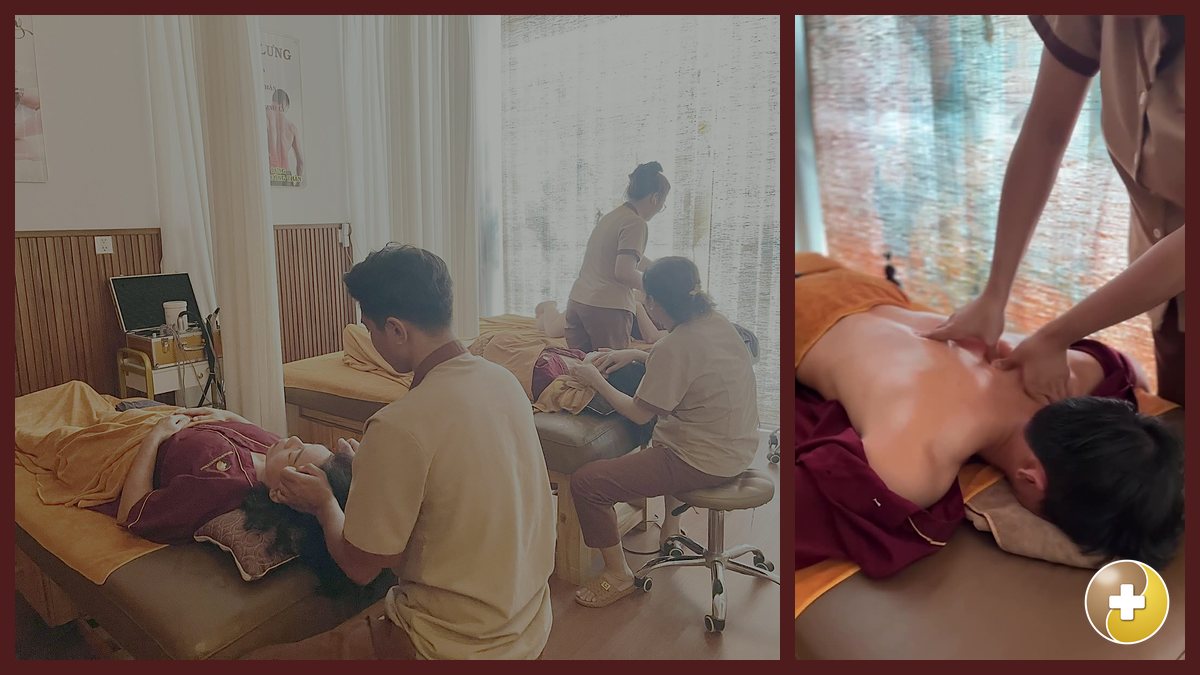
Quick answer: Elbow and shoulder pain from golf and pickleball usually comes from forearm tendons and shoulder muscles repeating one motion too often: a tight grip, wrist-driven shots, no warm-up. Rest from hitting, ice and gentle stretches help; swelling or weakness needs checking. In Ho Chi Minh City, Tong Gia Acupoint Wellness relaxes the shoulder and arm by hand.
Want Lương Y Tống Văn Huynh’s team to read your spine and posture in person?
Why golf and pickleball players over 55 get elbow and shoulder pain
On a Saturday morning in Orange County, the pickleball courts in the parks around Westminster, Garden Grove and Fountain Valley are full by seven, and many of the players are retirees. In San Jose, golf groups tee off while the morning is still cold; in Houston, autumn is the season for a full 18 holes every week. In Australia, November is already summer, so clubs in Sydney, Melbourne and Brisbane start early to beat the sun. Playing regularly is good for body and mood. Then one day lifting a coffee mug sends a sharp twinge through the outside of the elbow, turning a door handle hurts, or reaching up to a kitchen shelf makes the shoulder catch, and lying on that side at night becomes uncomfortable.
In Western anatomy terms, two spots on the elbow tend to hurt in racket and golf players. The bony bump on the outside of the elbow (the lateral epicondyle) anchors the tendons of the muscles that lift the wrist and fingers; players call pain here “tennis elbow”. The bump on the inside (the medial epicondyle) anchors the wrist flexors and the muscle that turns the palm down; pain here is often called “golfer’s elbow”. These are everyday names for where it hurts, not a conclusion about your arm: golfers can hurt on the outside, pickleball players on the inside, and some causes can only be sorted out at a medical check.
In the shoulder, the busy group is the rotator cuff, four small muscles that hold the head of the arm bone steady as it turns and lifts, together with the deltoid, the biceps and the muscles around the shoulder blade. Serves and overhead smashes in pickleball, and the top of the backswing and the follow-through in golf, all ask the shoulder to rotate through a wide range. After 50, tendons hold less water, stretch less and get less blood. A movement repeated hundreds of times per session leaves tiny strains where tendon meets bone; without enough rest the area is loaded again before it settles, so a dull ache can hang on for weeks or months.
- Players who moved from tennis or badminton to pickleball and still flick the wrist hard.
- Golfers who hit several buckets in a row on hard driving-range mats.
- People who play three or four games back to back each weekend, or every day since retiring.
- People who also garden, carry grandchildren, haul groceries or type on a phone for hours.
- Anyone about to fly to Vietnam for Tết, a winter stay or a move home with a sore arm.
This guide is for Vietnamese Americans and Vietnamese Australians who play regularly, their families waiting in Ho Chi Minh City, and other long-haul visitors who bring their paddles and clubs. For the whole spine after a long journey, start with our main guide on spine care after a long-haul flight.
Common causes: grip, wrist-driven shots, cold mornings and the long flight
- Gripping too tight: the forearm muscles brace on every shot to hold the face of the club or paddle. A handle that is too thin or a worn grip makes you squeeze harder, and that squeeze lands right on the tendon attachment at the elbow.
- Hitting with the wrist instead of the shoulder and trunk: backhands and dinks repeated hundreds of times, with the wrist snapping to steer the ball, pull on the outer elbow tendons again and again.
- Hitting the ground or hard mats in golf: a fat shot or a firm practice mat sends a jolt back up the forearm. A swing driven by the arms rather than the turn of the body also loads both elbows.
- Overhead work: serves, smashes and high reaches make the rotator cuff and deltoid work with the arm above the head, when space inside the shoulder joint is narrow.
- A stiff mid back and hips: after 55 the thoracic spine and hips rotate less; when the trunk does not turn enough, the shoulder and elbow make up the difference.
- No warm-up on cold mornings: winter mornings in San Jose or Melbourne mean cold muscles and stiff tendons going straight into play.
- Sudden jumps in load: club tournaments, multi-day golf trips, or daily play after retirement.
- Gear that does not fit: head-heavy paddles, grips too big or too small, hard outdoor balls, shoes that slip.
- Life off the court: lifting grandchildren, mowing, pruning, carrying rice bags, dragging suitcases. The dominant arm never gets a day off.
- The flight to Vietnam: from California to Tân Sơn Nhất often takes 15–20 hours with a connection, longer from Houston; from Sydney or Melbourne a direct flight is about 8–9 hours. Dozing in the seat, leaning on the armrest and lifting gift-filled bags into the overhead bin add load to an arm that already hurts. Our page on back pain after a long flight from the US to Vietnam covers the back.
Related signs to watch for
- Outer elbow pain that grows when you grip with the palm down: lifting a kettle, opening a jar, shaking hands.
- Inner elbow pain when squeezing or twisting the wrist, sometimes with brief tingling in the little and ring fingers, because the ulnar nerve runs just behind the inner elbow. See arm numbness when raised overhead.
- A stiff elbow on waking that loosens after bending it a few times.
- Shoulder pain lifting the arm from shoulder height to overhead, reaching behind your back or pulling on a jacket; waking when you roll onto that side. Read right shoulder pain when raising the arm.
- A tired neck and tight spot between the shoulder blades on the playing side.
- Heavy forearms and cold hands in cold weather or long hours in air conditioning.
- Calf cramps, dry eyes, brittle ridged nails, irritability after missed shots: signs Eastern wellness links to the Liver.
- Tired limbs, poor appetite and pale lips, or achy knees, a cold lower back and ringing ears: signs linked to the Spleen and Kidney, covered below.
The Tong Gia curriculum puts it simply: pain shows up in one place, but its source is often somewhere else. The elbow hurts, yet the root may be in the shoulder, a mid back that no longer turns, or a neck that has been tight on the playing side for years.
When to see a doctor
Most elbow and shoulder pain from sport eases with a break from hitting, ice, gentle stretching and a looser grip. With any of the following, please see a doctor at a medical facility and do not rely on massage. Emergency numbers: 911 in the US, 000 in Australia, 115 in Vietnam.
- Left shoulder or arm pain with chest pain or tightness, shortness of breath, cold sweats or pain spreading to the jaw: call emergency services right away. At 55–70, left shoulder pain during effort on the court should not be written off as a muscle.
- A “pop” during a shot followed by weakness, being unable to lift the arm, bruising running down the arm, or a biceps that bunches into a lump.
- A fall on the court onto an outstretched hand, then sharp pain, swelling or an elbow or shoulder you cannot move: it may be a fracture or dislocation.
- A swollen, hot, red elbow or shoulder, or fever.
- Weakness: dropping the club or paddle, not being able to lift a glass, numbness that keeps spreading or affects both hands.
- Severe pain at night even at rest, pain that has not eased after 2–3 weeks off, or weight loss and lasting tiredness without a clear reason.
- After the flight, one calf swollen, painful, warm or red, or sudden breathlessness: this can be a clot; get checked now and do not have your legs massaged.
- A shoulder replacement, recent surgery on the shoulder or elbow, severe osteoporosis or specific instructions from your care team: ask them before any massage.
Tong Gia does not read X-rays, MRI or ultrasound results and does not make medical plans. If you have been checked in the US or Australia, bring the results or tell us so staff know which areas to keep gentle or avoid. This is a wellness service, not medical care.
The Y Tướng Học view: Liver, Spleen and Kidney
Y Tướng Học (face reading for wellness) has roots going back over 2,000 years and rests on one idea: what is inside shows on the outside. Lương Y (traditional healer) Tống Văn Huynh organised this knowledge so that Tong Gia staff read the person before they place their hands. For older racket and golf players, three organ systems are usually compared.
The Liver governs the sinews. In the Tong Gia curriculum the Liver nourishes tendons and ligaments and supports movement; when it is strong, tendons are supple and joints move freely; when it is weak, muscles stiffen and cramp, tremble and lose flexibility. The tendons at the elbow and the rotator cuff tendons belong, in this view, to the “sinews” the Liver feeds. The Liver also stores blood: at rest blood returns to the Liver to be replenished, and during activity the Liver sends it out to muscles and tendons. Game after game without rest, plus broken sleep from jet lag or a sore shoulder, means the tendons are used a lot and fed little. The Liver shows in the nails (thin, ridged, brittle nails when Liver blood is low) and the eyes, and it is linked with anger: players who get frustrated after a bad shot and push on through pain tend to brace their neck and shoulders too. The Gallbladder channel, paired with the Liver, is noted for easing pain in the head, neck and shoulders.
The Spleen governs muscle and the four limbs. It feeds the muscles of the arms and legs; when it is weak, limbs feel tired and weak, muscle is slack, lips are pale and appetite drops. Retirees who travel a lot, eat irregularly and fight jet lag often find the forearm and shoulder muscles tire sooner on court.
The Kidney governs the bones. It shows in the ears, hair, bones and lower back; common signals are achy knees, a cold lower back, ringing ears and thinning hair. After a winter in San Jose or Melbourne, with a cold lower back and sore knees after 18 holes, staff also look at the Kidney.
The curriculum describes several face types linked to tendons and muscle. A long, narrow, thin face with little flesh suggests weaker qi and blood and slack muscles, so pressure stays gentle. A bony face with high cheekbones suggests sinews that stiffen and joints that wear early. A wide forehead with a broad jaw goes with pain that moves around and muscles that tense unevenly. Years of one-sided sport often leave one shoulder higher than the other; the curriculum describes an uneven face type with mismatched muscles on the two sides that need balancing. These are wellness observations only, never fortune telling or a judgement about anyone’s health.
Vertebrae and nerve-reflex areas involved
According to the Tong Gia curriculum on spinal nerve-reflex balancing, the neck vertebrae C1–C7 relate to the head, face, neck and arms, and the thoracic vertebrae relate to circulation, breathing and digestion. The nerves to the shoulder and arm come from the brachial plexus (roots C5 to T1), so elbow and shoulder pain is always traced back up to the neck and upper back. Tong Gia names thoracic vertebrae D1–D12.
| Vertebrae | Nerves / function (anatomy) | What players notice | Organ system (Eastern view) | Outer signs (Y Tướng Học) |
|---|---|---|---|---|
| C4–C5 | Suprascapular and axillary nerves (C5–C6) to supraspinatus, deltoid, rotator cuff | Shoulder pain on serves, smashes, reaching overhead | Liver (sinews); Gallbladder channel over the shoulder | Uneven shoulders, playing side raised |
| C5–C6 | Roots to the biceps, outer forearm and thumb; part of the radial nerve | Outer elbow pain on backhands, tight grip | Liver; Large Intestine channel from index finger to shoulder | Dry, ridged nails |
| C6–C7 | C7 root to the triceps and the wrist and finger extensors (radial nerve) | Forearm fatigue after a few buckets, stiff elbow in the morning | Liver, Spleen (muscle) | Thin forearm muscles, long narrow face |
| C7–D1 | C8–T1 roots to the ulnar nerve, wrist flexors, little and ring fingers | Inner elbow pain, brief tingling in the little finger | Kidney (bones); Heart channel along the inner arm | Head forward, rounded upper back |
| D1–D4 | Upper thoracic sympathetic chain; rhomboids and shoulder-blade stabilisers | Ache between the shoulder blades, shoulders rolled forward | Lung (D3 area), Heart | Long, square face: check D3 |
| D5–D9 | Mid thoracic rotation for the swing; intercostal nerves | Stiff trunk turn, load pushed into shoulder and elbow | Liver (D9 area), Spleen | Wide cheekbones: check D7–D9 |
| L1–L5 | Lower back and hips, the base of every rotation | Low back ache after 18 holes or several games | Kidney | Round face, cold lower back |
The table marks areas to explore, not a cause. The curriculum groups neck and shoulder aches and numb hands and feet under muscles, bones and joints, worked through C5–C7, L1–L5 and S1–S5. Because a swing or a stroke starts from the legs, hips and trunk, staff read from the neck down to the sacrum rather than rubbing only the sore elbow. More in common causes of shoulder joint pain.
How Tong Gia helps rebalance your shoulder and arm
Every session follows the spinal nerve-reflex balancing massage developed by Lương Y Tống Văn Huynh, founder of Huyệt Đạo Tống Gia, with over 13 years in traditional Vietnamese wellness, Y Tướng Học and this method. It is a Vietnamese Eastern wellness approach done entirely by hand, aimed at helping each spinal area regain balance and supporting the related organ functions.
- Questions and observation: which sport, how many sessions a week, dominant hand, which shot hurts (backhand, serve, smash, swing), outer or inner elbow, whether you have been checked at home and what was found, any calf swelling after the flight. Then shoulder height, neck posture, forearm muscles on both sides, complexion, nails, cheekbones and jaw.
- Reading the spine by hand: pressing, stroking and rolling along C1–C7 and D1–D12 down to the sacrum to read four factors from the Tong Gia curriculum: skin temperature, the muscle layer, the shape of each vertebra and sensation, comparing the playing side with the other side. Over-active zones (warmer skin, tight muscle, more tenderness) get the focus; under-active zones are not worked directly.
- Muscle release: neck, trapezius, levator scapulae, the shoulder-blade muscles, the back of the shoulder where the rotator cuff attaches, deltoid, upper arm and both forearm groups. Around the elbow tendons pressure stays light, following the muscle fibres, never digging into a hot or swollen spot. Pressure builds through five levels while staff check how you feel.
- Acupressure: Kiên Tỉnh on top of the shoulder, Kiên Ngung at the front tip of the shoulder, Thiên Tông on the shoulder blade, Xích Trạch in the elbow crease beside the biceps tendon, Hợp Cốc on the back of the hand (not used in pregnancy), and the Liver back point when tendons are tight and sleep is poor. Work on a point stops when the skin turns from dry to slightly moist.
- Self-care: two or three forearm and shoulder stretches to use before and after games back home.
You may feel tender points on top of the shoulder, behind it and along the forearm on your playing side. As the muscle lets go, the tenderness usually fades, the arm feels warmer and lighter and lifts more easily. Some people sleep deeply that night; others feel a little sore for a day. Results vary with age, build and years of play, and no one can promise the pain will be gone after one session.
- Neck and shoulder care, 60 minutes: 550,000 VND (about 21 USD or 32 AUD), first visit 399,000 VND (about 15 USD or 23 AUD). For a tired shoulder, stiff neck or elbow pain of a few weeks.
- Neck and shoulder care, 90 minutes: 750,000 VND (about 29 USD or 44 AUD) for years of play, shoulder and elbow both sore, and a stiff upper back.
- Extra 30-minute area massage: 199,000 VND (about 8 USD or 12 AUD) added to a session for the upper arm, forearm and hand on the painful side.
Approximate rates 1 USD ≈ 26,000 VND and 1 AUD ≈ 17,000 VND; payment in VND. See prices, sports recovery massage and neck and shoulder massage.
From Tân Sơn Nhất airport, the District 12 branch (225 Dương Thị Mười, Phường Tân Chánh Hiệp) lies to the north and is usually not a long ride, depending on traffic. The Vinhomes Grand Park branch (Căn T16-21 khu Manhattan, Phường Long Bình, TP. Thủ Đức) is farther, especially at evening rush hour. To stop on the way from the airport, read massage near Tan Son Nhat airport, though after nearly a day of travel a night’s sleep first is usually kinder.
Want Lương Y Tống Văn Huynh’s team to read your spine and posture in person?
Warm-up and self-care at home
- Warm up for 8–10 minutes: brisk walking around the court, ten slow backward shoulder rolls, wrist circles, opening and closing the hands, gentle trunk turns, and a few slow swings before hitting hard.
- Loosen your grip: hold the club or paddle just firmly enough to control it. Have a pro shop check the grip size, replace worn grips, and consider a lighter paddle if yours is head-heavy.
- Break up play: rest a few minutes between games and drink water; at the range, hit fewer balls slowly rather than bucket after bucket. With a sore elbow, take a few days off hitting and carry things with the other hand.
- Stretch afterwards: straighten the elbow, palm down, and gently draw the fingers back with the other hand for 15–20 seconds for the outer group; repeat palm up for the inner group; pull the arm across the chest for the back of the shoulder. No bouncing, and stop if it is sharp.
- Cool, warm and sleep: wrap ice in a cloth for 10–15 minutes on fresh, hot-feeling pain; use warmth on an old, stiff, cold shoulder. In the Tong Gia curriculum the Liver stores blood at rest, so good sleep is part of feeding the tendons; slow belly breathing (in for about 4 seconds, out for about 6, for 5–10 minutes) before bed helps you settle.
Some players like a forearm strap while playing; ask your care team where to place it and do not cinch it so tight that the hand tingles. Planning a longer stay? Read wintering in Vietnam: a health routine and retiring in Vietnam: a wellness routine.
A suggested plan for your trip to Vietnam
From early November to early March, Vietnam is 15 hours ahead of California and 13 hours ahead of Houston, and 4 hours behind Sydney and Melbourne on daylight saving time (3 hours behind Brisbane). Jet lag from the US is heavier, and broken sleep in the first days makes muscles slow to relax; see the US–Vietnam time difference and jet lag.
| When | What the shoulder and elbow need | What to do |
|---|---|---|
| 2 weeks before flying | No build-up of pain before the long haul | Fewer games, skip bucket-after-bucket range sessions; message us to book |
| Packing day | No heavy lifting with the sore arm | Split gifts into smaller wheeled cases; let family lift them |
| Flight day | No slumped neck, no long leaning on the elbow | Neck pillow, walk the aisle every few hours, sip water, ask crew to help with bags |
| Landing day | Rest and adjust to the heat | Warm shower, light meal, early night on Vietnam time |
| Days 2–3 | Release after the flight and the playing season | A 60- or 90-minute neck and shoulder session, plus 30 minutes for the arm if the elbow hurts |
| First week | Light movement, no hard hitting yet | Early walks, forearm stretches each evening; if you play in Saigon, go early, play fewer games and drink enough |
| Staying 3 weeks or more | Keep muscles from tightening again | A session every week or two |
| 2–3 days before flying back | Ready for the long haul and a new season | A gentle session; read preparing your body before the long flight |
Book before you fly
Call, Zalo or WhatsApp +84 888 264 559 (0888 264 559 in Vietnam) from Orange County, Houston or Sydney with your landing date and time at Tân Sơn Nhất, where it hurts (outer or inner elbow, which shoulder, dominant hand, any tingling) and which branch you prefer. Mention golf or pickleball and how often you play so staff can suggest 60 or 90 minutes. Family in Ho Chi Minh City can book for you. You can also book online or read how to book a massage in Saigon from abroad.
- District 12 branch: 225 Dương Thị Mười, Phường Tân Chánh Hiệp (Tan Chanh Hiep Ward), Ho Chi Minh City. Open 8:00–19:00 daily (12:00–23:00 Sydney summer time).
- Vinhomes Grand Park branch: Căn T16-21 khu Manhattan, Vinhomes Grand Park, Phường Long Bình, TP. Thủ Đức (Thu Duc City). Open 9:00–20:00 daily (13:00–24:00 Sydney summer time).
In the US, opening hours fall from the previous evening to the early morning, California or Houston time; just message ahead and staff reply when the branch opens. Slots fill up before Tết, so book early. Real customer reviews are on Google Maps on each branch page.
Visit us
- Đông Y Huyệt Đạo Tống Gia Quận 12 (District 12)
225 Dương Thị Mười, Phường Tân Chánh Hiệp, Quận 12, HCMC · 8:00–19:00 daily · 0888 264 559 · Directions on Google Maps - Đông Y Huyệt Đạo Tống Gia Quận 9 (Vinhomes Grand Park, District 9)
Căn T16-21 khu Manhattan, Vinhomes Grand Park, Phường Long Bình, TP. Thủ Đức, HCMC · 9:00–20:00 daily · 0888 264 559 · Directions on Google Maps
Map of our two branches
Want Lương Y Tống Văn Huynh’s team to read your spine and posture in person?
What guests say on Google Maps
“Good service and attentive advice. Worth experiencing.” (translated from a Vietnamese review)
— Minh Nguyệt N., Google Maps review · District 12 branch · 2025 · See on Google Maps
“Everything is great at the District 12 branch: attentive advice, cheerful staff, good technique… overall a 10 out of 10.” (translated from a Vietnamese review)
— Hoan N., Google Maps review · District 12 branch · 2025 · See on Google Maps
Quoted from public reviews, shortened where marked (…). Experiences vary from person to person; reviews are not a substitute for seeing a doctor when something feels wrong.
Related guides for your trip
FAQ
Is elbow and shoulder pain from golf and pickleball serious? Usually it is overuse of the forearm tendons and shoulder muscles, common in regular players aged 55–70. It tends to ease with a few days off hitting, ice, gentle stretches and a looser grip. Swelling, heat, weakness, spreading numbness, night pain, pain after a fall, or chest pain and breathlessness need a medical check right away.
How long should I rest a sore elbow from pickleball in Orange County? Often a few days to one or two weeks off hitting, while you keep walking, stretch the forearm gently and ice fresh pain. When you return, play fewer games, hold the paddle loosely and warm up for 8–10 minutes. If it has not eased after 2–3 weeks, or there is swelling or weakness, get it checked.
Is massage okay for shoulder pain from golf? When there are no warning signs, gentle work on the neck, shoulder blade and arm can help the muscles let go so lifting the arm feels easier. Skip massage if the shoulder is hot and swollen, after a fall, after a “pop” with weakness, or with left shoulder pain plus chest tightness.
What is the difference between tennis elbow and golfer’s elbow? They are everyday names for location. Tennis elbow means pain on the outside of the elbow where the wrist extensor tendons attach; golfer’s elbow means pain on the inside where the flexor tendons attach. Players of any sport can hurt in either spot, and only a medical check can tell you the cause.
Flying from Houston or San Jose for Tết, when should I book shoulder care? Rest on landing day and sleep on Vietnam time. Book a 60–90 minute neck and shoulder session on day 2 or 3, adding 30 minutes for the arm if the elbow hurts, and a gentle session 2–3 days before flying back. Message +84 888 264 559 from the US to hold a slot.
How much is shoulder and arm care at Tong Gia? Neck and shoulder care is 550,000 VND for 60 minutes (399,000 VND first visit) or 750,000 VND for 90 minutes; an extra 30-minute area massage is 199,000 VND. That is roughly 21, 15, 29 and 8 USD at 1 USD ≈ 26,000 VND. Payment is in VND at District 12 or Vinhomes Grand Park.
Author: Lương Y Tống Văn Huynh – founder of Huyệt Đạo Tống Gia, a master of traditional Vietnamese wellness with over 13 years in Eastern wellness care, Y Tướng Học (face reading) and spinal nerve-reflex balancing massage.
Updated: 2026-11-16
Related guides
- Elbow and shoulder pain from golf and pickleball: why it builds after 55 and how to care for it in Vietnam
- Stiff neck and headaches from studying late for exams: why low desks and laptops strain the neck
- Working US hours remotely from Vietnam: neck and shoulder pain, night calls and day sleep on a long visit home
- Stiff neck from unfamiliar beds on trips home: why it happens, how to fix the pillow and when to get checked
- Neck and shoulder pain from factory shifts in Japan: causes, Japanese phrases and care on your trip home
This is a wellness service, not medical care.