
Vietnamese vs Thai massage: a plain comparison with tuina and shiatsu, and how a Tong Gia session works
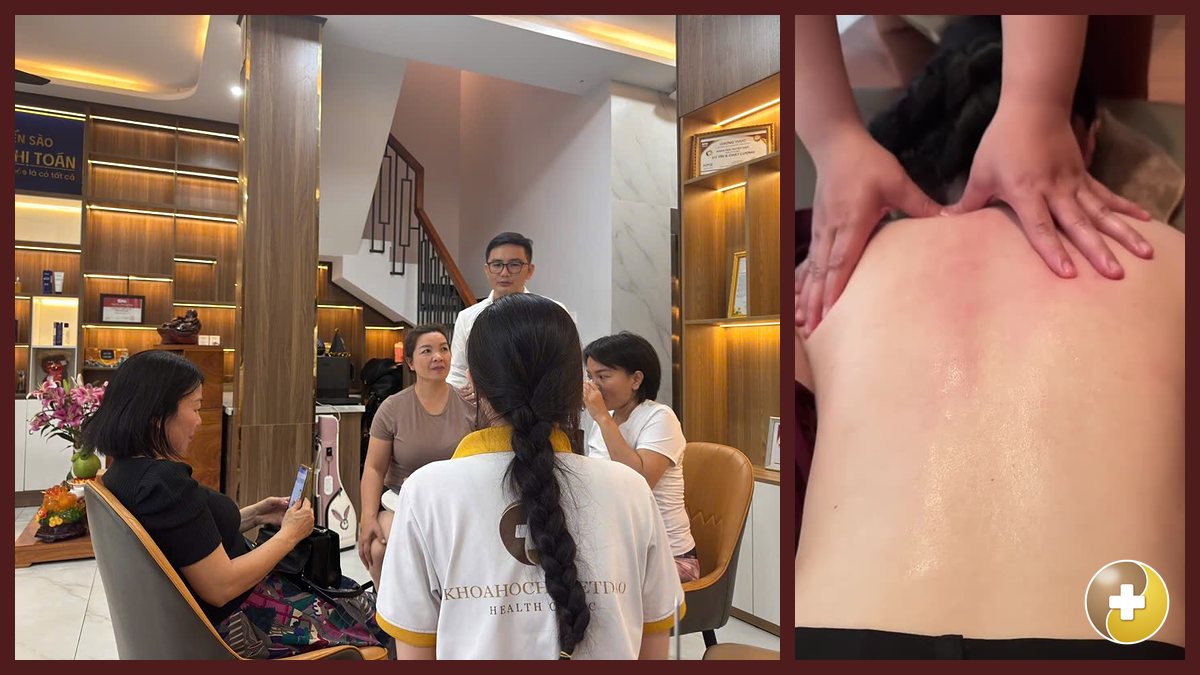
Quick answer: Vietnamese massage is usually done on a table, with kneading and acupressure zone by zone, pressure building gradually and little stretching. Thai massage is done clothed, with lots of yoga-like stretches. At Tong Gia Acupoint Wellness in Ho Chi Minh City (District 12, Vinhomes Grand Park), each session also starts with face reading and reading the spine by hand.
Want Lương Y Tống Văn Huynh’s team to read your spine and posture in person?
Vietnamese vs Thai massage: the short answer for long-haul travellers
Every winter, Ho Chi Minh City fills up with people escaping the cold: Russians from Moscow, St Petersburg, Novosibirsk and Vladivostok staying for weeks or the whole season, Europeans and Americans working remotely or travelling through the dry season, and Viet Kieu families from Russia, Germany, Poland or the Czech Republic coming home with partners and friends who have never had a Vietnamese massage. Many of them have tried Thai massage on holiday, so the first question is always the same: Vietnamese vs Thai massage, what is the actual difference? Will I be pulled and twisted into yoga positions again?
The short answer: both belong to the Asian family of bodywork and both work with points and energy lines, but they differ in position, pressure, how much stretching is involved, and whether oil is used. Vietnamese massage is usually done lying on a massage table, with kneading, gliding and acupressure applied zone by zone; pressure builds up gradually and stretching is minimal. Thai massage is usually done fully clothed on a floor mat or table, pressing along the "sen" lines with palms, thumbs, elbows and sometimes feet, and moving the limbs through many passive, yoga-like stretches.
From a Western anatomy point of view, any massage is mechanical work on soft tissue: skin, fascia, muscle, tendon and ligament. Pressure and movement stimulate mechanoreceptors in the skin and muscles, and those signals travel along nerves to the spinal cord and brain. When the input is steady and comfortable, the autonomic nervous system shifts towards its rest mode (the parasympathetic side): breathing slows, muscles let go, local circulation improves and you feel sleepy. Passive stretching, as in Thai massage, also loads the joint capsules and lengthens muscles, which helps range of motion. So each style feels different and suits a different need. None of them is "right" and the others "wrong".
What travellers bring to the table is surprisingly similar: a stiff neck and tired lower back after roughly 9–10 hours of direct flying from Moscow (longer with a connection), or a full connecting journey from Europe or the US; heavy calves; shoulders tight after months hunched inside a winter coat; and a body clock 4 hours behind Vietnam if you came from Moscow. For the spine side of this, read our main guide on spine care after a long-haul flight.
This guide is for international visitors and for Viet Kieu who want to take a foreign partner or friend to the right kind of massage: a comparison of four common Asian styles, who suits which, when to skip massage altogether, and what a session at Tong Gia Acupoint Wellness (Huyệt Đạo Tống Gia) looks like. It does not rank styles or name other venues. Each tradition has its own strengths, kept alive by generations of practitioners.
Comparison table: Vietnamese, Thai, Chinese tuina and Japanese shiatsu
The table describes how each style is commonly done. Every venue and practitioner varies, so use it as a map for questions before you book, not as a league table.
| Feature | Vietnamese massage | Thai massage | Chinese tuina (推拿) | Japanese shiatsu |
|---|---|---|---|---|
| Position and clothing | On a massage table, the area being worked uncovered, towels for draping | On a floor mat or table, wearing loose clothes | Lying or seated, usually clothed or under a thin cloth | On a futon or table, wearing comfortable clothes |
| Pressure | Kneading, gliding, circling and pressing zone by zone; builds up to what you can take | Deep pressure with palms, thumbs, elbows, sometimes feet | Pushing, rolling, grasping, kneading at a brisk pace; often firm | Steady, sustained pressure at right angles to the muscle with thumbs and palms |
| Stretching | Little; neck, shoulders and limbs only when needed | A lot; passive yoga-like stretches, twists and folds | Joint mobilisation: shaking, rotating, gentle traction | Light stretches and slow joint rotation |
| Oil | Massage oil or essential oil is common, depending on the service | Usually none | Usually none or very little | None |
| Point system | Acupoints and meridians of Vietnamese Đông y; often paired with cupping, gua sha, herbal steam or compresses | The "sen" energy lines | Meridians and acupoints of the Chinese tradition | Meridians and "tsubo" points |
| Typical after-feel | Warm, light, sleepy | Looser and more mobile, sometimes sore where stretched | Clear tenderness at tight spots, warmth in the area | Deep calm, little soreness |
| Often suits | People with specific tired areas after a flight who want warmth and release | Active people with supple joints who enjoy stretching | People used to strong pressure with obvious knots | People who like even pressure, clothes on, no oil |
A word on names. Thai massage (nuad Thai) comes from Thailand and is linked to the "sen" lines and a stretching style that resembles yoga. Chinese tuina literally means "push and grasp" and follows the meridians and acupoints of the Chinese tradition. Shiatsu is Japanese for "finger pressure", with even, held pressure. Vietnamese massage has no single standard form: it is folk kneading and acupressure blended with Vietnamese Đông y (Eastern wellness), and each region and family of practitioners has its own way. Many places add cupping, gua sha, herbal head washing or herbal steam.
A simple way to remember it: Thai massage stretches to open the joints, tuina pushes and grasps to move things along, shiatsu presses and holds to settle the body, and Vietnamese massage warms and presses the right zones so the body can let go. At Tong Gia, that Vietnamese approach has been organised into a school with clear principles, described next.
What Tong Gia adds to Vietnamese massage: face reading and reading the spine by hand
Tong Gia's method is called spinal nerve-reflex balancing massage. According to the Tong Gia curriculum, it grew out of the Head and Spine practice of Lương Y Nguyễn Tham Tán and master Công Kim Thắng, and was developed into its own method by Lương Y (master of traditional Vietnamese wellness) Tống Văn Huynh, founder of Tong Gia Acupoint Wellness, over more than 13 years of work in Vietnamese Đông y wellness and Y Tướng Học face reading. The school's motto is "the human spine is the human life". The difference from the styles above is not about stronger or softer pressure. It is about the order of work:
- Look before touching: the practitioner observes complexion, lips, ears, posture and shoulder level, following the Y Tướng Học principle "the signs show outside, the organs lie inside".
- Read the spine by hand: using the soft pads of the fingertips (the curriculum calls this Cảm thủ, "feeling hands"), with laying, stroking, pressing and rolling techniques, to read four objective signs: skin temperature, the muscle layer, the shape of each vertebra (raised, raised and shifted, shifted, sunken and shifted, sunken) and how you feel.
- Choose the zone, then the pressure: work concentrates on "excited" zones (warm skin, contracted muscle, rising tenderness) and avoids pressing directly on "inhibited" ones. Pressure follows five levels, from one finger, the whole hand, a bent arm, a straight arm, up to whole-body weight, matched to each person.
- Know when to stop: the dosing principle says stop when the skin over the key point turns from dry to slightly moist; the temperature principle says "cool what is hot, warm what is cold".
The curriculum also sets out the school's "three no's": no needles, nothing to swallow or inject, and no rough force. So a first-timer at Tong Gia is not cracked or twisted the way some people expect from Asian massage; stretching is used only when needed and kept gentle. If you want a mental picture, the steady fingertip holds feel a little like shiatsu and the pushing and rotating techniques a little like tuina, but the axis for reading and choosing where to work is the spine and its nerve reflexes. See also our page on traditional Vietnamese massage.
Common causes: why winter escapers and long-haul flyers arrive sore
Before picking a style, it helps to know why your body is tired. For visitors from Russia, Europe and the US it is usually several things at once:
- A winter spent hunched: weeks below zero in Moscow or Novosibirsk, heavy coats and scarves, shoulders pulled up whenever you go outside. The trapezius and levator scapulae work all day and the neck and shoulders lock up.
- Dry, heated indoor air: dry skin and nose, little daylight, less outdoor movement, back muscles slowly losing tone.
- The flight itself: 9–10 hours direct from Moscow, more with a connection, hips bent, little walking. Blood returns from the legs more slowly, calves feel heavy and ankles puff up; sleeping slumped in the seat stiffens the neck. More in swollen legs after a long flight.
- Time difference: Vietnam is 4 hours ahead of Moscow and 6 hours ahead of Central Europe in winter, while Vladivostok is 3 hours ahead of Vietnam. The first nights are often broken, see jet lag and sleep after flying to Vietnam.
- A sudden climate switch: from sub-zero to Saigon's dry season, usually above 30°C in the day with strong sun, and constant moves between heat and air conditioning blowing on the neck and waist.
- Lots of walking and riding: sightseeing, markets, motorbike taxis and ride-hailing cars in traffic, heavy suitcases and backpacks.
- New food: chilli, iced drinks, tropical fruit, late dinners; bloating and heaviness for the first few days.
If you are staying for the whole season, our guide to wintering in Vietnam with a weekly health routine has a longer plan. Here we focus on matching the massage style to the reason you are sore, because a stiff joint, a cold lower back and poor sleep each call for different work.
Signs to note, and who suits which style
Jot down which of these apply. It helps you, or the friend you are booking for, choose the right style and length:
- A stiff neck that catches on one side, a heavy head after the flight.
- Tightness between the shoulder blades, shallow breathing, a constant urge to stretch.
- A stiff lower back in the morning; bending to tie shoes feels tight.
- Heavy calves, mildly puffy ankles on both sides by evening.
- Broken sleep, waking early on home time.
- Dry skin and nose, cold hands and feet despite the heat.
- Bloating and low appetite after switching to Vietnamese food.
From there, general experience in the trade suggests:
- Thai massage often suits younger, supple, active people who feel "stiff all over" after sitting and enjoy being stretched, with no bone or joint problems and no pregnancy.
- Tuina often suits people used to strong pressure with clear knots who like that "good hurt".
- Shiatsu often suits people who prefer slow, even pressure, clothes on and no oil.
- Vietnamese massage as done at Tong Gia often suits people with specific sore zones (neck and shoulders, lower back, legs) after a flight, older travellers, anyone still tired on arrival, and people who want pressure that builds gradually, warmth, and an explanation of why that spot is tired.
- Avoid strong stretching if you have osteoporosis, a hip or knee replacement, disc problems, a recent injury, are pregnant, or are elderly. If you still want Thai massage, say so up front so the stretches can be reduced.
Muscle soreness from flying and climate change usually eases with sleep, water, gentle walking and well-placed muscle release. If it gets worse instead, or any sign from the next section appears, skip massage of every kind for now.
When to see a doctor first
Please see a doctor at a medical facility, and skip massage, acupressure and stretching, if you have:
- Chest pain or tightness, shortness of breath, cold sweats, pain spreading to the neck, jaw or left arm: call 115 in Vietnam immediately.
- A drooping mouth, slurred speech, numbness or weakness on one side, sudden blurred vision: call 115 immediately.
- Swelling in one leg only, a painful, tight, warm or red calf after a long flight: this may be a deep vein clot. Get checked straight away and do not have the leg massaged; with breathlessness or chest pain, call 115.
- Back pain with numbness running down a leg, leg weakness, or trouble controlling bladder or bowels.
- A recent fall, knock or traffic accident involving the neck, back or shoulder.
- Fever, pain that gets worse at night, unexplained weight loss or pale skin: get checked alongside any wellness care.
- Sunburn, blisters, open wounds or a spreading rash on the area to be worked.
- Existing conditions such as heart disease, blood pressure or blood sugar problems, severe osteoporosis, pregnancy, recent surgery or blood thinners: ask your doctor first and mention it when booking.
This is a wellness service, not medical care. Tong Gia does not read X-rays, MRI scans or lab results to draw conclusions and does not draw up care plans in place of a medical facility. If you have already been told at home to avoid a certain area, say so when booking so the practitioner works around it, and keep following the advice you were given.
The Y Tướng Học view: why the same massage feels different to each person
Y Tướng Học, the Vietnamese art of face and body reading for wellness, has roots going back more than 2,000 years; Lương Y Tống Văn Huynh has organised it into a practical way to plan care for each person. Its core saying is "the signs show outside, the organs lie inside": how the organ systems are doing shows up in shape and complexion. It is observation for wellness, not fortune-telling and not a statement that something is wrong. It also explains why one person loves deep stretching and another feels enough from a light touch. According to the Tong Gia curriculum, after a cold winter and a long flight, five organ systems tend to speak up:
- Liver (Can): governs the sinews, opens into the eyes, linked to emotions. Months of bracing against the cold and work stress leave sinews tight and hard to stretch. Signs: knitted brows, a crease between the eyebrows, shoulder muscle hard as wood; people with a "Thân" (申) face shape often hold tension around D7–D9.
- Kidney (Thận): governs the bones, opens into the ears; the lower back is its "home". Long cold spells bring a cold lower back, tired knees and sensitivity to wind. Signs: thin, dull ears, dry hair; round "Viên" (圓) faces often have a cool, soft lower back; "Giáp" (甲) faces are "full above, empty below", with a warm C1–C2 area and a sunken, cool lower back.
- Spleen and Stomach (Tỳ Vị): govern the flesh and limbs and the processing of food and fluids. New food, iced drinks and late meals make you heavy and leave arms and legs tired. Signs: pale lips, a puffy tongue with tooth marks; square "Điền" (田) faces have thick back muscles that tighten in broad patches around D11–D12.
- Lung (Phế): governs qi and the skin, opens into the nose. Dry heated rooms followed by humid heat and air conditioning mean dry skin, a blocked nose, shallow breathing. Signs: dry skin, a dry red nose; "Đồng" (同) faces often tighten around D3 (the Lung point).
- Heart (Tâm): governs the blood vessels, linked to sleep and spirit. Jet lag and long journeys bring restlessness and trouble falling asleep. Signs: a pale or flushed face, eyes lacking spark.
The Tong Gia curriculum lists vibration for "soft, thick tissue and nervous exhaustion", and pushing and rotating for "thick, hard, immobile" tissue. In other words, within the same Vietnamese massage, someone with thick, hard muscle is worked differently from someone soft and worn out. That is why Tong Gia reads the face first, feels the muscle layer by hand, and only then chooses the technique. More on this in face reading for wellness.
Want Lương Y Tống Văn Huynh’s team to read your spine and posture in person?
Spine segments and nerve-reflex zones involved
The Tong Gia spinal reflex curriculum describes 33 vertebrae: 7 cervical (C1–C7) serving the head, face, neck and arms; 12 thoracic (D1–D12) linked to circulation, breathing and digestion; 5 lumbar (L1–L5) linked to digestion, kidneys, urinary and reproductive function and the legs; and the sacrum and coccyx linked to elimination and the pelvis. Nerve roots leave on both sides through the gaps between vertebrae, which is exactly where the practitioner's fingertips search. This is a key difference from styles that mainly follow meridians or sen lines: at Tong Gia the spine is the axis for reading and choosing zones. After winter and a long flight, these zones are often warm, tight, or sunken and cool:
| Vertebrae | Nerves and function (Western anatomy) | Common signs | Organ system | Outer signs (Y Tướng Học) |
|---|---|---|---|---|
| C1–C2, base of the skull | Upper cervical roots; suboccipital muscles holding the head, sensation at the back of the head | Heavy head, sore nape after sleeping slumped on the plane, poor sleep from jet lag | Heart, Liver, Kidney | Giáp face; eyes lacking spark; knitted brows |
| C3–C7 | Cervical and brachial plexus; neck, shoulders, arms, hands | Stiff neck, raised shoulders from a winter hunched up, tired arms after hauling luggage | Liver (sinews) | Uneven shoulders, hard shoulder muscle, pale nails |
| D1–D4 (D3: Lung point) | Upper thoracic nerves; heart, lungs, muscles between the shoulder blades | Ache between the shoulder blades, shallow breathing, dry nose after months of heating | Lung, Heart | Đồng face; dry skin, dry red nose |
| D7–D9 | Mid thoracic nerves; liver, gallbladder, stomach area | Fullness under the ribs, burping with new food, irritability when tired | Liver – Spleen/Stomach | Thân face; crease between the eyebrows |
| D11–D12 (Spleen and Stomach points) | Lower thoracic nerves; upper abdominal digestion | Bloating, heaviness, tired limbs | Spleen/Stomach | Điền face; pale lips; puffy tongue |
| L1–L3 (Kidney point, Mệnh môn at L2) | Upper lumbar roots; kidneys, urinary tract, hip flexors | Cold lower back, ache across the waist after hours sitting with hips bent | Kidney | Thin, dull ears; Viên face |
| L4–S1 | Roots forming the sciatic nerve; buttocks, thighs, lower legs | Stiff low back, tired buttocks, heavy calves after the flight | Kidney – Liver; Bladder meridian | Do and Viên faces: thick or soft muscle at the lower back and hips |
The table only says "linked to", to help choose where to work; it is not used to name any illness. According to the Tong Gia curriculum, face shape suggests which part of the back to check first, and then the hands decide, moving from survey zone to key zone to key point.
How Tong Gia helps rebalance: the session, services, prices and getting there from the airport
A Vietnamese massage session using the Tong Gia method has five steps, aimed at helping each spinal zone and the related organ function come back into balance and supporting the body's own regulation. It does not replace the need to see a doctor when one is needed:
- Questions and observation: your flight, arrival date, sore areas, health conditions, which styles you already know (Thai, tuina, shiatsu) and how much pressure you like; then a look at complexion, lips, ears and posture.
- Reading the spine by hand: laying, stroking, pressing and rolling from C1 down to S1 to read skin temperature, the muscle layer, vertebra shape and your feedback, comparing left and right, upper and lower.
- Muscle release: softening the neck, trapezius, spinal erectors, quadratus lumborum, glutes and calves, pressure rising through the five levels and held at "tender but pleasant".
- Acupressure on the right zones: the nape for a heavy head, around D3 for an ache between the shoulder blades, the Kidney point and Mệnh môn for a cold lower back; cooling hot skin, warming cold skin, and stopping when the skin over the key point turns slightly moist.
- Self-care advice: simple neck stretches, warming the lower back, raising the legs, and sleep timing for your first days in Saigon.
For a first try of Vietnamese massage, these three services cover most needs. Prices are in VND; dollar and euro figures use a reference rate (1 USD ≈ 26,000 VND, 1 EUR ≈ 30,000 VND) and payment is in VND:
| Service | Length | Price (VND) | ≈ USD / EUR (reference) | Good for |
|---|---|---|---|---|
| Đông y (Eastern) massage | 60 min | 450,000 | ≈ 17 USD / ≈ 15 EUR | A first taste of Vietnamese massage, mild all-over tiredness |
| Đông y (Eastern) massage | 90 min | 550,000 | ≈ 21 USD / ≈ 18 EUR | Just off the plane, wanting a slower, more thorough session |
| Neck and shoulder / lower back care | 60 min | 550,000 (first visit 399,000) | ≈ 21 USD / ≈ 18 EUR (first visit ≈ 15 USD / ≈ 13 EUR) | Stiff neck and shoulders after winter, lower back tired from the flight |
| Full-body care | 120 min | 950,000 | ≈ 37 USD / ≈ 32 EUR | Winter stayers wanting one thorough head-to-toe session |
Other services are on the price list. If one leg is swollen or a calf hurts after your flight, you will be asked to get checked first; Tong Gia does not work on the legs in that case.
From Tân Sơn Nhất airport: the District 12 branch (225 Dương Thị Mười, Tân Chánh Hiệp ward) is north of the airport and usually the shorter ride, handy if you are staying in Gò Vấp or District 12 or want to stop by soon after landing. The Vinhomes Grand Park branch (Unit T16-21, Manhattan block, Long Bình ward, Thủ Đức City) is in the east of the city and takes longer, suiting people renting in Thủ Đức or District 9. Travel time depends heavily on the hour and rush-hour traffic, so leave a generous gap between landing and your appointment. Our guide to massage near Tân Sơn Nhất airport covers going straight from the airport.
A typical session for someone just in from Moscow who is used to Thai massage: the practitioner first asks how much stretching they like, then notices both shoulders sitting high, slightly knitted brows and dry skin. Reading the spine finds C5–C7 tight and warm, a thick muscle layer around D3, and L2 a little cool. The practitioner releases the nape and trapezius first, building pressure to whole-hand level, stretches only the neck and shoulders gently, then warms the lower back and presses points at the nape, around D3 and at the Kidney point. At the end, the guest is shown a morning neck stretch and reminded not to sleep with the air conditioner blowing on the neck.
What you may feel during and after. Over tight spots there is a tender but pleasant ache, which the Tong Gia curriculum calls "creating a sensation wave" so the body can regulate itself, and the back usually warms up. People who know Thai massage often notice the session is "quieter": less pulling, more time spent exactly where it is tired. Afterwards the neck may turn more easily, the shoulders feel less bound and sleep comes more easily; some people feel mildly sore the next day, like after light exercise. Everyone responds differently depending on constitution, age and how much tiredness has built up. Tong Gia supports and helps rebalance; it does not promise that every ache will go after one session.
A suggested plan for your trip or winter stay, and self-care
There is no need to cram sessions into one week. Adjust this plan to your energy and sightseeing:
| When | What to do | Tong Gia session (if booked) |
|---|---|---|
| Landing day | Drink enough water, eat light, walk slowly, sleep on Saigon time | Rest; if you still have energy, a gentle 60-min Đông y massage (450,000 VND) |
| Days 2–3 | Early morning sun, avoid midday heat, fewer iced drinks | Main session: 90-min Đông y massage (550,000 VND) or 60-min neck and shoulder / lower back care (550,000, first visit 399,000) |
| Weeks 1–2 | Walking, easy swimming, regular sleep | If the neck or back is still stiff: one more neck and shoulder / lower back session |
| A 1–3 month winter stay | Keep a steady routine, avoid air conditioning blowing directly on you | 120-min full-body care (950,000 VND) when you want a thorough session; frequency as you feel |
| A few days before flying home | Sleep well, pack early, avoid heavy lifting | A light session so you board feeling looser |
For the trip home, see preparing your body before a long flight home. Daily self-care:
- Morning neck stretch: sit tall, tilt the head to each side for 20–30 seconds, roll the shoulders back 10 times; never crack the neck forcefully.
- Warm the lower back: rub your palms until hot, place them on either side of the lower back and rub up and down 50–100 times before bed.
- Raise your legs for 15 minutes in the evening after a big walking day; flex and point the ankles 20 times.
- Keep air conditioning off your neck and waist; dry your hair before lying down.
- Sleep on Saigon time from the first night and keep naps under 30 minutes. As the Tong Gia curriculum puts it, do not wait for pain before caring for yourself.
Booking from abroad: what to send, when to message, which branch
You can book for yourself or a friend before leaving Russia or Europe. Message +84 888 264 559 on Zalo or WhatsApp, or use the online booking page. Include four things:
- Landing date and time at Tân Sơn Nhất (Vietnam time) and your departure date.
- Sore areas, any health conditions, and which massage styles you already know (Thai, tuina, shiatsu), plus whether you like light or medium pressure.
- Preferred branch: District 12 or Vinhomes Grand Park, depending on where you stay.
- Preferred date and time in Vietnam time, and how many people are coming.
Time difference: Moscow is 4 hours behind Vietnam, so the District 12 branch (8:00–19:00 Vietnam time) is open 4:00–15:00 Moscow time and Vinhomes Grand Park (9:00–20:00) is open 5:00–16:00 Moscow time. Central Europe is 6 hours behind Vietnam in winter. Always write appointment times in Vietnam time. Step-by-step details are in booking a massage in Saigon from abroad.
Tong Gia Acupoint Wellness has two branches in Ho Chi Minh City, open every day, with genuine guest reviews on Google Maps:
- District 12 branch: 225 Dương Thị Mười, Tân Chánh Hiệp ward. Open 8:00–19:00 daily.
- Vinhomes Grand Park branch, District 9: Unit T16-21, Manhattan block, Long Bình ward, Thủ Đức City. Open 9:00–20:00 daily.
This is a Vietnamese Đông y method built by Lương Y Tống Văn Huynh, and you are welcome to experience it while you are in Ho Chi Minh City. If you are booking for a foreign friend who speaks no Vietnamese, a Vietnamese-speaking companion on the first visit makes it easy to explain sore spots and massage habits. A well-timed Vietnamese massage is a gentle way to start a stay in Saigon and a small window into how Vietnamese people look after their bodies.
Visit us
- Đông Y Huyệt Đạo Tống Gia Quận 12 (District 12)
225 Dương Thị Mười, Phường Tân Chánh Hiệp, Quận 12, HCMC · 8:00–19:00 daily · 0888 264 559 · Directions on Google Maps - Đông Y Huyệt Đạo Tống Gia Quận 9 (Vinhomes Grand Park, District 9)
Căn T16-21 khu Manhattan, Vinhomes Grand Park, Phường Long Bình, TP. Thủ Đức, HCMC · 9:00–20:00 daily · 0888 264 559 · Directions on Google Maps
Map of our two branches
Want Lương Y Tống Văn Huynh’s team to read your spine and posture in person?
What guests say on Google Maps
“I had a trial massage session and really enjoyed the experience. The massage was excellent… Everything was great, and I was very satisfied with the service.”
— Roman T., Google Maps review · Vinhomes Grand Park branch (District 9) · 10/2026 · See on Google Maps
“It was amazing experience. I felt so good after session”
— Ivan K., Google Maps review · Vinhomes Grand Park branch (District 9) · 10/2026 · See on Google Maps
Quoted from public reviews, shortened where marked (…). Experiences vary from person to person; reviews are not a substitute for seeing a doctor when something feels wrong.
Related guides for your trip
FAQ
What is the difference between Vietnamese and Thai massage? Vietnamese massage is usually on a table, with kneading and acupressure zone by zone, gradual pressure, little stretching and often oil. Thai massage is usually clothed on a mat, pressing along sen lines with palms and elbows plus many yoga-like stretches. At Tong Gia, sessions also include face reading and reading the spine by hand.
Is Vietnamese massage painful? Will they crack my back? At Tong Gia, pressure rises through five levels and is held at "tender but pleasant". The school uses no rough force, so there is no cracking or twisting, and stretching is gentle and only when needed. You can ask for lighter pressure at any time during the session.
I just flew into Saigon from Moscow. Can I get a massage right away? Yes, if it is ordinary muscle tiredness, but choose something gentle such as a 60-min Đông y massage and allow for traffic. If one leg is swollen, a calf is painful, warm or red, or you feel short of breath or chest pain, get checked first and skip massage; for chest pain or breathlessness call 115.
How much is a Vietnamese massage at Tong Gia in Ho Chi Minh City? Đông y massage is 450,000 VND for 60 min (≈ 17 USD) and 550,000 VND for 90 min (≈ 21 USD); neck and shoulder / lower back care is 550,000 VND for 60 min, 399,000 on a first visit; full-body care is 950,000 VND for 120 min (≈ 37 USD). Conversions are a reference only; payment is in VND.
Should older people or people with osteoporosis try Thai massage? People with osteoporosis, joint replacements, disc problems or pregnancy should avoid strong stretching and ask a doctor first. If you want bodywork, choose gentle pressure with little stretching and mention your condition when booking so the practitioner can avoid the areas concerned.
Which suits a stiff neck after a winter in Russia: Thai, tuina, shiatsu or Vietnamese massage? Any style can feel good, but a neck and shoulders locked from months of hunching often respond well to gradual, targeted work rather than big stretches. Vietnamese massage at Tong Gia reads C3–C7 and the area around D3 by hand first, then releases and warms the tight zones.
Author: Lương Y Tống Văn Huynh – founder of Huyệt Đạo Tống Gia, a master of traditional Vietnamese wellness with over 13 years in Eastern wellness care, Y Tướng Học (face reading) and spinal nerve-reflex balancing massage.
Updated: 2026-11-15
Related guides
- How to book a massage in Saigon from abroad: a guide for Viet Kieu in Taiwan, Korea and Japan
- Taking elderly parents back to Vietnam for the first time: health prep for the flight and first week in Saigon
- A 7-day wellness plan for a Tết visit to Saigon: from Canadian winter to Ho Chi Minh City heat
- Massage near Tan Son Nhat Airport: how to loosen up after a long flight from the US East Coast
- Vietnamese vs Thai massage: a plain comparison with tuina and shiatsu, and how a Tong Gia session works
- Retiring in Vietnam from the US: a regular wellness routine for joints, back and sleep in Thu Duc
This is a wellness service, not medical care.