
Back pain for factory workers in Hungary and Poland: 12-hour line shifts and back care on home leave
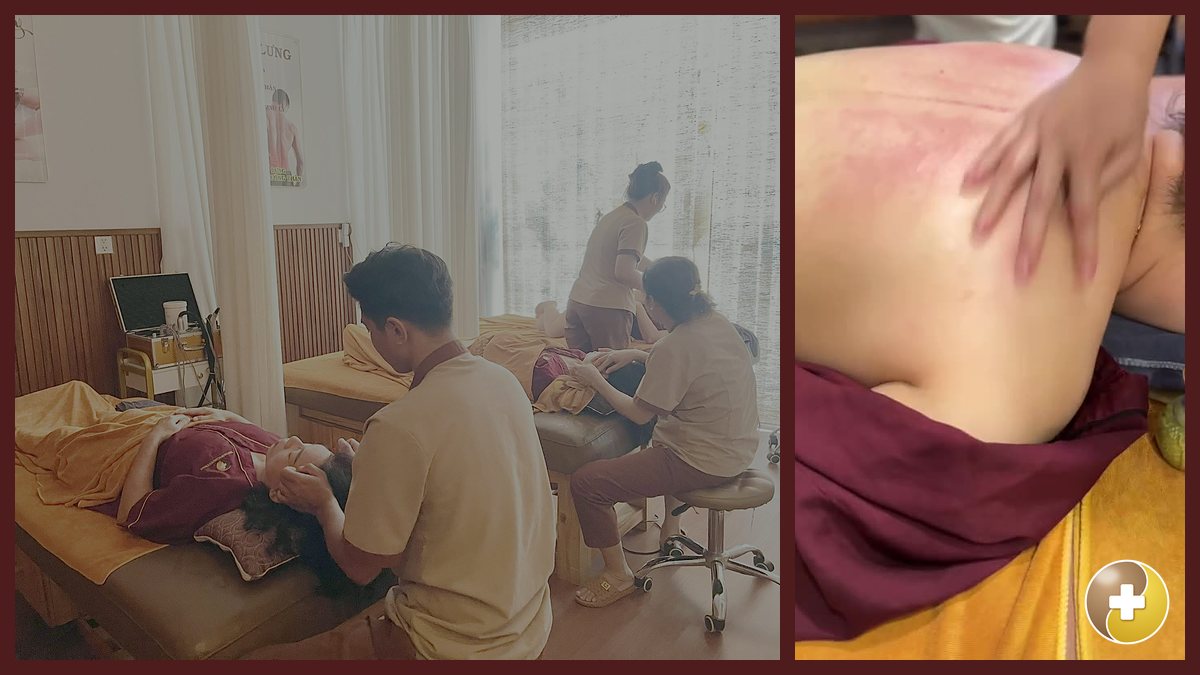
Quick answer: Back pain and stiff shoulders in electronics factory workers in Hungary and Poland usually come from 12-hour standing shifts on hard floors, repetitive movements, poor dorm sleep and cold winters. Shifting your weight, shoulder stretches and warmth help. On home leave, Tong Gia Acupoint Wellness in Ho Chi Minh City relaxes the muscles and applies acupressure.
Want Lương Y Tống Văn Huynh’s team to read your spine and posture in person?
Why factory work in Hungary and Poland is so hard on your back and shoulders
In the past few years, many Vietnamese workers have moved to Central Europe through recruitment agencies to work in electronics and component plants: around Budapest, Győr, Tatabánya, Komárom and Debrecen in Hungary; Wrocław, Łódź and Mława in Poland; Timișoara and Cluj-Napoca in Romania; Plzeň and Pardubice in the Czech Republic. The contract usually includes a shared dormitory, a shuttle bus and 12-hour shifts, some weeks on days, some on nights. The tasks sound light: inserting components, assembling, checking circuit boards, labelling, packing. But standing in one spot on a hard floor, repeating the same hand movement hundreds or thousands of times a shift and looking down at a tray of tiny parts adds up. After a few weeks or months, many people notice a dull ache across the lower back, shoulders that feel as if they carry weights, and heavy, tight calves every evening.
Winter arrives early in Central Europe. From late November to February the sky stays grey for days, temperatures hover around zero and sometimes fall well below minus ten, and the days are short: you leave for the morning shift in the dark and come home in the dark. There are few other Vietnamese around, Hungarian and Polish are hard languages, and many people simply put up with the pain because they do not know whom to ask or how to describe it.
From a Western medical point of view, this kind of fatigue is usually three things stacked together:
- Mechanical low back pain (L4–L5, L5–S1): static standing keeps the erector spinae muscles beside the spine working nonstop to hold you upright. As they tire, people push the belly forward or sink into one hip, the low back arches, and the discs and small facet joints take uneven load.
- Neck and shoulder muscle tension: both hands work in front of the body, shoulders slightly raised, head bent. The trapezius, levator scapulae and rhomboids hold the arms steady all shift and gradually become stiff, heavy and sometimes tingly down the arm.
- Pooling of blood in the calves: when you stand still, venous blood relies on the calf muscles to pump it back up to the heart. With few steps, that pump works poorly, so the legs feel heavy, ankles puff slightly by the end of the shift and night cramps are common.
It hits newcomers in their first three to six months, people who used to farm or work in an office, shorter workers who have to raise their arms to reach the line, taller workers who have to stoop, and anyone over 35 to 40. This page is about the back, shoulders and calves of people who stand on assembly lines; it differs from market stall work or long-haul trucking. For the bigger picture of how the neck, upper back and low back connect, read our pillar guide on spine care after a long-haul flight.
Common causes: 12-hour shifts, repetitive movements, dorm life and grey winters
- Static standing on a hard floor: concrete or anti-static coated floors, no mats, no stool. Standing still is more tiring than walking for the same time because the same muscles hold one position.
- A line that does not fit your body: bench and tray heights are set for everyone. Shorter people lift their shoulders and elbows; taller people bend at the waist and neck. A few centimetres multiplied by twelve hours is enough.
- Small, fast, repeated motions at line speed: nothing heavy, but the shoulders stay fixed and never get a moment to relax.
- Looking down at small parts: inspecting boards or working under magnifiers bends the neck forward and drags the shoulders and upper back with it. If you work at a microscope, see eye strain and stiff neck from microscope work.
- Safety or ESD shoes with hard soles: little arch support, so impact travels up to the knees, hips and low back. Read sore feet from safety boots on long shifts.
- Rotating night shifts and shared dorms: bunk beds, thin mattresses, roommates on different shifts, lights and doors at all hours. Shallow sleep means muscles do not recover between shifts.
- Cold and lack of daylight: walking to the bus stop in icy wind tightens the muscles, and you start work before they warm up. Winter also means less movement and lower mood; see winter fatigue from short days in Europe.
- Rushed meals, homesickness, few people to talk to: instant noodles, quick meals in a shared kitchen, worry about agency fees and the language barrier keep the shoulders tense without you noticing.
When home leave comes, the trip from Budapest, Warsaw, Prague or Bucharest to Tan Son Nhat usually connects through the Middle East or a large European hub, often 16 to 20 hours or more door to door. After months of standing, sitting cramped for almost a day stiffens the back further and swells the legs; see swollen legs after a long flight.
Related signs to notice: low back, shoulders and calves
- A dull ache across the low back at the end of the shift, relief as soon as you sit: the back muscles have been holding too long.
- Morning stiffness, hard to bend over the sink, easier after a few steps: tight low back muscles that loosen with gentle movement.
- Heavy, stiff shoulders, pain rising into the neck, a catch when turning the head: sometimes a headache at the back of the skull by the end of the work week.
- Tingling or tired arms and fingers after long work, easing with rest: if numbness lasts, the hand gets weak or you keep dropping things, get checked.
- Tight, heavy calves, slightly puffy ankles in the evening, cramps at night: poor circulation from standing still; see calf tightness.
- A cold back, sensitivity to wind, more aching in cold weather, waking at night to urinate: in Eastern wellness this is often linked to weak Kidney yang, explained below.
- Dry, tired eyes, poor sleep, irritability, waking up tired: night shifts and stress slow muscle recovery.
The Tong Gia training manual lists "aching low back; tired, weak knees; tiring quickly when standing" among the signs of reduced Kidney function. It also notes that pain shows up in one place while the source may sit elsewhere: the habit of standing on one leg, hard-soled shoes, or a neck bent all shift. That is why the practitioner reads the whole spine, not just the sore spot.
When to see a doctor
Most back and shoulder fatigue from line work eases with rest, sleep, warmth and stretching. Please see a doctor or go to a medical facility, and do not rely on massage, if you have any of the following:
- Pain right after a fall, a slip on the factory floor, something dropping on you, a machine accident, or a "snap" followed by being unable to stand straight.
- Pain shooting below the knee, numbness in the calf or foot, leg weakness, or a foot that drags.
- Numbness in the buttocks, groin or around the anus, trouble passing urine, or loss of bladder or bowel control: go to emergency now.
- Lasting numbness or weakness in one arm, dropping things, or neck pain with dizziness, blurred vision or slurred speech.
- Back pain with fever, chills, burning urination or blood in the urine; unexplained weight loss, lasting fatigue, or pain that worsens at night even at rest.
- Upper back pain between the shoulder blades with chest tightness, shortness of breath, sweating, or pain spreading to the jaw or left arm: call 112 in Hungary, Poland, Romania or the Czech Republic, 115 in Vietnam, and no massage.
- One calf swollen, painful, warm and red after a long flight or days of standing and little walking: this can be a deep vein clot. Get checked now and do not have the leg massaged.
- Pain lasting more than 4–6 weeks despite rest, or getting worse; pregnancy, recent surgery, osteoporosis or severe varicose veins: ask your doctor before any massage.
If you get hurt during a shift, tell your team leader, the shift manager and your agency at once and get checked early so there is a record. Tong Gia does not read X-rays or MRI scans and does not make medical plans. If you have results from a European medical facility, simply tell the practitioner which areas to keep gentle or avoid. This is a wellness service, not medical care.
Describing back pain in English when few people speak Vietnamese
In industrial towns such as Komárom, Mława or Pardubice there are few Vietnamese, and not every health worker speaks fluent English, but English is still the language most likely to be understood. Ask your team leader, the agency interpreter or a roommate who speaks the local language to come along, and check where your health insurance lets you be seen. Bring your passport, residence card and insurance card. These short phrases help; speak slowly and point to where it hurts:
| Phrase | When to use it |
|---|---|
| My lower back hurts. | Opening line at the front desk or with the nurse |
| My neck and shoulders are stiff and painful. | For shoulder and neck tension |
| My calves are swollen and sore. | For heavy, puffy legs |
| It hurts here. | While pointing |
| I stand for twelve hours on an assembly line. | When asked about your work |
| It started three days ago. | When asked how long |
| The pain goes down my leg. / My leg feels numb and weak. | Important warning signs to mention |
| On a scale of zero to ten, it is a seven. | When asked how bad it is |
| I hurt my back at work. | For an injury during a shift |
| I need an interpreter, please. | When you cannot follow the instructions |
| Please call an ambulance. | Emergencies |
Keep these on your phone with a short note: when the pain started, which station you work at, anything you have already taken or applied, and any existing conditions. A translation app helps for longer explanations. The common emergency number across the European Union, including Hungary, Poland, Romania and the Czech Republic, is 112.
The Y Tướng Học view: the low back and the Kidney, tendons and the Liver, muscles and the Spleen
Y Tướng Học, the Vietnamese art of reading the body's outer signs, rests on the saying "what is inside shows outside". Lương Y Tống Văn Huynh organised this knowledge so that practitioners can observe the face and body before placing their hands on the spine. For people who stand on a line through a Central European winter, three organ systems are usually compared.
Kidney and the low back. In the Tong Gia manual, the Kidney governs the bones, relates to the low back and knees and corresponds to winter. It shows in the ears, hair, bones and lower back: thick, rosy ears, glossy hair and a stable back are a good foundation; tired knees, a cold back, ringing ears and dry, thinning hair are signals to keep the low back warm and rest enough. Weak Kidney yang is described as feeling cold, cold hands and feet, a cold aching back and knees, and night urination; the advice is to keep the back, belly and feet warm and soak the feet. In Eastern wellness this is a functional idea, not a kidney disease in the Western sense.
Liver, tendons and eyes. The Liver nourishes tendons and ligaments and opens into the eyes. Rotating night shifts, short sleep, stress and eyes glued to tiny parts let Liver qi stagnate: tight shoulders and neck, cramping back muscles, dry red eyes, irritability, cramps. People with a "Thân" face (wide cheekbones, narrower forehead and chin) tend to hold tension around T7–T9.
Spleen, muscles and limbs. The Spleen governs the muscles and the four limbs and turns food into qi and blood. Rushed meals, noodles in place of dinner and late eating after night shifts tire it, and the arms and calves fatigue faster. A square, fleshy "Điền" face often goes with thick back muscles that can stiffen in a large patch around T11–T12.
Faces that call for a closer look. The manual links a "Đồng" face to stiffness or a prominent vertebra in the upper back around T3, affecting breathing, which is common in people who hunch over the line; "Do" and round "Viên" faces to the low back and hips, with the round face prone to a cold, soft low back. The bridge of the nose is seen as a small image of the spine: a crooked bridge often goes with an uneven spinal axis, which is then checked by hand. These are wellness observations, not fortune telling and not a judgement of illness.
Vertebrae and nerve-reflex areas involved
In the Tong Gia method of spinal nerve-reflex balancing, the neck (C1–C7) relates to the head, face, neck and arms; the thoracic spine (T1–T12) to circulation, breathing and digestion; the lumbar spine (L1–L5) to digestion, kidneys, urinary and reproductive organs and the legs; and the sacrum (S1–S5) to elimination and the pelvis. The muscle–bone–joint group, including neck and shoulder aches, sciatic pain and numb hands or feet, is worked through C5–C7, L1–L5 and S1–S5.
| Vertebrae | Nerves / function (Western anatomy) | Common signs in line workers | Organ (Eastern view) | Outer signs (Y Tướng Học) |
|---|---|---|---|---|
| C5–C7 | Roots of the brachial plexus to the shoulder, arm and hand | Stiff shoulders, tired arms, tingling fingers | Liver (tendons) | Hard shoulder muscles, dry red eyes |
| T1–T3 | Upper back nerves, trapezius and rhomboids; Phế du level at T3 | Heaviness between the shoulder blades, shallow breathing when hunched | Lung | "Đồng" face, prominent T3 |
| T7–T9 | Mid intercostal nerves; Can du area | Tight bands along the spine, rib-side tension under stress | Liver | "Thân" face, wide cheekbones |
| T10–T12 | Nerves to the abdominal wall; Tỳ du and Vị du | Heavy mid back, bloating after rushed meals | Spleen–Stomach | "Điền" face, pale lips |
| L1–L3 | Nerves to the groin and front thigh; psoas; kidneys at T12–L3; Thận du and Mệnh môn at L2 | Cold, stiff low back that tires quickly when standing | Kidney | Thin, dull ears, dry hair; round "Viên" face |
| L4–L5 | Roots contributing to the sciatic nerve; heavily loaded when standing arched | Dull ache across the lower back by end of shift | Kidney–Bladder | "Do" face, crooked nose bridge |
| S1–S5 | Roots to the buttocks, back of the thigh, calf and heel | Heavy calves, night cramps, ache behind the knee | Kidney–Bladder | "Giáp" face, cold hollow low back |
The table shows related areas for the practitioner to read carefully by hand; it is not a conclusion about causes. For more on the low back itself, see what causes lower back pain, and for the shoulders, what causes upper back pain.
Want Lương Y Tống Văn Huynh’s team to read your spine and posture in person?
How Tong Gia helps rebalance your back, shoulders and calves on home leave
Tong Gia Acupoint Wellness (Huyệt Đạo Tống Gia) follows the spinal nerve-reflex balancing method built by Lương Y Tống Văn Huynh, a Vietnamese traditional wellness practitioner with over 13 years of experience in Eastern wellness, Y Tướng Học and spinal reflex balancing. It is a Vietnamese Eastern method, and if you are passing through Ho Chi Minh City you are welcome to try it. The aim is to help each spinal area and the related organ function come back into balance, by hand.
- Questions and observation: which station you work at, standing or sitting, day or night shifts, how many months, where it hurts, whether it spreads to the leg or the hand tingles, any fall or injury, any results from Europe. Then complexion, ears, nose bridge, posture and shoulder and hip levels are observed.
- Reading the spine by hand: skin temperature, muscle layer, vertebral shape and local sensation, left against right, top to bottom, from the neck to the sacrum, narrowing to the key points. Long-time line workers often have one side of the low back thicker from favouring one leg.
- Muscle release: trapezius, levator scapulae and the area between the shoulder blades; the muscles along the spine and both sides of the waist; the glutes; then the back of the thighs and the calves, stroking upward. Pressure rises in five levels and you are asked how it feels.
- Acupressure on the right points: Kiên tỉnh (GB21) on the shoulders, Phế du (BL13) and Can du (BL18) on the upper and mid back, Thận du (BL23) and Mệnh môn (GV4) on the low back, Ủy trung (BL40) behind the knee. Each point is worked until the skin turns from dry to slightly moist, then stopped.
- Self-care coaching: how to shift your weight at the line, a two-minute calf raise and shoulder stretch between tasks, warming the low back and soaking your feet before bed, to take back to Europe.
You may feel tender points on top of the shoulders, along the low back and behind the knees; as the muscle lets go, the tenderness softens and the back and legs warm up. Afterward many people find their shoulders lighter, standing straight easier and the calves less tight, and sleep deeply that night; some feel a little sore for a day first. Everyone responds differently, and Tong Gia does not promise the pain will be gone after one session.
- Neck-shoulder / lower back care, 60 min: 550,000 VND (about 18 EUR / 21 USD), first visit 399,000 VND (about 13 EUR / 15 USD); 90 min: 750,000 VND (about 25 EUR / 29 USD). Shoulders, upper back, low back and waist; choose 90 minutes if both shoulders and back are tired.
- Heavy, tired legs care, 60 min: 500,000 VND (about 17 EUR / 19 USD). For tight calves and puffy ankles after months on the line and a connecting flight.
- Kidney wellness session, 75 min: 750,000 VND (about 25 EUR / 29 USD). For a cold, dull-aching back, tired knees and night urination after a Central European winter.
Conversions use reference rates of 1 EUR ≈ 30,000 VND and 1 USD ≈ 26,000 VND; payment is in VND. Full list: prices.
From Tan Son Nhat airport: the District 12 branch (225 Dương Thị Mười, Phường Tân Chánh Hiệp) lies north of the airport and is not a long drive outside rush hour. The Vinhomes Grand Park branch (Căn T16-21 khu Manhattan, Phường Long Bình, TP. Thủ Đức) is farther and takes longer, especially in the evening rush. Connecting flights from Europe land at various times of day, and most people sleep one night before booking. To stop on the way from the airport, see massage near Tan Son Nhat airport.
A suggested plan for home leave, and daily self-care
| When | What your body needs | What to do |
|---|---|---|
| Last week in Hungary or Poland | No extra load | Ask for day shifts if possible, sleep well before the flight, keep suitcases manageable |
| Travel day with a connection | Movement and fluids | Loose clothes, easy shoes; stand and walk every hour, do calf raises; walk during the layover; sip water |
| Landing day | Relax and sleep | Warm shower, light walk; Vietnam is 6 hours ahead of Hungary, Poland and Czechia in winter (5 in summer) and 5 ahead of Romania (4 in summer), so sleep on local time |
| Days 2–3 | Release months of standing | A 90-minute neck-shoulder / lower back session, or 60 minutes plus leg care; foot soak at night |
| Family visits | No long floor sitting or kitchen standing | Use chairs with back support, take breaks on long car trips, do not carry heavy things alone |
| Mid-leave | Keep fatigue from building | A Kidney wellness session if your back feels cold and achy |
| 2–3 days before flying back | Prepare for the next season | A gentle session and practise the stretches; read preparing your body before a long flight |
- Shift your weight at the line: rest one foot on a rail or low step if allowed and switch every few minutes; feet hip-width, knees soft, belly not pushed forward.
- Calf raises and shoulder rolls: at every short break, 20 calf raises to pump the blood back up, 10 shoulder rolls backward and a gentle neck tilt to each side.
- Warm the low back: rub your palms until warm, place them on both sides of the low back and rub up and down 50–100 times before bed.
- Soak and raise your feet: 15–20 minutes in warm water after the shift, then lie with your legs above heart level for a few minutes; with marked swelling or varicose veins, ask a health worker about compression stockings.
- Stay warm and sleep deeper: a thermal layer covering the waist on the way to the bus, a dry shirt after work, and an eye mask, earplugs and a bed curtain in the dorm on night-shift weeks. More ideas: back pain exercises at home.
Book from Europe before you fly home
Message us on WhatsApp or Zalo at +84 888 264 559 (0888 264 559 inside Vietnam) from Budapest, Győr, Wrocław, Łódź or Plzeň with three details: your landing date and time at Tan Son Nhat, where it aches (low back, shoulders, calves or all three), and which branch you prefer. You can also book online; tips are in booking a massage in Saigon from abroad.
- District 12 branch: 225 Dương Thị Mười, Phường Tân Chánh Hiệp (Tan Chanh Hiep Ward, District 12). Daily 8:00–19:00.
- Vinhomes Grand Park branch: Căn T16-21 khu Manhattan, Vinhomes Grand Park, Phường Long Bình, TP. Thủ Đức (Unit T16-21, The Manhattan, Thu Duc City). Daily 9:00–20:00.
Slots before Tet fill quickly, so write early. Genuine guest reviews are on each branch's Google Maps listing. If you drive trucks across Europe instead, read back pain from long-haul trucking in Europe.
Visit us
- Đông Y Huyệt Đạo Tống Gia Quận 12 (District 12)
225 Dương Thị Mười, Phường Tân Chánh Hiệp, Quận 12, HCMC · 8:00–19:00 daily · 0888 264 559 · Directions on Google Maps - Đông Y Huyệt Đạo Tống Gia Quận 9 (Vinhomes Grand Park, District 9)
Căn T16-21 khu Manhattan, Vinhomes Grand Park, Phường Long Bình, TP. Thủ Đức, HCMC · 9:00–20:00 daily · 0888 264 559 · Directions on Google Maps
Map of our two branches
Want Lương Y Tống Văn Huynh’s team to read your spine and posture in person?
What guests say on Google Maps
“The hair wash was pleasant, and the service was good.” (translated from a Vietnamese review)
— Thanh Như B., Google Maps review · Vinhomes Grand Park branch (District 9) · 2025 · See on Google Maps
“A pretty good experience – I was very relaxed.” (translated from a Vietnamese review)
— Khoa N., Google Maps review · Vinhomes Grand Park branch (District 9) · 2024 · See on Google Maps
Quoted from public reviews, shortened where marked (…). Experiences vary from person to person; reviews are not a substitute for seeing a doctor when something feels wrong.
Related guides for your trip
- Back pain and numb legs from long-haul trucking in Europe: why it happens and back care on a trip to Vietnam
- Leg numbness after a long flight: is it sciatica, when is it a clot, and how to care for your back and legs
- Quick 4–5 day trip to Vietnam: two long-haul flights in one week and how to look after your body
FAQ
Is back pain for factory workers in Hungary and Poland serious? Usually it is muscle fatigue from standing 12-hour line shifts on hard floors, repetitive hand work, looking down at small parts and cold winters, and it eases with rest, sleep, shifting your weight, shoulder stretches and warmth. Get checked right away if it follows a fall, spreads below the knee with numbness, comes with arm weakness, fever or trouble urinating.
My calves feel heavy every night after standing on the line in Wrocław. What can I do? Standing still weakens the calf pump, so blood pools and the ankles puff. Do 20 calf raises at breaks, switch legs and take a few steps when you can; after work, soak your feet in warm water and raise your legs. If one calf is swollen, painful, warm and red, get checked now and skip massage.
How do I explain back pain at a medical visit in Budapest if I don't speak Hungarian? Use short English phrases such as "My lower back hurts", "My neck and shoulders are stiff", "It hurts here" while pointing, and "I need an interpreter, please". Ask your team leader or agency interpreter to come with you. The emergency number in EU countries is 112.
Why does my back feel cold and achy during the Polish winter? In Western terms, cold muscles lose elasticity and tire faster when you stand for hours. In Eastern wellness, a cold back, tired knees and night urination are linked to weak Kidney yang, a functional idea rather than a kidney disease. Keep the waist warm and soak your feet; with fever or burning urination, get checked.
Should I get a massage right after a connecting flight home from Europe? Most people sleep one night first and book for day two or three. Before the session the Tong Gia practitioner asks about your work, where it hurts, any leg numbness, one-sided calf swelling or falls; with warning signs you will be advised to get checked first.
Does massage help back and shoulder pain from line work, and what does it cost? Massage helps the shoulders, back and calves relax, supports circulation and sleep; it is wellness care and does not replace a medical check. At Tong Gia, neck-shoulder / lower back care is 550,000 VND for 60 minutes (399,000 VND first visit), 750,000 VND for 90 minutes; heavy legs care 500,000 VND; Kidney wellness 750,000 VND, paid in VND.
Author: Lương Y Tống Văn Huynh – founder of Huyệt Đạo Tống Gia, a master of traditional Vietnamese wellness with over 13 years in Eastern wellness care, Y Tướng Học (face reading) and spinal nerve-reflex balancing massage.
Updated: 2026-11-18
Related guides
- Massage after spine surgery: is it safe on a trip to Vietnam, what to bring and which areas must be avoided
- Back pain from wrapping banh tet and cooking for Tet: care for the lower back, neck, shoulders and wrists
- Back pain and numb legs from long-haul trucking in Europe: why it happens and back care on a trip to Vietnam
- Back and knee pain from hotel housekeeping in Japan: what is going on and how to recover on your trip home
- Back pain and fatigue from FIFO mining in Western Australia: 12-hour shifts, vibration, camp sleep
- Knee and back pain from tiling and building work in Australia: causes and care when you fly home
This is a wellness service, not medical care.