
Back pain and tired feet for cruise ship crew on home leave: long contracts and recovery in Saigon
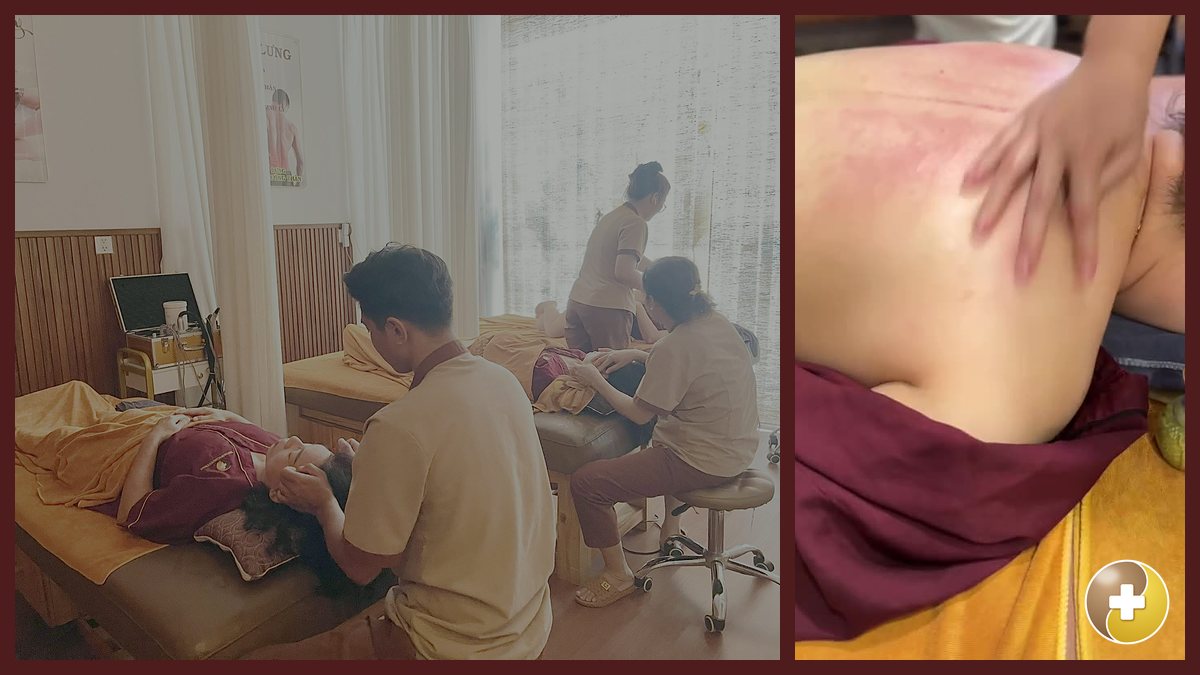
Quick answer: Back pain and tired feet after a cruise ship contract usually come from overuse: months of 10–12 hour shifts on your feet, steep crew stairs, repeated bending and broken sleep in a small cabin. Rest and calf stretches help. On home leave, Tong Gia Acupoint Wellness in Ho Chi Minh City applies acupressure to the back and legs.
Want Lương Y Tống Văn Huynh’s team to read your spine and posture in person?
Why months at sea are so hard on your back and feet
Vietnamese crew, and crew from many other countries, work every route the big cruise lines sail: the Caribbean out of Miami, Fort Lauderdale and Port Canaveral in winter, the Mediterranean out of Barcelona, Civitavecchia near Rome, Genoa and Marseille in summer, and Asian loops from Singapore, Hong Kong or Shanghai. The jobs vary: restaurant and buffet service, bar, stateroom attendants, galley, dishwashing, laundry, spa, provisions. What they share is a long contract, often 6–9 months, shifts of 10–12 hours a day and almost no full day off. When the contract ends, many people get around two months of leave, depending on the company, and fly home. That is usually when the lower back, heels, calves and one shoulder start to complain.
From a Western medical point of view, most of this is musculoskeletal overuse: muscles, tendons, ligaments and small joints carrying the same type of load for months without enough recovery time, not a disease of an internal organ. Three areas take most of the strain:
- The lower back: stateroom attendants bend to tuck sheets, lift mattresses, wipe floors and scrub bathtubs in dozens of cabins a day; waiters lean over tables; galley crew stand bent over prep counters. Bending and twisting over and over keeps the spinal erector muscles and the quadratus lumborum tense, and loads the L4–L5 and L5–S1 levels.
- Feet, heels and calves: standing and walking on carpeted steel decks or tiled galley floors all shift, in uniform shoes, plus many trips up and down crew stairs. The plantar fascia under the foot gets overstretched, so the first steps in the morning sting at the heel; calves feel heavy and ankles swell a little by the end of the shift.
- Shoulders and wrists: heavy trays carried on one side, housekeeping carts, laundry bags, cases of stores loaded in port.
This is different from the strain described in our page on shrimping and offshore work, where the load is hauling nets, heavy lifting and engine vibration. Cruise crew mostly stand, walk and bend lightly, but for very long hours, with few days off, small cabins and constant time changes. For how the neck, upper back and lower back work together after a long flight, see our main guide on spine care after a long-haul flight.
Common causes: long shifts, crew stairs, small cabins and ship time
- On your feet almost the whole shift. A waiter can cover a lot of ground in one busy dinner service; a stateroom attendant walks long corridors and in and out of dozens of cabins. The calf muscles act as a pump that pushes venous blood back to the heart. Standing still for long periods weakens that pump, so blood and fluid pool in the lower legs.
- Crew stairs. Crew areas are often on lower decks, with narrow, steep stairways climbed many times a day, sometimes with something in your hands. Going up loads the front of the thigh and the knee; going down loads the knee and calf.
- Repetitive bending in housekeeping. No single movement is heavy, but hundreds a day for six to nine months leave the lower back no real rest.
- One-sided carrying. Trays on the dominant hand and pushing heavy carts make one shoulder and one side of the back work harder, and over time your standing posture tilts to match.
- No full days off. Port days may give a few hours ashore, but many people spend them walking, shopping and calling home, so the feet still do not rest.
- Small cabins and short sleep. Crew cabins are small, often shared, with narrow bunks and thin mattresses; climbing into a top bunk means curling the back. A late evening shift followed by an early morning one cuts sleep into pieces. Tong Gia's training material explains that, in Eastern tradition, the Liver stores blood: at rest, blood returns to the Liver to be nourished, and in movement the Liver sends it to muscles and tendons. Long-term short sleep leaves tendons and muscles poorly nourished and prone to cramps.
- Ship time changes. Repositioning between the Caribbean and Europe, or sailing between regions, means the ship clock moves back and forth. Just as your body adjusts, it shifts again.
- Rushed meals in the crew mess, late meals after night shifts, and a lot of coffee to stay alert.
- Cold air-conditioning inside, heat and humidity outside and in the galley. Muscles that keep meeting cold air tighten and lose elasticity.
Then comes the trip home. From Miami or Fort Lauderdale to Ho Chi Minh City usually means connecting flights and a full day of travel; from Barcelona or Rome it is often more than 12 hours in the air. Vietnam is 12 hours ahead of Miami in winter (11 in summer) and 6 hours ahead of Barcelona and Rome in winter (5 in summer); if you sign off in Singapore, Vietnam is one hour behind. Many crew say the soreness only "surfaces" once they stop: on board you are braced all the time, at home you finally relax and the back, heels and calves speak up. For leg swelling after the flight, read swollen legs after a long flight.
Related signs to notice
- Sharp heel pain for the first steps in the morning that eases after a few minutes: common when the plantar fascia is strained after months on hard floors.
- Heavy calves, night cramps, mild ankle swelling at the end of the day that goes down overnight: poor venous return from long standing. See calf tightness after walking.
- A stiff lower back in the morning, an ache across the waist when standing in one place.
- Aching into the buttock or the back of the thigh: the lower lumbar and sacral area, where the nerve roots form the sciatic nerve.
- Knee pain going downstairs or squatting.
- One heavy shoulder, an ache between the shoulder blades, tired wrists.
- A cold lower back, cold feet, weak knees, tiring quickly when standing, waking at night to urinate: in Eastern tradition these are often linked with the Kidney, covered below.
- Still sleeping badly at home and sleepy during the day: your body clock is still on ship time.
Tong Gia's training material notes that pain often shows up in one place while the source sits somewhere else: heel pain may start with tight calves and the lower back; lower back pain may come from standing with your weight on one leg all shift. That is why the practitioner reads the whole spine and then the legs, not just the sore spot.
When to see a doctor
Most back pain and leg fatigue after a long contract eases with rest, sleep and stretching. Get checked at a medical facility, rather than booking a massage, if you have:
- One calf that is swollen, painful, warm or red after a long flight or days of little movement: this can be a deep vein clot. Get checked now and do not have the leg massaged.
- Sudden shortness of breath, chest pain or coughing blood after a long flight: call 115 in Vietnam straight away.
- Chest tightness, shortness of breath, sweating, or pain spreading to the jaw or left arm: call 115, no massage.
- Pain after a fall on the crew stairs or a slip on a wet galley floor, or a "crack" when lifting and then being unable to stand straight.
- Pain spreading below the knee, numbness in the calf or foot, a weak leg or a foot that drags.
- Numbness in the buttocks, groin or around the anus, trouble passing urine, or loss of bladder or bowel control: go to emergency now.
- A heel or ankle that is very swollen or bruised after a twist, or that cannot take your weight.
- Swelling in both legs that does not settle after several days of rest, puffy eyelids in the morning, or passing very little urine.
- Back pain with fever, unexplained weight loss, lasting fatigue, or pain that gets worse at night even at rest.
- Pain lasting more than 4–6 weeks despite rest; pregnancy, recent surgery or severe varicose veins: ask your doctor before any massage.
If you are hurt while working on board, report it to your supervisor and visit the ship's medical centre so there is a record; many lines also require a medical exam before a new contract. Tong Gia does not read X-rays or MRI scans and does not make medical plans. If you have results from a medical facility, simply tell the practitioner which areas to keep gentle or avoid. This is a wellness service, not medical care.
The Y Tướng Học view: back and knees with the Kidney, tendons with the Liver, limbs with the Spleen
Y Tướng Học, the Vietnamese art of reading the body's outward signs, rests on one idea: what is inside shows outside. Lương Y Tống Văn Huynh, founder of Huyệt Đạo Tống Gia, organised this knowledge so practitioners can read the face and posture before touching the spine. For crew who stand and walk for months, three organ systems are usually considered.
Kidney, lower back and knees. In Tong Gia's training material, the Kidney governs the bones, opens into the ears and shows in the hair, and is linked with the lower back and knees. Its table of signs of weakened Kidney function lists, for the back and knees: aching lower back, weak knees and tiring quickly when standing for long; and under swelling: swollen ankles. That is close to a description of a waiter or stateroom attendant at the end of a shift. Weak Kidney yang is described as feeling cold, cold hands and feet, a cold and aching lower back and knees, and waking at night to urinate. Crew moving between cold stores, air-conditioned corridors and a hot galley often describe exactly this. The material calls the Kidney your "base capital": spend it early and you pay it back later in money and time.
Liver and the tendons of the feet and calves. The Liver governs the tendons and ligaments; when it is in good shape, tendons stay supple. Broken sleep, peak-season stress and homesickness let Liver qi stagnate: heel cords, the sole of the foot and the calves tighten, cramps come easily, eyes feel dry and tempers run short. People with a "Thân" face shape (wide in the middle, narrow at both ends, broad cheekbones) have a key area at D7–D9 according to the material.
Spleen, muscle and limbs. The Spleen and Stomach are the base of acquired energy; the Spleen governs muscle and the four limbs and dislikes damp. Rushed meals between shifts and late eating tire it, showing as pale lips, bloating, a heavy body and tired arms and legs. A square, full "Điền" face has its key area at D11–D12.
Faces that call for a closer look at the lower back and body axis. The material notes that a "Do" face (narrow on top, full jaw) points to the lower back and hips; a round "Viên" face needs a warm lower back and gentle regular movement; an uneven "Dụng" face, one side larger than the other, goes with a tilted axis and asymmetric muscles on both sides, very relevant for people who have carried trays on one side for years. The bridge of the nose is seen as a small map of the spine: a crooked nose bridge often goes with a tilted spinal axis. A pale complexion from little sunlight, dark circles and pale lips that last are signs the body is short of rest.
This is observation for wellness care, not fortune-telling, and it is never used to say anyone has a disease.
Vertebrae and nerve-reflex areas involved
According to Tong Gia's material on rebalancing the spinal nerve-reflex system, the neck (C1–C7) relates to the head, face, neck and arms; the thoracic spine (D1–D12) to circulation, breathing and digestion; the lumbar spine (L1–L5) to digestion, kidneys, urinary and reproductive function and the legs; the sacrum (S1–S5) to elimination and the pelvis. Muscle, bone and joint complaints are grouped at C5–C7, L1–L5 and S1–S5. For cruise crew, the practitioner usually compares these areas:
| Vertebrae | Nerves / function (Western anatomy) | Common complaints in cruise crew | Organ (Eastern tradition) | Outward signs (Y Tướng Học) |
|---|---|---|---|---|
| C5–C7 (lower neck) | Roots of the brachial plexus to shoulder, arm and wrist | Heavy tray-side shoulder, tired wrist, numb hand after sleeping in a cramped bunk | Liver (tendons); Spleen (limbs) | Tight shoulder muscles, knitted brows, dry eyes |
| D7–D9 (mid back) | Middle intercostal nerves; Liver shu area | Long back muscles tightening from standing braced all shift | Liver | "Thân" face, broad cheekbones, short temper |
| D11–D12 (thoracolumbar junction) | Nerves to the lower abdominal wall; Spleen shu below T11, Stomach shu below T12 | Heavy mid back, bloating from rushed or late meals | Spleen–Stomach | "Điền" face, pale lips, heavy body |
| L1–L3 (upper lumbar) | Roots to the groin and front of the thigh; Kidney shu and Mingmen at L2 | Lower back aching when standing long, cold back, knees tired on stairs | Kidney | Dull ears, dry hair, cold lower back; "Viên" face |
| L4–L5 (lower lumbar) | L4 root to the inner shin, L5 root to the top of the foot and big toe; part of the sciatic nerve | Ache across the low back after hours of making beds, mopping, scrubbing | Kidney–Bladder | Thick waist and hips ("Do" face), crooked nose bridge |
| S1–S5 (sacrum) | S1 root to the outer foot, heel and calf; pelvic nerves | Tired buttocks and hamstrings, heavy calves, morning heel pain | Kidney–Bladder | "Dụng" face, tilted axis, uneven hips |
The table shows "related" areas so the practitioner knows where to read carefully by hand; it is not a statement of cause. Weizhong (Ủy trung, BL40) in the middle of the knee crease is used under the classic line "for back pain, look to Weizhong". At the ankle, Taixi (Thái khê, KI3) sits in the hollow between the inner ankle bone and the Achilles tendon; Yongquan (Dũng tuyền, KI1) lies in the hollow on the front third of the sole when the toes curl, and is used to calm the mind and help sleep.
How Tong Gia helps rebalance your back and legs on home leave
Each session follows the spinal nerve-reflex rebalancing massage developed by Lương Y Tống Văn Huynh, founder of Huyệt Đạo Tống Gia and practitioner of Vietnamese traditional wellness, Y Tướng Học and spinal reflex rebalancing for over 13 years. It is a Vietnamese traditional wellness method done entirely by hand, aimed at helping each spinal area rebalance, supporting the related organ functions and making the legs feel lighter.
Steps in one session
- Questions and observation: your department on board, contract length, shift hours, where it hurts, any swelling or numbness in the legs, any falls, where you signed off and when you landed. Then the practitioner looks at your complexion, ears, nose bridge, standing posture, shoulder and hip levels and how you place your feet.
- Reading the spine by hand: skin temperature, the muscle layer, the shape of the spine and the sensation at each point, comparing left with right and top with bottom from the neck to the sacrum, then narrowing to key zones and points.
- Releasing muscles: the long back muscles, quadratus lumborum and glutes, then hamstrings, calves, Achilles tendon and the sole. Pressure moves from light to firm over five levels, and you are asked how it feels; swollen legs get light strokes toward the heart.
- Acupressure in the right areas: Shenshu and Mingmen at the lower back, Weizhong at the knee crease, Taixi at the ankle, Yongquan on the sole, and Zusanli below the knee when you feel drained and have been eating irregularly. The practitioner stops at a point when the skin there changes from dry to slightly moist, following the training material. Sanyinjiao is not pressed during pregnancy.
- Self-care to take back on board: calf stretches, rolling the sole, bending to make beds without straining the back, warming the lower back before sleep.
A typical session for cruise crew: along the spine the practitioner finds both sides of the lower back tight, one side thicker; the calves feel bunched, the heel cords taut and the soles tender in a few spots. The first part goes slowly so the muscles accept the pressure, then works deeper into the lower back and glutes and down the legs. You may feel tenderness on both sides of the low back, mid-calf and on the sole, easing as the muscles let go and the legs warm up. Afterwards many people find walking lighter and bending easier, and sleep deeply that night; some feel a little sore for a day first. Everyone responds differently, and Tong Gia does not promise the pain will be gone after one session.
Suitable services and prices
- Neck–shoulder / back–waist care, 60 min: 550,000 VND (about 21 USD), first visit 399,000 VND (about 15 USD); 90 min: 750,000 VND (about 29 USD). Focus on the lower back, sides of the waist, mid back and the tray-side shoulder.
- Heavy, tired legs care, 60 min: 500,000 VND (about 19 USD). For heel pain, heavy calves and mild end-of-day ankle swelling.
- Kidney wellness session, 75 min: 750,000 VND (about 29 USD). For a cold, aching lower back, tired knees and night-time urination after months without days off.
Conversions use a reference rate of 1 USD ≈ 26,000 VND; payment is in VND. Full list on the price page.
From Tan Son Nhat Airport to the branches
The District 12 branch (225 Dương Thị Mười, Phường Tân Chánh Hiệp, north of the airport) is a fairly short drive, depending on the time of day and traffic. The Vinhomes Grand Park branch (Căn T16-21 khu Manhattan, Phường Long Bình, TP. Thủ Đức, in the east of the city) is further, and the drive takes longer, especially in the evening rush. Flights from Miami or Europe often land late at night or early in the morning, so most people sleep first and book for the next day. If you want to stop on the way from the airport, read massage near Tan Son Nhat Airport. Branch details: District 12 and District 9 / Thu Duc.
Want Lương Y Tống Văn Huynh’s team to read your spine and posture in person?
A suggested plan for two months of home leave, and self-care
| When | What your body needs | What to do |
|---|---|---|
| Last week on board | No extra load | Sleep well on the last nights, pack a little each day, do not carry heavy luggage one-handed down the stairs |
| Sign-off day and flight | Blood moving in the legs | Loose shoes; stand and walk every hour, rise onto your toes, circle the ankles; sip water, go easy on alcohol |
| Landing day | Relax, sleep on Vietnam time | Warm shower, foot soak, a gentle walk; morning daylight the next day to reset your clock |
| Week 1 | Release a whole contract's worth of tension | A 90-minute back–waist session; a few days later a 60-minute tired legs session |
| Weeks 2–4 | Let muscles and tendons recover | Morning walks, daily calf stretches; on long car trips to the hometown, take breaks |
| Weeks 5–6 | Rebuild your reserves | A 75-minute Kidney wellness session if your back is cold or knees tired; sleep before 11 pm |
| Last week before sign-on | Prepare for the next contract | Medical exam if your line requires it, a light session, practise the stretches; read preparing your body for a long flight |
Five small habits while you are home:
- Regular sleep: go to bed and wake at the same time daily instead of long afternoon naps. Tong Gia's material says sleeping before 11 pm lets the Kidney rest. For jet lag, see jet lag and sleep after flying to Vietnam.
- Rub Yongquan: in the evening, rub the sole of each foot with your palm for 3–5 minutes, after a 15–20 minute warm foot soak.
- Calf stretch: hands on a wall, one leg back with the heel down, hold 20–30 seconds, switch; roll the sole over a bottle or small ball for a few minutes.
- Warm the lower back: rub your palms until warm, place them on both sides of the lower back and rub up and down until warm; press Taixi at each ankle for 1–2 minutes, a mild ache is enough.
- Legs up and walking: lie with your legs above heart level for 10–15 minutes each evening; walk 20–30 minutes in the morning on flat ground in cushioned shoes.
For acupressure you can do on board, see self-acupressure at home. If you also know the strain of standing all day ashore, read standing all day at work, and for boots on long shifts, sore feet from safety boots.
Self-care back on board
- Shoes and insoles that support the arch, within uniform rules; two pairs to rotate, kept dry.
- Bend at the knees, not the back, when making beds and picking things up; push carts with your legs, do not over-reach.
- Switch tray hands when you can, keep the tray close and avoid arching your back under it.
- Rise onto your toes and circle the ankles while waiting, 10–15 times, to keep the calf pump working.
- Legs up the wall for 5–10 minutes before sleep, even in a narrow bunk.
- Protect sleep: eye mask, earplugs, less coffee in the second half of a shift, an earlier night when the ship clock changes.
- On port days, do not walk all day in stiff shoes; sit down and put your feet up for a while.
If heel or calf pain keeps building, one leg swells or numbness lasts, do not push through to the end of the contract: tell your supervisor and visit the ship's medical centre.
Book from Miami, Barcelona or Singapore before you sign off
You can book while still on board, whenever you have port wifi. Call, Zalo or WhatsApp +84 888 264 559 (0888 264 559 inside Vietnam) and send three things: your landing date and time at Tan Son Nhat, where it hurts (lower back, heels, calves or all of them) and which branch you prefer. Staff will suggest a suitable day and hold the time, including for family members coming with you. You can also book online; for messaging across time zones, read booking a Saigon massage from abroad.
- District 12 branch: 225 Dương Thị Mười, Phường Tân Chánh Hiệp, Ho Chi Minh City. Open 8:00–19:00 daily.
- District 9 branch: Căn T16-21 khu Manhattan, Vinhomes Grand Park, Phường Long Bình, TP. Thủ Đức (Thu Duc City). Open 9:00–20:00 daily.
The weeks before Tet get busy, so message early if your leave falls then. Real customer reviews are on Google Maps on each branch page.
Visit us
- Đông Y Huyệt Đạo Tống Gia Quận 12 (District 12)
225 Dương Thị Mười, Phường Tân Chánh Hiệp, Quận 12, HCMC · 8:00–19:00 daily · 0888 264 559 · Directions on Google Maps - Đông Y Huyệt Đạo Tống Gia Quận 9 (Vinhomes Grand Park, District 9)
Căn T16-21 khu Manhattan, Vinhomes Grand Park, Phường Long Bình, TP. Thủ Đức, HCMC · 9:00–20:00 daily · 0888 264 559 · Directions on Google Maps
Map of our two branches
Want Lương Y Tống Văn Huynh’s team to read your spine and posture in person?
What guests say on Google Maps
“Wonderful service, attentive advice.” (translated from a Vietnamese review)
— Xuân S., Google Maps review · District 12 branch · 2023 · See on Google Maps
“Wonderful – the whole team is warm and attentive.” (translated from a Vietnamese review)
— Tuấn T., Google Maps review · District 12 branch · 2023 · See on Google Maps
Quoted from public reviews, shortened where marked (…). Experiences vary from person to person; reviews are not a substitute for seeing a doctor when something feels wrong.
Related guides for your trip
FAQ
Is back pain and foot pain after a cruise ship contract serious? Usually it is muscle and tendon overuse from standing, walking and bending 10–12 hours a day for months, steep crew stairs and short sleep in a small cabin. It tends to ease with rest, steady sleep, calf stretches and warmth. A swollen, hot calf on one side, breathlessness, chest pain or a weak, numb leg needs a medical check straight away.
I work as a waiter on Caribbean cruises out of Miami. Why does my heel hurt when I get out of bed? This is common when the plantar fascia under the foot is strained after months on hard floors, often with tight calves. The pain is sharpest in the first steps and then eases. Calf stretches, rolling the sole and cushioned shoes help. If the heel is very swollen or bruised, or the pain does not settle after a few weeks, get it checked.
I clean cabins on Mediterranean cruises from Barcelona and my lower back still hurts at home. What should I do? Hundreds of bends a day for making beds and mopping keep the low back muscles tight. At home, keep regular sleep, walk gently, warm the lower back in the evening and avoid heavy lifting on your own. Pain spreading below the knee, numbness, fever or pain lasting more than 4–6 weeks should be checked at a medical facility.
Are swollen ankles after months of standing on a ship dangerous? Mild swelling in both ankles in the evening that goes down overnight is usually fluid pooling from long standing. One swollen, painful, warm calf after a long flight can be a clot: get checked now and do not have it massaged. Lasting swelling with little urine or puffy eyelids also needs a check.
Should I get a massage right after flying in from Europe or the US? Most people do better sleeping first, getting morning daylight and booking for the next day or the one after. Before the session, the practitioner asks about your work on board, the flight, where it hurts and any swelling or numbness. If something looks unusual, you will be advised to get checked first.
How much does back and leg care cost at Tong Gia? Back–waist care is 550,000 VND for 60 minutes (399,000 VND on your first visit) and 750,000 VND for 90 minutes; heavy, tired legs care is 500,000 VND for 60 minutes; the Kidney wellness session is 750,000 VND for 75 minutes. That is roughly 15–29 USD at 1 USD ≈ 26,000 VND, paid in VND. This is wellness care and does not replace a medical check.
Author: Lương Y Tống Văn Huynh – founder of Huyệt Đạo Tống Gia, a master of traditional Vietnamese wellness with over 13 years in Eastern wellness care, Y Tướng Học (face reading) and spinal nerve-reflex balancing massage.
Updated: 2026-11-18
Related guides
- Massage after spine surgery: is it safe on a trip to Vietnam, what to bring and which areas must be avoided
- Back pain from wrapping banh tet and cooking for Tet: care for the lower back, neck, shoulders and wrists
- Back pain and numb legs from long-haul trucking in Europe: why it happens and back care on a trip to Vietnam
- Back and knee pain from hotel housekeeping in Japan: what is going on and how to recover on your trip home
- Back pain and fatigue from FIFO mining in Western Australia: 12-hour shifts, vibration, camp sleep
- Knee and back pain from tiling and building work in Australia: causes and care when you fly home
This is a wellness service, not medical care.