
Weekly wellness routine for long stays in HCMC: one session a week, rotating neck, back, legs and sleep
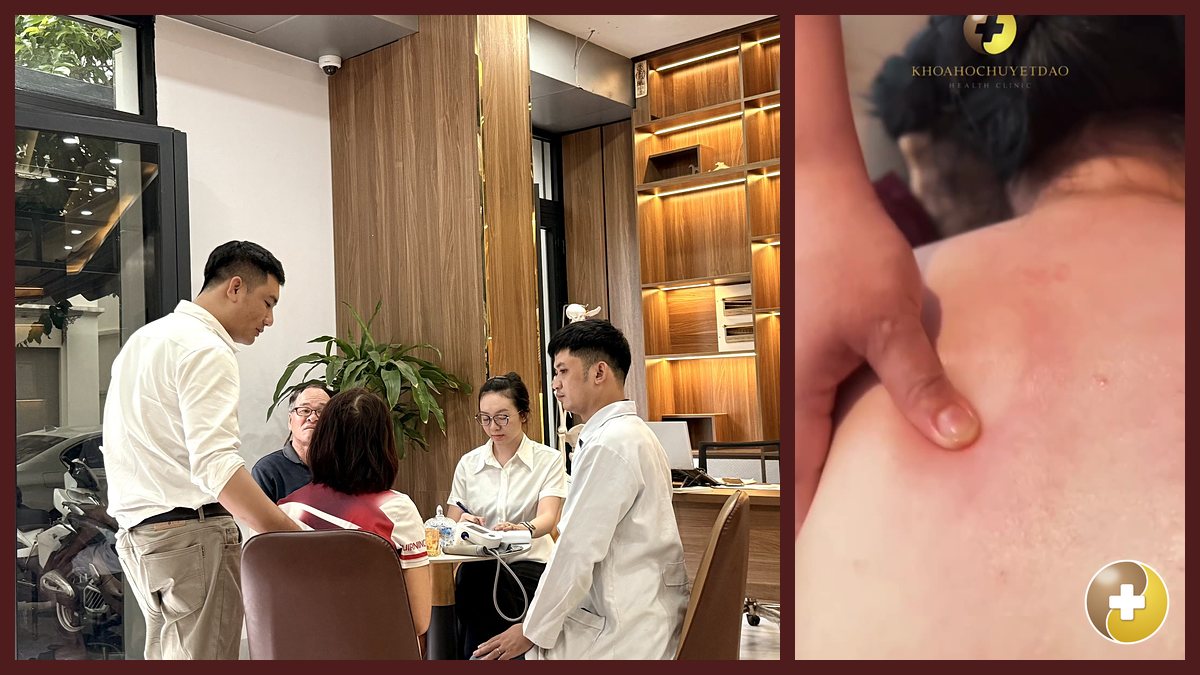
Quick answer: For a long stay in Ho Chi Minh City, a simple rhythm works well: one session a week, changing the focus each week between neck and shoulders, lower back, legs and sleep, then repeating for 4–12 weeks. Huyệt Đạo Tống Gia in District 12 and Vinhomes Grand Park charges its standard listed prices; ask reception about monthly packages.
Want Lương Y Tống Văn Huynh’s team to read your spine and posture in person?
What a weekly wellness routine means on a long stay in HCMC
Every winter, Vietnamese families from Moscow, Saint Petersburg, Kazan, Almaty and Astana, along with Russian and Kazakh friends and long-haul travellers from colder countries, swap snow for Saigon for one to three months. Some stay with relatives, some rent an apartment in Thủ Đức, District 12 or Gò Vấp, and many keep working remotely. The direct flight from Moscow usually takes around 9 to 10 hours; from Kazakhstan, depending on the route, you fly direct or connect.
A week's holiday and a two-month stay are very different for the body. On a short trip, tiredness never has time to build up. Over several weeks in a new city, small new habits repeat every day: an unfamiliar bed and pillow, a laptop on the kitchen table, long walks in the heat, taxi and motorbike rides, air-conditioning at night. None of them matters much on its own, but after three or four weeks they tend to show up as a stiff neck, a heavy lower back, aching legs and lighter, broken sleep.
In physiological terms, muscles do not only tire from heavy work. Holding one posture for hours, sleeping on the wrong pillow or walking on uneven pavements keeps muscles contracted for longer than usual. Local blood flow drops, metabolic by-products linger and the area starts to feel tight and heavy. When those muscles are released once a week and someone keeps track of what changes, fatigue is less likely to settle into hard, sore knots. That is the idea behind a weekly routine: a steady rhythm instead of one long session when things finally hurt.
This article is not about the first days of adjusting to the heat; dry nose, throat and breathing are covered in wintering in Vietnam: a weekly health routine. If you have just landed and your back still remembers the aircraft seat, start with the main article of the series, spine care after a long-haul flight.
Why the body gets more tired week by week
On a long stay, fatigue rarely has a single cause. It is usually the sum of new routines:
- Unfamiliar beds and pillows. Rental mattresses are often firmer or softer than yours at home; you wake with a tight neck or an aching lower back.
- Remote work. A laptop on the dining table, sofa or café counter means head forward, shoulders raised and a rounded back for hours. If you work to Moscow or European hours, the day often runs late into the evening.
- Walking and sightseeing. Markets, streets, stairs and weekend trips work your calves and feet far more than a winter at home, often in thin sandals on hot pavements.
- Long rides. Taxis in traffic, motorbikes and weekend drives to Vũng Tàu or Đà Lạt put vibration and jolts through the lower back and hips.
- Air-conditioning and heat in turn. Cold air on your neck while you sleep, heavy sweating outside; the shoulder muscles tense and the afternoons feel sluggish.
- A shifted body clock. Saigon is 4 hours ahead of Moscow and Kazan and 2 hours ahead of Yekaterinburg, Almaty and Astana; Novosibirsk shares Saigon's time. Calls home, football and online meetings push bedtime later, and sleep gets lighter week by week.
- Different food. Sweet iced coffee, lots of fruit and weekend feasts leave the stomach heavy and sleep restless.
None of this is dangerous by itself. But after a month the body usually signals in four places: neck and shoulders, lower back, legs and sleep. The weekly plan is built around exactly those four areas.
Related signs to watch for in each area
Jot down once a week what bothers you; it makes it easier to choose where to start:
- Neck and shoulders: morning stiffness, a pulling feeling when you turn your head, shoulders that feel as if you are carrying a backpack, an ache between the shoulder blades after a day at the laptop, sometimes rising into the head.
- Lower back: tiredness standing at the stove or on long rides, difficulty bending to tie shoes, a stiff back in the morning that eases after moving around.
- Legs: heavy calves by evening, mild ankle puffiness after a long walk, burning heels and soles, night cramps.
- Sleep: trouble falling asleep, waking in the night, waking too early, a heavy head and no energy in the morning.
- Overall: a slump after lunch, poor appetite, short temper with family, always wanting to lean on something.
If these signs ease after each session and each week, the rhythm suits you. If they get worse, spread, or you notice anything in the next section, get checked first.
When to see a doctor
A weekly routine is meant only for muscle fatigue, stiffness and sleep thrown off by daily habits. Please see a doctor or go to a medical facility, without waiting for your next session, if you notice:
- Chest pain or pressure, shortness of breath, cold sweats, pain spreading to the jaw or left arm: call 115 (Vietnam's ambulance number) at once.
- One calf swollen, painful, warm or red in the days after a long flight, or sudden breathlessness: this can be a blood clot. Get checked immediately and do not have the leg massaged.
- Back pain with numbness or weakness in a leg, loss of feeling around the buttocks, or new bladder or bowel problems, or back pain after a fall or road accident.
- Neck pain with arm numbness, dizziness, double vision, slurred speech or a drooping face: call 115.
- High fever, headache, pain behind the eyes, body aches or red spots on the skin: mosquitoes are around all year in Saigon, so get tested early.
- Weeks of poor sleep with low mood, strong anxiety, unexplained weight loss or a racing heart at rest.
- Pain that builds at night and does not ease with rest, or a new lump or swelling.
- If you live with heart disease, high blood pressure or diabetes, take blood thinners or are pregnant, mention it when booking, bring your prescriptions and never stop them on your own.
This is a wellness service, not medical care. Tong Gia does not read X-rays, MRI scans or lab results and does not replace a medical facility. If a practitioner notices any of these signs, the session stops and you are advised to see a doctor first.
The face-reading view: which organs sit behind the four areas
Huyệt Đạo Tống Gia practises a Vietnamese Eastern wellness method built by Lương Y Tống Văn Huynh ("Lương Y" is a Vietnamese title for a master of traditional Eastern wellness) over more than 13 years of work in Eastern wellness, Y Tướng Học (Vietnamese face and body reading) and spinal reflex balancing. Its core phrase is "the outer appearance reflects the inner organs": what happens inside shows on the outside, a principle with roots more than 2,000 years old. Another line from the Tong Gia training course fits long stays well: pain appears in one place, but its source is often somewhere else. So each week of the plan is linked to an organ system in the Eastern sense:
- Neck and shoulder week – Liver (Can). In the Tong Gia course, the Liver "governs the tendons", nourishing tendons and ligaments. In balance, muscles are supple and joints move freely; when it is weak, you get tightness and cramps. The Liver also keeps qi flowing, and long-running stress or bottled-up anger makes it "stagnate". Outer signs: dry, tired eyes, knitted brows, forehead lines, rock-hard shoulders and cheeks, a short fuse.
- Lower back week – Kidneys (Thận). The Kidneys "govern bones and marrow"; the point Thận du sits on both sides of the lower back, below the L2 spinous process. Tong Gia's table shows the Kidneys in the ears, hair, bones and lower back: a steady back, full pink ears and glossy hair point to balance, while tired knees, a cold lower back, ringing ears, hair loss and forgetfulness suggest the area needs care.
- Leg week – Liver, Kidneys and Spleen (Tỳ). Constantly tired legs are linked to the Liver (tendons) and Kidneys (bones); the Spleen shows in the lips and muscles, and its signal is a heavy body, weary arms and legs and pale lips. The Kidney meridian begins at Dũng tuyền on the sole, and Ủy trung lies in the middle of the crease behind the knee, the point the course sums up as "back pain, look to Ủy trung".
- Sleep week – Heart (Tâm) and Liver. The Heart "houses the spirit": awareness, thinking and sleep. When it is weak, you sleep badly, dream a lot and forget things. The Heart "shows on the face": an even, rosy colour, deep sleep and a clear head mean balance; pallor or flushing, trouble falling asleep and palpitations are signals. The practitioner also looks at the area between the brows, the eyes and the tongue.
This is a wellness tradition used to choose the area and pressure for each session, not a way to label illness or tell fortunes.
Spinal segments and reflex areas
According to Tong Gia's course on balancing the spinal reflex system, the spine has 33 vertebrae: the cervical spine C1–C7 relates to the head, face, neck and arms; the thoracic spine D1–D12 to circulation, breathing and digestion; the lumbar spine L1–L5 to digestion, kidneys, urinary function and legs. Nerve roots exit on both sides through the gaps between vertebrae, and that is what the practitioner's fingers read.
| Segment | Nerves / function (anatomy) | What you notice on a long stay | Organ (Eastern view) | Outer sign |
|---|---|---|---|---|
| C1–C3, base of skull | Occipital nerves, suboccipital muscles that hold the head | Stiff neck from a new pillow, heavy head after video calls | Liver, Heart | Knitted brows, forehead lines, dry eyes |
| C4–C7, D1 | Brachial plexus (C5–D1), trapezius | Heavy shoulders, tired arms at the laptop, mild tingling fingers | Liver, Kidneys | Raised shoulders, dense shoulder muscles |
| D4–D5 (Tâm du) | Upper thoracic sympathetic fibres to heart and lungs | Light sleep, mild palpitations after late calls | Heart | Pale or flushed face, tense area between the brows |
| L1–L3 (Thận du below L2) | Upper lumbar nerve roots, quadratus lumborum | Tired lower back in taxis and at the stove, morning stiffness | Kidneys | Dull ears, cold lower back, dry hair |
| L4–L5, S1 | Femoral nerve (L2–L4), sciatic nerve (L4–S3) | Heavy calves, burning heels, night cramps | Liver, Kidneys, Spleen | Pale lips, cold feet, tight calves |
The table only shows "related" areas to plan each week; it is not used to draw conclusions about disease.
How Tong Gia helps the body rebalance, one session a week
The aim of the weekly rhythm is to help each spinal segment and its related organ function come back into balance, so the body feels lighter as the weeks go by. It does not replace sleep, movement or seeing a doctor when needed. A typical session runs like this:
- Questions: did you walk or sit more this week, how did you sleep, what feels worse than last week; pregnancy, heart, blood pressure, fever, prescriptions. With any sign from the "When to see a doctor" list, the session does not go ahead.
- Observation by Y Tướng Học: complexion, eyes, the area between the brows, lips, posture, shoulder height, the way you walk.
- Reading the spine by hand: resting, gliding and pressing along both sides of the spine to feel skin temperature, muscle tone and vertebral position, comparing above and below, left and right. An "excited" zone is where skin is warmer, muscles are denser and pressure is more tender; the session concentrates there.
- Muscle release: working the muscle group of the week, light to moderate pressure, never forcing a sharp, painful spot.
- Acupressure on the right points: for the back week, Thận du, Mệnh môn, Chí thất and Ủy trung; for the leg week, Túc tam lý, Thái khê and Dũng tuyền; for the sleep week, Tâm du, Thần môn, Nội quan and Bách hội. Tam âm giao and Hợp cốc are not used during pregnancy.
- Homework: one or two simple moves for the week, plus a note to compare next time.
Here is what a session can look like: you come in after a week of laptop work; the practitioner looks at your shoulders, runs a hand along your neck and finds the right trapezius denser than the left and the skin around C6–C7 warmer. Most of the hour goes on the neck and shoulders and the points at the base of the skull, followed by advice to raise your screen. During the session the tight spot aches a little and then lets go, what the course calls a "wave of sensation". Afterwards the shoulders feel lighter, the head turns more easily, many people feel drowsy and sleep more deeply that night. Everyone responds differently; we support the body and make no promises.
Three services that fit a weekly plan (standard prices from the price list; conversions use an indicative rate of 1 USD ≈ 26,000 VND, payment in VND):
- Neck and shoulder / lower back care, 60 minutes: 550,000 VND (about 21 USD, 18 EUR); first visit 399,000 VND (about 15 USD); 90 minutes 750,000 VND (about 29 USD). For neck weeks and back weeks. More on the neck and shoulder massage page.
- Tired, heavy legs care, 60 minutes: 500,000 VND (about 19 USD, 17 EUR). For the leg week, after days of walking. See foot massage.
- Head care, 60 minutes: 750,000 VND (about 29 USD, 25 EUR). For the sleep week, when your head feels heavy and sleep comes slowly. See sleep acupressure.
At standard prices, one four-week round (neck, back, legs, head, 60 minutes each) comes to 2,350,000 VND, about 90 USD or 78 EUR; with the first-visit price on the opening session it is 2,199,000 VND. We do not invent memberships or discounts here; if you would like a monthly package, ask reception and they will give you the details.
Getting there: from Tân Sơn Nhất airport, the District 12 branch (225 Dương Thị Mười, Tân Chánh Hiệp Ward) is usually the closer ride; the Vinhomes Grand Park branch (Unit T16-21, Manhattan zone, Long Bình Ward, Thủ Đức City) is further and takes longer by car, especially at rush hour. To keep a weekly rhythm, pick the branch near where you stay: Thủ Đức or District 9 suits Vinhomes Grand Park; Gò Vấp or District 12 suits the District 12 branch.
Want Lương Y Tống Văn Huynh’s team to read your spine and posture in person?
A 4–12 week plan and self-care at home
Use this as a starting point; your practitioner will switch the order if one area bothers you more. For 4 weeks, do one round; for 8 or 12, repeat the round with adjustments.
| Week | Focus at Tong Gia | What to do yourself |
|---|---|---|
| Week 1 (a few days after landing) | Neck and shoulders or lower back, whichever is stiffer after the flight | Sleep enough, walk early, sort out your pillow, set the air-con to 26–27 °C at night |
| Week 2 | Lower back | Stand up every 45–60 minutes of work, avoid sudden heavy lifting |
| Week 3 | Legs | Warm foot soak in the evening, cushioned shoes for long walks |
| Week 4 | Head and sleep | Fixed bedtime, no coffee after 2 pm |
| Weeks 5–8 | Repeat: neck → back → legs → sleep, priority to what still bothers you | Note what feels lighter so you can compare |
| Weeks 9–12 | Repeat; choose 90 minutes for a stubborn area | Keep moving daily, start shifting your sleep before flying home |
| 3–5 days before flying home | One gentle back or neck session 1–2 days before the flight | Read prepare your body before the long flight home |
Between sessions (from the practical section of the Tong Gia course):
- Rub Thận du: warm your palms, place them on both sides of your lower back and rub up and down 50–100 times until warm, morning and evening.
- Rub Dũng tuyền: in the evening, rub each sole with your palm for 3–5 minutes; in the Eastern tradition this helps you settle for sleep.
- Press Thần môn before bed: gently massage the point at the wrist crease for 1–2 minutes each side while breathing slowly.
- Loosen your neck every hour at the laptop: 10 shoulder rolls backwards, slow head tilts to each side.
- Drink water steadily through the day and go out early in the morning or late afternoon.
For more on doing the points yourself, read self-acupressure at home; for a general answer on frequency, see how often to get acupressure.
Booking a weekly slot before you arrive
Tong Gia has two branches in Ho Chi Minh City, open every day, with genuine customer reviews on Google Maps:
- District 12: 225 Dương Thị Mười, Tân Chánh Hiệp Ward, 8:00–19:00 daily.
- District 9 – Vinhomes Grand Park: Unit T16-21, Manhattan zone, Long Bình Ward, Thủ Đức City, 9:00–20:00 daily.
Message us on WhatsApp or Zalo at +84 888 264 559 or book online. Please send your landing date and time, how many weeks you are staying, which areas bother you (neck, back, legs, sleep), the weekday and time you would like to keep, any health conditions, and which branch suits you. Reception can hold the same slot for the following weeks. When it is 9:00 in Moscow it is already 13:00 in Saigon; Almaty and Astana are 2 hours behind Saigon. Family or friends in Saigon can book for you too. Book early around Tết.
Visit us
- Đông Y Huyệt Đạo Tống Gia Quận 12 (District 12)
225 Dương Thị Mười, Phường Tân Chánh Hiệp, Quận 12, HCMC · 8:00–19:00 daily · 0888 264 559 · Directions on Google Maps - Đông Y Huyệt Đạo Tống Gia Quận 9 (Vinhomes Grand Park, District 9)
Căn T16-21 khu Manhattan, Vinhomes Grand Park, Phường Long Bình, TP. Thủ Đức, HCMC · 9:00–20:00 daily · 0888 264 559 · Directions on Google Maps
Map of our two branches
Want Lương Y Tống Văn Huynh’s team to read your spine and posture in person?
Related guides for your trip
FAQ
Is a massage once a week too much on a two-month stay? For a healthy adult, one session a week at moderate pressure is a gentle rhythm. At Tong Gia the focus changes each week (neck, back, legs, sleep), so the same spot is not worked over and over. Mention heart disease, high blood pressure, pregnancy or blood thinners when booking; with numbness or weakness in your arms or legs, see a doctor first.
How many sessions should I book if I am in Saigon for 8 weeks? Around eight, one a week: two rounds of neck, lower back, legs and head. At standard prices one round of four 60-minute sessions is 2,350,000 VND, about 90 USD. Your practitioner may switch the order depending on what bothers you most.
Does Tong Gia offer a membership or discount for long stays? This article lists only the standard prices: neck and shoulder / lower back 60 minutes 550,000 VND (first visit 399,000 VND), legs 60 minutes 500,000 VND, head 60 minutes 750,000 VND. For a monthly package, ask reception on WhatsApp or Zalo at +84 888 264 559.
I just flew in from Moscow or Almaty. When should I have my first session? Give yourself one to three days to sleep and adjust, then book a first session for the neck or lower back that the aircraft seat left stiff. Saigon is 4 hours ahead of Moscow and 2 hours ahead of Almaty. If one calf is swollen, painful and red, or you feel suddenly breathless, see a doctor straight away and do not have your legs massaged.
Will a weekly massage help me sleep if I stay up late calling home? A head and upper-back session relaxes you and many people fall asleep more easily that night, but responses vary and it will not replace a regular bedtime. Keep a fixed bedtime, skip coffee after 2 pm and press Thần môn before bed. If poor sleep lasts for weeks with anxiety or weight loss, see a doctor.
Which Tong Gia branch is easier for a long stay in Thủ Đức or District 12? Choose the branch closest to where you live so the weekly slot is easy to keep: Vinhomes Grand Park (Unit T16-21, Manhattan zone, Long Bình Ward, Thủ Đức City, 9:00–20:00) for Thủ Đức and District 9; District 12 (225 Dương Thị Mười, 8:00–19:00) for Gò Vấp and District 12.
Author: Lương Y Tống Văn Huynh – founder of Huyệt Đạo Tống Gia, a master of traditional Vietnamese wellness with over 13 years in Eastern wellness care, Y Tướng Học (face reading) and spinal nerve-reflex balancing massage.
Updated: 2026-11-16
Related guides
- Weekly wellness routine for long stays in HCMC: one session a week, rotating neck, back, legs and sleep
- First massage in Vietnam: booking, what to wear, asking for pressure, tipping and a Tong Gia session
- What Vietnamese massage feels like and why people choose it: an honest guide for long-haul visitors to Saigon
- How to book a massage in Saigon from abroad: a guide for Viet Kieu in Taiwan, Korea and Japan
- Taking elderly parents back to Vietnam for the first time: health prep for the flight and first week in Saigon
- A 7-day wellness plan for a Tết visit to Saigon: from Canadian winter to Ho Chi Minh City heat
This is a wellness service, not medical care.